

Audio By Carbonatix
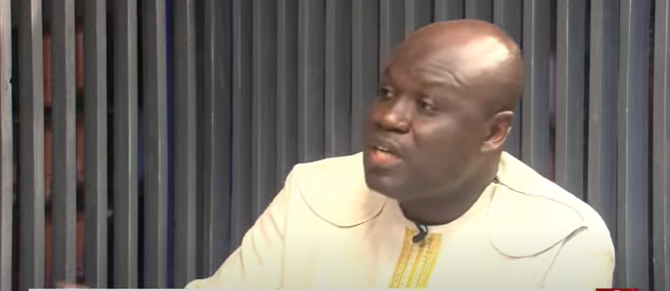
Mark Badu-Aboagye, CEO of the Ghana National Chamber of Commerce and Industry (GNCCI), has urged the banking sector to stop treating the business community as inherently risky.
He argues that credit decisions should be driven by the strength of projects rather than by broad assumptions about private-sector risk.
Speaking on Joy News’ PM Express Business Edition on Thursday, Mr Badu-Aboagye said banks must be willing to support businesses that present viable projects capable of generating revenue and profits needed to repay loans.
“The banking community should not look at the business community as a more risky institution,” he said.
He argued that where a project is bankable and can generate “the necessary profit” and “the necessary revenue” for repayment, banks should be ready to finance it.
“So if you have any bankable project, and they look at it and they see that is a project that will make the necessary profit, getting the necessary revenue for you to be able to pay them, I think they will do that,” he noted.
However, he admitted that many banks remain hesitant, particularly when it comes to startups, which he said are often seen as too risky.
“Some will sit back more, especially with startups. I mean, startups are perceived as risky businesses, so anybody who is investing in a startup will think twice,” he explained.
Mr Badu-Aboagye said this cautious posture has become a major obstacle for young businesses trying to establish themselves, even when they show strong prospects.
He criticised what he described as a pattern in which banks become interested in financing a business only after it has struggled to grow without support.
“That is one thing we have observed when we are dealing with our banks. They want you to struggle and grow and then… they will come to you to come and give you money,” he said.
He questioned the logic of that approach, arguing that the very businesses banks eventually seek to support are often the ones that need early-stage capital to survive.
“But who should give the money to the startup to go before you come?” he asked.
The GNCCI CEO said that if banks and the broader financial sector identify startups with clear prospects, they should be supported rather than left to struggle.
“So for some of them that we see the prospect, I think we should help them,” he said.
He also pointed to alternative funding models in other economies, where startups can access financing through NGOs, private investors, and other backers until they are stable enough to qualify for mainstream bank facilities.
“So in other organisations, there are other forms of financing for these startups, NGO, investors, people helping them, and then when they are able to stand on their feet, then they can go in for… these facilities,” he stated.
Beyond access to credit, Mr Badu-Aboagye said businesses are also closely monitoring the market, particularly interest rates.
He noted that some firms believe interest rates could fall, and this expectation is shaping how they plan for borrowing.
“So even the businesses themselves, some are also monitoring what is happening in the market. Some are very sure that interest rates will come down,” he said.
According to him, where a business does not urgently need funding, it may choose to wait and observe how conditions evolve.
“So they are also monitoring to see what will happen. So if your business does not need money immediately, then you sit back and see,” he explained.
However, he stressed that for businesses with urgent financing needs, waiting is not always an option.
“But if there’s something you cannot do… without it, and then you need to obviously get the resources, you have to move on and get it,” he said.
Mr Badu-Aboagye’s comments come amid growing calls for stronger collaboration between banks and the private sector, especially as Ghana seeks to deepen industrial growth, expand entrepreneurship, and support job creation through small and medium-sized enterprises.
Latest Stories
-
YEA clears majority of beneficiary arrears, assures completion of outstanding payments
4 minutes -
AfCFTA key to building globally competitive African businesses – Zambia envoy urges Ghanaian CEOs
16 minutes -
Albert Kobina Mensah, soil pollution and remediation: Risk assessment, phytoremediation, revegetation
22 minutes -
GIFEC supports national rollout of One Million Coders Programme with laptop presentation
30 minutes -
Old Tafo MP rolls out street lights project to boost security and night-time economy
37 minutes -
Telecel Ghana CEO urges urgent education reform and stronger industry-academia partnership at UEW Public Lecture
47 minutes -
Nigerian army general and several soldiers killed in assault on military base in northeast
48 minutes -
Dagbamete chief urges completion of road project, expansion of vocational training
56 minutes -
Urgently cancel Truedare AI Customs deal over cost concerns – Joseph Cudjoe to Mahama
1 hour -
Poor safety habits to blame for recurring boat fatalities — GMA boss, Kamal-Deen Ali
1 hour -
Owabi 75% blocked, Barekese loses 40% capacity as siltation, plastics threaten water supply crisis
1 hour -
Ashanti RCC seeks to clear unauthorised garages under new car mall initiative
1 hour -
DPS International steals spotlight at Ghana Interschool Festival Part 2
1 hour -
Republic Bank Ghana PLC leverages Kwahu Business Forum deliberations
1 hour -
Ghana and Artemis II: Hospitality, Love, and Conquest
1 hour