

Audio By Carbonatix
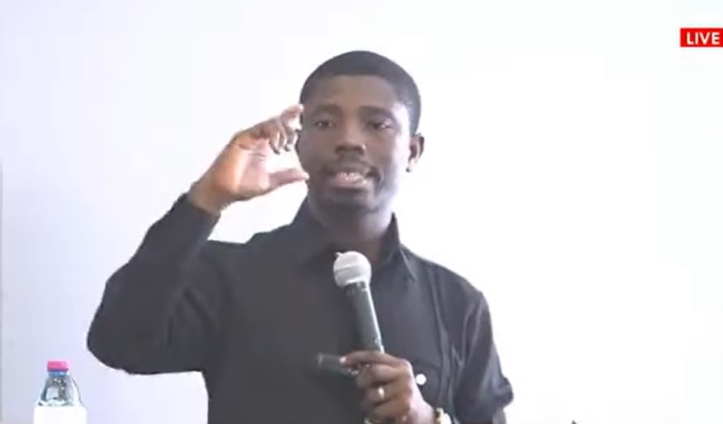
A Senior Lecturer and Projects Coordinator at the University of Professional Studies, Accra (UPSA), Dr Eric Boachie Yiadom, has called for the strengthening of national institutions and the embrace of technology to plug persistent tax revenue leakages in Ghana.
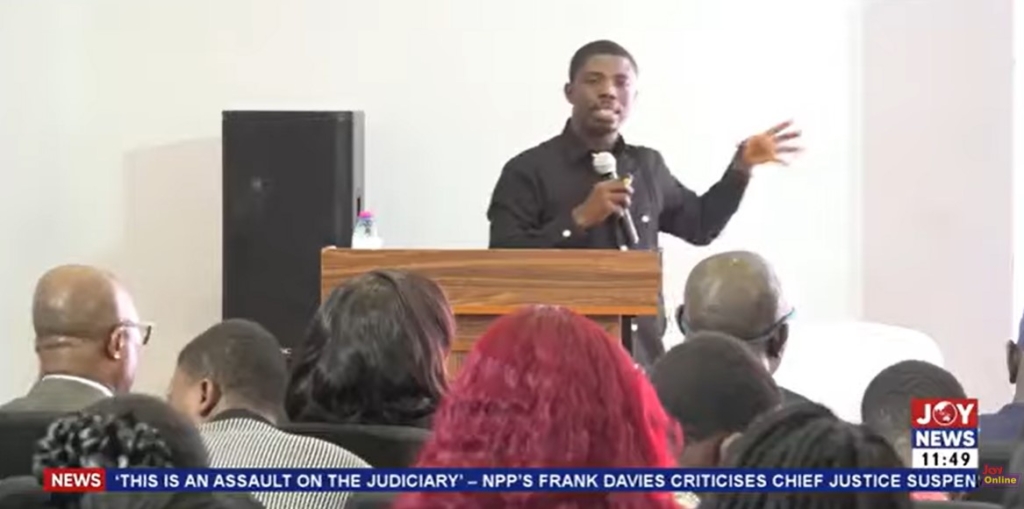
Speaking at a forum on "Tackling Tax Revenue Leakages in Ghana" hosted by the Faculty of Accounting and Finance at UPSA, Dr Yiadom presented findings from an independent study on the effectiveness of technological solutions in revenue assurance, highlighting Strategic Mobilisation Ghana Ltd (SML) as a case study.
“We cannot build a nation based on trust. Strong nations are built on strong institutions,” Dr Yiadom said. “Whether someone is trustworthy or not, a robust system ensures compliance.”
Referencing former US President Barack Obama’s historic address to Ghana’s Parliament in 2009, he quoted the famous admonition of the then US President, saying, “Africa doesn't need strong men. It needs strong institutions.”
Dr Yiadom argued that while public discourse, including media exposés and a KPMG audit, has spotlighted gaps in SML’s contract and value claims, a deeper, more empirical look is needed.
“In academic research, it is not enough to rely on secondary reporting. We must interrogate the primary data ourselves.”
Dr Yiadom revealed that after formally engaging SML, he was granted access to their facilities, allowing for firsthand verification of their technology systems, including ultrasonic flow meters, AI-powered surveillance, and automatic reconciliation tools used in the downstream petroleum sector.
Technology vs. Revenue Leakages
Quoting data from regulatory bodies and policy think tanks, including the National Petroleum Authority (NPA), Ghana Revenue Authority (GRA), and Africa Centre for Energy Policy (ACEP), Dr Yiadom noted that discrepancies between reported petroleum lifting volumes and actual taxable volumes had previously reached 3.2 billion litres in a year. However, following SML’s engagement in mid-2020, this figure dropped by over 91%, to 260 million litres annually.
“Let’s assume, without admitting, that SML was not the sole reason for this drastic improvement,” Dr Yiadom posited. “Even then, the timing of the reduction aligns directly with the introduction of SML’s monitoring technology.”
He acknowledged legitimate concerns raised by the KPMG report, including the appropriateness of SML’s variable fee structure and procurement processes. However, he argued that risk-reward-based contracts—where payment is tied to performance—should be better integrated into Ghana’s Public Procurement framework to accommodate innovation.
“There is nowhere in the Public Procurement Act that expressly forbids risk-reward models. If anything, this is a call to modernise our procurement laws to meet evolving technological solutions.”
Redundancy or Reinforcement?
Dr Yiadom conceded that SML’s work appeared to duplicate systems already in place, such as the NPA’s ERDMS and GRA’s ICUMS. However, he likened it to internal and external audits within companies—where overlapping controls are necessary to detect inefficiencies and irregularities.
“The presence of multiple layers is not a flaw but a safeguard. It’s no different from having internal audits before an external one and still facing the Public Accounts Committee,” he said.
He also questioned resistance to such technological reinforcement when similar arrangements at the ports—such as with West Blue and ICUMS—had improved customs classification and blocked leakages.
A call for transparency and independent research
Dr Yiadom concluded his presentation by urging fellow academics and professionals to engage directly with institutions like SML rather than rely solely on third-party reports or public commentary.
“If you want to know what’s truly happening, write to them, visit the site, ask the questions, see the data. That is how we strengthen our democracy—with facts, not assumptions.”
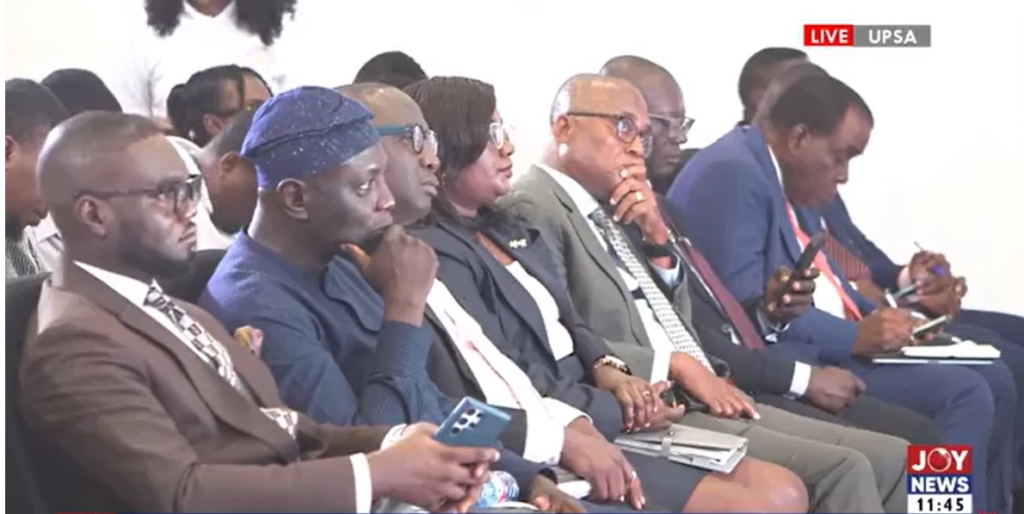
The forum, attended by students, academics, policy makers, and industry stakeholders, continues UPSA’s commitment to providing research-led insight into Ghana’s public finance management challenges.
Latest Stories
-
Kwaku Azar writes: A-G vs OSP
25 minutes -
Mfantsipim–Adisadel rivalry built excellence, not division – Sam Jonah
50 minutes -
Vice President launches Mfantsipim’s 150 years of shaping Ghana’s greatest mind
1 hour -
I assure Otumfuo, Mahama will join him to commission KNUST Teaching Hospital by end of this year – Haruna Iddrisu
2 hours -
Barcelona dominate derby to extend La Liga lead
2 hours -
Gov’t to roll out free special education for persons with disabilities from July 1 – Education Minister
2 hours -
Importers and Exporters Association declares full support for Publican AI port system
2 hours -
“We used it to test our officiating officials’ readiness” – Bawah Fuseini after CAA Athletics event
3 hours -
Volleyball emerges as Ghana’s fastest rising sport
3 hours -
National Sports Fund needs strong leadership from the top – Administrator David Wuaku
3 hours -
JoySports Exclusive: Steve McLaren in talks with GFA after expressing interest in Black Stars job
3 hours -
Fire guts auto parts warehouse at Bubuashie, one fire officer injured
3 hours -
I owe my victory to coach Ofori Asare – Allotey after winning WBA Africa Gold Super Flyweight belt
3 hours -
Church of Pentecost supports over 2,000 BECE candidates in Obuasi with career guidance seminar
5 hours -
Brandon Asante and Coventry all but promoted to Premier League despite Sheffield Wednesday draw
5 hours