


Audio By Carbonatix
Sultan Qaboos bin Said Al Said of Oman, the Arab world's longest-serving ruler, has died aged 79."With great sorrow and deep sadness... the royal court mourns His Majesty Sultan Qaboos bin Said, who passed away on Friday," a court statement said.Last month he returned home after undergoing medical checks and treatment in Belgium. There were reports he was suffering from cancer.Sultan Qaboos was unmarried and had no heir or designated successor.Three days of national mourning have been declared.The sultan deposed his father in a bloodless coup with British support in 1970. Using its oil wealth, he then set Oman on a path to development.According to the sultanate's Basic Statute, the Royal Family Council - comprising about 50 male members - should choose a new sultan within three days of the throne falling vacant.If the family cannot agree, members of the defence council and the chairmen of the Supreme Court, the Consultative Council and the State Council will open a sealed envelope in which Sultan Qaboos secretly recorded his choice and enthrone that person.The leading contenders reportedly include three brothers who are cousins of the late sultan: Culture Minister Haitham bin Tariq Al Said; Deputy Prime Minister Asaad bin Tariq Al Said; and Shihab bin Tariq Al Said, a former Oman Navy commander who was a royal advisor.The sultan is the paramount decision-maker in Oman and also holds the positions of prime minister, supreme commander of the armed forces, minister of defence, minister of finance and minister of foreign affairs.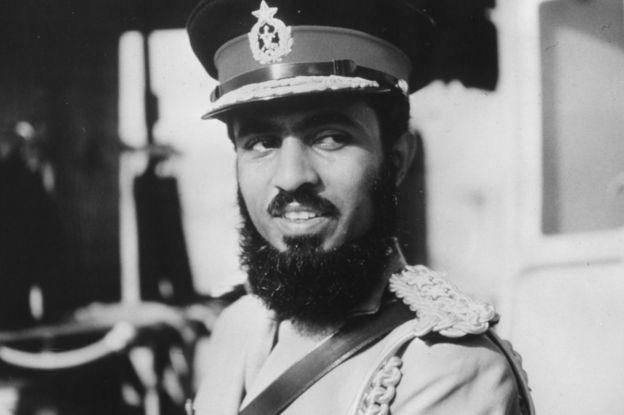 Sultan Qaboos deposed his father in a bloodless coup in 1970Sultan Qaboos immediately declared that he intended to establish a modern government and use oil money to develop a country where at the time there were only 10km (six miles) of paved roads and three schools.In the first few years of his rule, he suppressed with the help of British special forces an insurgency in the southern province of Dhofar by tribesmen backed by the Marxist People's Democratic Republic of Yemen.He pursued a neutral path in foreign affairs and was able to facilitate secret talks between the United States and Iran in 2013 that that led to a landmark nuclear deal two years later
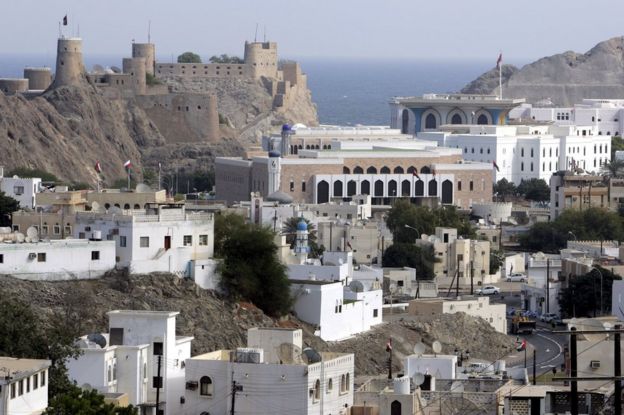 Using its oil wealth, Sultan Qaboos drew Oman into the modern world and brought its people prosperityThere was no major upheaval in Oman, but thousands of people took to the streets across the country to demand better wages, more jobs an end to corruption.Security forces initially tolerated the protests, but later used tear gas, rubber bullets and live ammunition to disperse them. Two people were killed and dozens of people were injured. Hundreds were prosecuted under laws criminalising "illegal gatherings" and "insulting the sultan".The protests failed to produce anything in the way of major change. But Sultan Qaboos did remove several long-serving ministers perceived as corrupt, widened the powers of the Consultative Council, and promised to create more public sector jobs.Since then, the authorities have continued to block local independent newspapers and magazines critical of the government, confiscate books, and harass activists, according to Human Rights Watch.
Neutral policy
For almost five decades, Sultan Qaboos completely dominated the political life of Oman, which is home to 4.6 million people, of whom about 43% are expatriates.At the age of 29 he overthrew his father, Said bin Taimur, a reclusive and ultra-conservative ruler who banned a range of things, including listening to the radio or wearing sunglasses, and decided who could get married, be educated or leave the country.
Sultan Qaboos deposed his father in a bloodless coup in 1970Sultan Qaboos immediately declared that he intended to establish a modern government and use oil money to develop a country where at the time there were only 10km (six miles) of paved roads and three schools.In the first few years of his rule, he suppressed with the help of British special forces an insurgency in the southern province of Dhofar by tribesmen backed by the Marxist People's Democratic Republic of Yemen.He pursued a neutral path in foreign affairs and was able to facilitate secret talks between the United States and Iran in 2013 that that led to a landmark nuclear deal two years laterAbsolute rule
Sultan Qaboos was described as charismatic and visionary, and he was widely regarded as popular. But he was also an absolute monarch and any dissenting voices were silenced.A degree of discontent surfaced in 2011 during the so-called Arab Spring.
Using its oil wealth, Sultan Qaboos drew Oman into the modern world and brought its people prosperityThere was no major upheaval in Oman, but thousands of people took to the streets across the country to demand better wages, more jobs an end to corruption.Security forces initially tolerated the protests, but later used tear gas, rubber bullets and live ammunition to disperse them. Two people were killed and dozens of people were injured. Hundreds were prosecuted under laws criminalising "illegal gatherings" and "insulting the sultan".The protests failed to produce anything in the way of major change. But Sultan Qaboos did remove several long-serving ministers perceived as corrupt, widened the powers of the Consultative Council, and promised to create more public sector jobs.Since then, the authorities have continued to block local independent newspapers and magazines critical of the government, confiscate books, and harass activists, according to Human Rights Watch.DISCLAIMER: The Views, Comments, Opinions, Contributions and Statements made by Readers and Contributors on this platform do not necessarily represent the views or policy of Multimedia Group Limited.
DISCLAIMER: The Views, Comments, Opinions, Contributions and Statements made by Readers and Contributors on this platform do not necessarily represent the views or policy of Multimedia Group Limited.
Latest Stories
-
Prudential Life settles GH¢100,000 medical bills under its PRUCares Valentine Experience Initiative
6 hours -
Wa West Picnic: Peter Lanchene Toobu champions peace, health and unity in landmark celebration
6 hours -
Dr Mensah Market flooded after downpour in Kumasi
6 hours -
Armed men reportedly storm Adjen Kotoku Onion Market amid tensions
7 hours -
Tecco Mensah writes: Why football fans must look beyond statistics
8 hours -
Police recover stolen Honda CR-V in Kumasi within 48 hours
9 hours -
Apetorku Gbodzi 2026 Festival opens in Dagbamete with development focus
9 hours -
President Mahama arrives in Lyon to co-chair One Health Summit
9 hours -
Beverly View Plus Hotel draws crowds amid coastal Easter rush in Volta
9 hours -
Maiden Zongo Festival held in Wa amid calls to tackle drug abuse among the youth
9 hours -
FDA warns of fake HIV test kits on Ghanaian market
10 hours -
Africa urged to build resilient health systems as donor support tightens
10 hours -
Easter gesture: Ablakwa settles medical bills for 85 North Tongu constituents
12 hours -
Africa must harness its population strength—Titus-Glover
12 hours -
Visa-free access doesn’t mean unlimited stay – Lom Ahlijah
12 hours