

Audio By Carbonatix
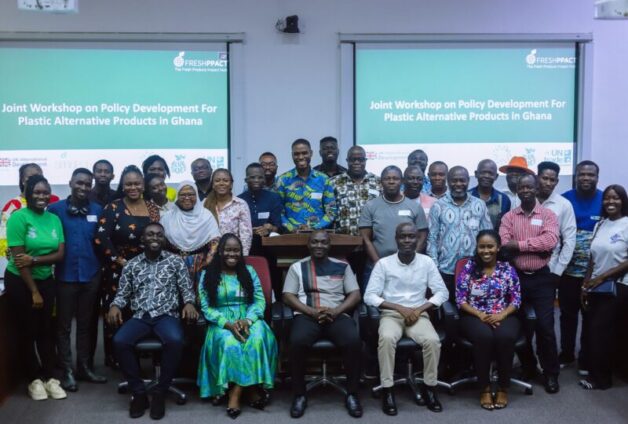
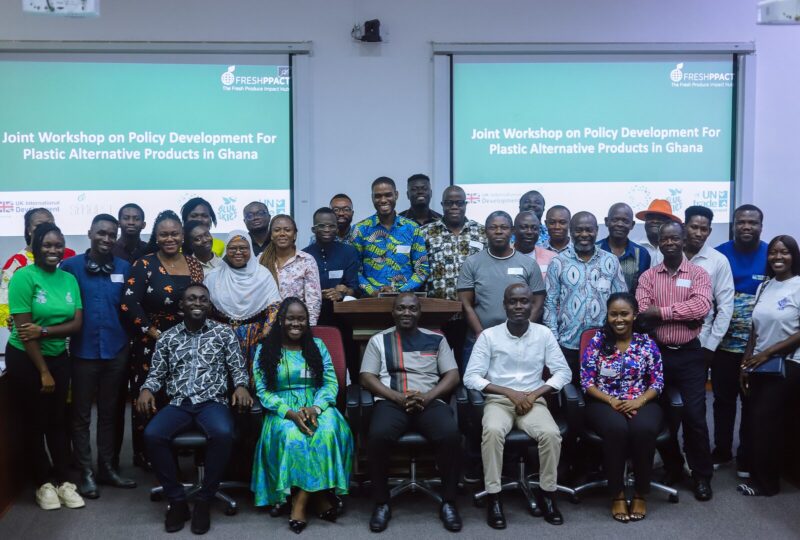
The Fresh Produce Impact Hub (FRESHPPACT) project team recently organised a workshop to discuss policy development for plastic alternatives and waste management.
This was in collaboration with Blue Skies, the Ministry of Environment, Science, Technology, and Innovation (MESTI), and other key stakeholders in Ghana’s plastic production and waste management sectors.
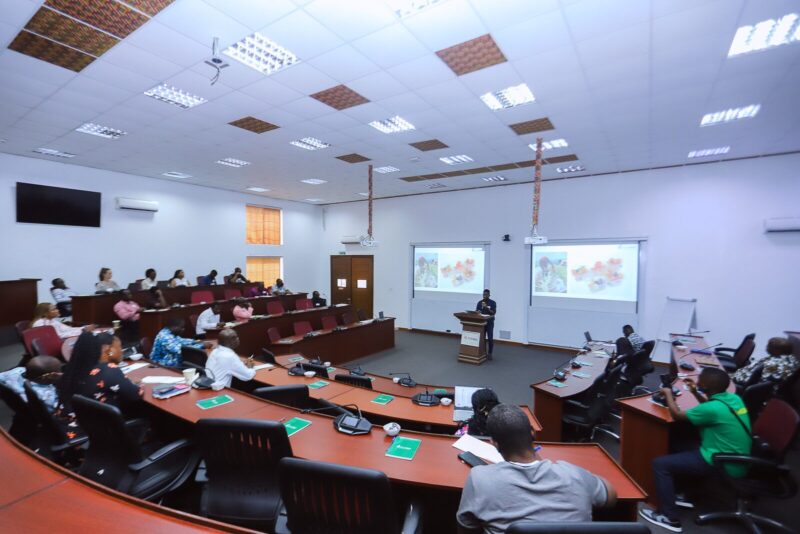
Held on October 24, 2024, at the China Europe International Business School (CEIBS) in Accra, the workshop aimed to refine and enhance Ghana’s existing plastic waste management policies.
Building on previous initiatives, the gathering focused on identifying concrete, actionable recommendations to improve policy effectiveness, particularly around plastic alternative products.
The Global Call for Sustainability
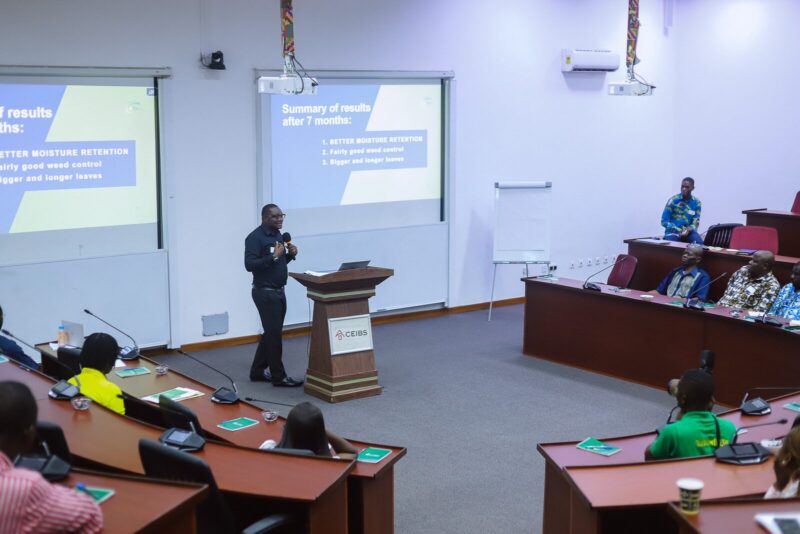
Dr Ebenezer Laryea, Director of FRESHPPACT and Associate Professor for Sustainable Development at the University of Northampton emphasised the global shift toward a green economy, stressing the need to reduce plastic use for environmental sustainability.
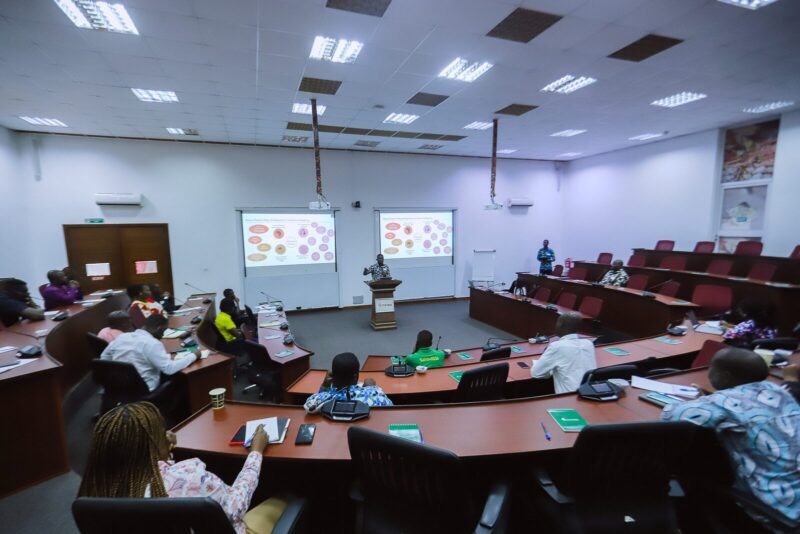
Dr Laryea highlighted the significant impact of plastics on agriculture and the environment in Ghana, explaining how plastic mulch intended to retain moisture can ultimately damage farmland and ecosystems.
He cited that while 840,000 tonnes of plastic waste are generated annually in Ghana, only 9.5% is recycled, underscoring the need for more robust solutions.
Interactive Breakout Sessions
Participants from government, industry, academia, civil society, and the private sector took part in breakout sessions to focus on specific areas of plastic waste management policy.
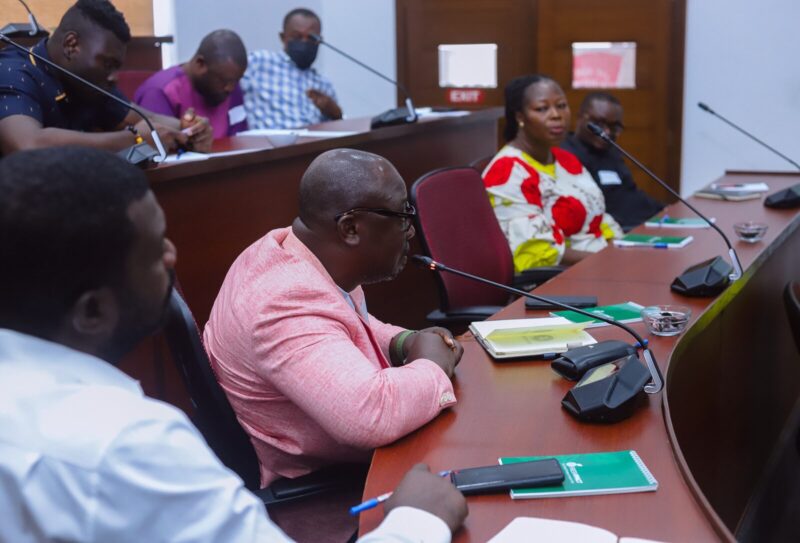
These groups discussed economic mechanisms, regulatory areas, international standards, education, capacity building, and effective monitoring and evaluation to create a comprehensive policy framework for plastic alternatives.
Stakeholder Insights and Initiatives
Mary Aka, Head of Internal Audit on Environment, Health, and Safety at Blue Skies, shared that the company encourages customers to return used fruit juice bottles, which are then sent to a recycling facility.
Thomas Narh Korley, Coordinator for the Zoomlion Foundation, added that educating schoolchildren on the impact of plastic waste is essential for instilling sustainable practices.
He advocated for more workshops and seminars targeted at youth to promote environmental responsibility.
The workshop represents a significant step forward in Ghana’s commitment to sustainable waste management, uniting diverse stakeholders in the pursuit of effective and practical solutions.
Latest Stories
-
Fitch affirms Ghana’s LT Instruments at ‘B-‘; assigns recovery rating of ‘RR4’
60 minutes -
T-bills: Government records 25% undersubscription; interest rates rise marginally
1 hour -
Vinicius scores twice as Real beat Atletico in thriller
3 hours -
Guardiola’s dance of joy as Man City pile pressure on desolate Arsenal
4 hours -
Kenyans fighting illegally for Russia in Ukraine to be granted amnesty
4 hours -
Hawaii storms have caused $1bn in damage, governor says
4 hours -
Mahama to lead Ghana’s delegation to UN special session on reparatory justice
4 hours -
National blackout hits Cuba for second time in a week
4 hours -
Trump at a crossroads as US weighs tough options in Iran
4 hours -
UDS and UG seeded ahead of 2026 Honda Football Championship raw
5 hours -
GPL 2025/26: Swedru All Blacks edge out Hohoe United in narrow 1–0 win
6 hours -
Carabao Cup: Semenyo wins first trophy with City
7 hours -
Carabao Cup: O’reilly double gives Man City Wembley win over Arsenal
7 hours -
Man City end Arsenal’s quadruple hopes as O’Reilly’s double clinches Carabao Cup triumph
7 hours -
Mahama to attend Africa Energy Technology Conference 2026 in Accra
7 hours