

Audio By Carbonatix
A growing number of girls aged between 13 and 16 in the Talensi District of the Upper East Region are abandoning school to live with illegal miners, performing domestic roles typically associated with marriage.
Local education authorities are raising the alarm, as school enrolment and attendance continue to plummet in communities affected by illegal mining, also known as galamsey.
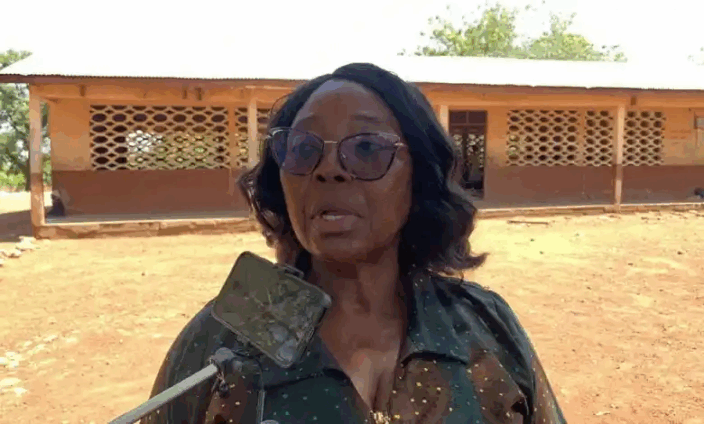
The Talensi District Director of Education, Christiana Azure Ayinzoya, says the situation is dire, particularly among Junior High School students.
“These girls are cohabiting with young boys and older miners at the sites, cooking, cleaning, and in many cases, becoming pregnant,” Ayinzoya told Asaase News. “By the time we trace some of them, they are already pregnant or have dropped out completely.”
Boys drop out too
The problem is not limited to girls. Young boys are also quitting school in pursuit of quick cash from illegal mining.
Education officers in the district say some pupils, after registering for the Basic Education Certificate Examination (BECE), never return to class and are eventually barred from sitting the exams due to absenteeism.
In 2023, seven girls wrote the BECE while pregnant, highlighting the severity of the crisis. Though Ghana’s re-entry policy allows pregnant girls to return to school and complete their education, the dropout rate remains high due to poor attendance, academic disengagement, and the pull of mining-related income.
Strained efforts to intervene
Ayinzoya says district education officials, social welfare officers, and the assembly’s girls’ education team have been working together to identify and retrieve girls from mining sites. But progress is slow and complex.
“We sometimes have to negotiate with the boys or men they’re staying with,” she explained. “We tell them, ‘We’re not taking her from you—we just want her to complete her education.’ And only then can we convince her to return.”
While some girls are persuaded to rejoin school, many struggle to catch up after long absences. Their academic performance suffers, and the wider school environment also feels the effects.
“We registered them, but many are unprepared for the exams because they spent the year in mining pits instead of the classroom,” she said.
The district’s overall academic performance remains poor. “When I took over, we had a BECE pass rate of 26 per cent. We’ve moved to 46 per cent, but I’ve never crossed 50 per cent,” Ayinzoya noted.
Families losing control
The situation is further complicated by a breakdown in family discipline and changing household dynamics. Parents feel powerless with some children returning home from mining sites with food and money.
“They bring home noodles and cash, and their parents can’t compete,” Ayinzoya stated. “Some parents admit they don’t even know where their children sleep. Poverty is robbing them of authority.”
She added that many parents, overwhelmed by economic hardship, give up. “Discipline has gone down. And it’s not just in Talensi—it’s happening in homes across the country.”
Long-term consequences
While the immediate benefits of mining may appear attractive to young people, the Director of Education warns that the long-term consequences of leaving school are far more damaging.
“You have energy to dig for gold now, but gold doesn’t reproduce. Once it’s gone, it’s gone. Education, on the other hand, is an investment that never expires,” she said.
She is calling for urgent, coordinated interventions, from regulating illegal mining to boosting parental engagement, to stem the growing tide of school dropouts and prevent a lost generation in Talensi.
Latest Stories
-
Anti-LGBTQ Bill: Forget the rumour mongers, I’m a man of action, and will pass the bill – Speaker
39 minutes -
Women and children among those killed in Sudanese army shelling of wedding celebration
43 minutes -
President Mahama is not sincere with Ghanaians on LGBTQ bill matter – Hassan Tampuli
1 hour -
Gov’t to establish Prison Industrial Hub to equip inmates with income-generating skills – Prison Service boss
1 hour -
Alhassan Tampuli donates cement, roofing sheets to support storm victims in Gushegu
1 hour -
Alhassan Tampuli appeals for urgent support for storm victims in Gushegu
1 hour -
The hypocrisy must stop; pass Anti-LGBTQ+ Bill now – Alhassan Tampuli to Mahama
1 hour -
Imprisonment should be rehabilitative, not punitive – Ghana Prisons boss at UNGA
2 hours -
Ga Adangbe traditional priests petition Mahama over McDan aviation licence revocation
2 hours -
Anti-LGBTQ Bill: NDC’s arrogance is worrying – Hassan Tampuli
2 hours -
Let’s give OSP time to mature, not to scrap it – Hassan Tampuli
2 hours -
Nigeria convicts 386 Islamist militants in mass trials
2 hours -
Djibouti president wins election with 97.8% of vote, state media says
2 hours -
We don’t have mandate to deduct tax from rent allowance of security services personnel – Interior Ministry clarifies
3 hours -
Ablakwa receives Presidential Special Envoy on Reparations to advance global agenda
3 hours