

Audio By Carbonatix
A former CEO of the National Pensions Regulatory Authority (NPRA) has warned that taxpayers will ultimately bear the cost of the state’s decision to halt prosecution in the case involving Dr. Kwabena Duffuor and seven others after reaching a 60% recovery threshold.
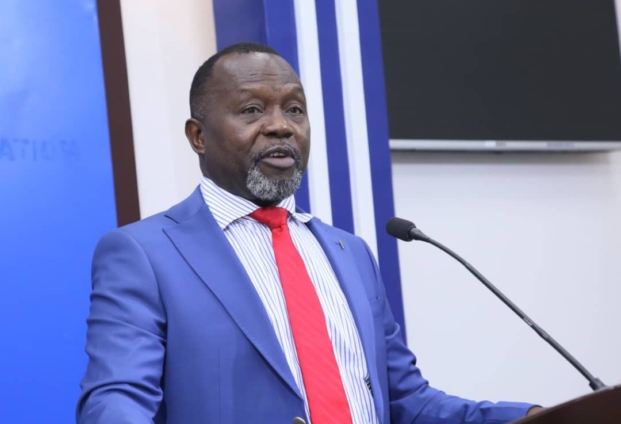
Dr. Daniel Seddoh, speaking on JoyNews’ PM Express on Tuesday, said he wasn’t surprised by the announcement from the Office of the Attorney-General.
The office, in collaboration with EOCO and other state agencies, recently disclosed that it had recovered 60% of the over GH¢5 billion allegedly lost and would reconsider prosecution.
“I wasn’t surprised, because this case took us how many years, between seven to eight years,” Dr. Seddoh said.
“We have a legal system that is very slow and very painful. We’ve lost lives because of this whole thing.”
He acknowledged that some may see the 60% recovery as better than nothing, but disagreed.
“Some people will tell you it’s better than nothing, but I have deeper questions to ask than telling me it’s better than nothing,” he said.
Dr. Seddoh explained that banks operate not with their own money, but with funds entrusted to them by depositors and other stakeholders.
“Banks have no money of their own. They leverage on depositors and other people’s money to work,” he explained.
“The depositors put money in the bank with the understanding that it’s a relationship of trust… that anytime they go for their money, they will get it.”
But that trust was broken, he argued, when depositors could not access their money and no one came to their aid.
“What has happened has created a situation where the depositors could not get their money, and there was nobody to come to the air rescue.”
Referring to the state’s recovery efforts, he questioned: “When you take 60% and you can get 40%, who is going to finance that 40%? Because ultimately, the money belongs to depositors. Ultimately. So who is going to finance that?”
He added that the chosen path to resolve the crisis may not have been the wisest. “We use a certain approach to resolve the issue, and it just comes back to bite us. Probably this is not the most efficient approach.”
Dr. Seddoh suggested that a better route would have been to bring in investors and turnaround experts to revive and eventually sell the troubled banks.
“We should have probably used approach of an investment… get people in, put money in, get stronger hands to manage the bank and get it out of the hole, turn it around, sell it and get your money out.”
Instead, he lamented, “The approach we have used is to throw money at it as an expense which will never come back. And that ultimately, falls on the taxpayer, which includes the depositor.”
Latest Stories
-
Power restoration fault suspected in Kumasi Central Market fire
1 hour -
The 7-foot giant of Ngleshie Amanfro: Seven-foot Ghanaian Ephraim Saawa dreams of joining the national basketball team
2 hours -
Government promises support for Kumasi Central Market fire victims
2 hours -
Vibes The Movie: Big Ghun’s Ghanaian film earns five nominations at 2026 REFFA
3 hours -
MamaCare CEO warns unresolved conflicts among health workers could undermine maternal and neonatal care
3 hours -
Health professionals urged to translate medical knowledge into practice to save mothers
3 hours -
Conflicts among care providers linked to maternal, neonatal deaths – Expert
5 hours -
GIS marks 10th TIME conference, champions improved teaching practices
5 hours -
BRICS Or Balance? What Ghana’s bid really means
5 hours -
GPRTU wants full TRAFFITECH-GH implementation to start in 2027
6 hours -
Mahama announces plans to import electric wheelchairs for PWDs
6 hours -
KGL U17 Colts 2026: Western beat Prempeh Elite Academy to set up final final with Greater Accra Region
6 hours -
Late Solanke strike salvages 10-man Spurs draw at Man United
6 hours -
Gender Ministry to monitor welfare of Nana Akua Addo’s children amid domestic violence case
6 hours -
Benedict Okyere Yeboah: Ghana’s football problem goes beyond sacking a coach
7 hours