

Audio By Carbonatix
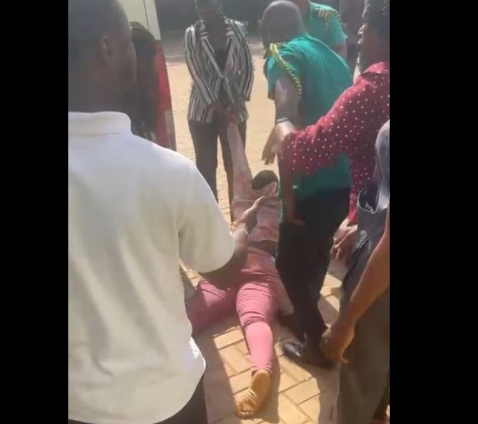
A dramatic and tense situation unfolded at the VICSEM Hotel in Ogbojo, Accra, on Tuesday afternoon, November 11, 2025, as Ghana Immigration Service (GIS) officials attempted to forcibly remove a group of deportees recently repatriated from the United States.
Eyewitnesses at the scene reported that the effort to relocate the deportees, who are part of an ongoing arrangement between the U.S. government under President Donald Trump and Ghana, generated confusion and significant distress among the returnees.
Immigration officials were spotted in viral videos dragging a woman on the floor into a waiting vehicle.
The intention of their action is not clear but the attempted removal suggests officials were trying to move the individuals from the hotel facility where they were initially accommodated upon arrival.
The incident highlights the sensitive nature of Ghana’s agreement to receive its citizens deported from the U.S.
The current group arrived as part of a deal governed by a Memorandum of Understanding (MOU) with the United States.
Crucially, the government maintains that this arrangement is legally binding but does not require parliamentary ratification, distinguishing it from treaties or defence agreements.
Ghana's decision to accept the deportees has been publicly framed as being driven purely by humanitarian concerns, responding to reports of harsh treatment and poor conditions faced by deportees from abroad.
The confrontation at the hotel comes amid heightened political scrutiny over the repatriation policy.
The government had previously faced sharp criticism from the Minority in Parliament following the earlier acceptance of a group of 14 deportees.
The Minority accused government officials of attempting to sidestep parliamentary approval for the controversial arrangement.
This apprehension is compounded by the recent announcement from the Minister of Foreign Affairs, Samuel Okudzeto Ablakwa, that Ghana was expecting an additional 40 West African deportees from the United States.
In a related development, a human rights lawyer and legal representative to some of the deportees, Oliver Barker-Vormawor, is alleging that Ghana is now facilitating the return of these individuals to their home countries, where their lives are at risk.
Barker-Vormawor's post highlights that the U.S. government cannot legally deport these individuals directly to their home countries because they have been "granted protection" based on a "genuine fear of persecution."
By accepting them, Ghana essentially becomes an intermediary.
Latest Stories
-
A source of excellence across generations – Vice President Opoku-Agyemang lauds Mfantsipim
19 minutes -
(Photos) Mfantsipim School launches historic 150th anniversary
42 minutes -
Knights and Ladies of Marshall group backs Catholic Bishops’ stance on anti-LGBTQ+
2 hours -
Bright Simons writes: All the Filla in the Ibrahim Mahama/E&P – Gold Fields Saga
2 hours -
Monetise Idiocy In Ghana
2 hours -
The Ghanaian prophet and the mysterious death of his scottish wife Charmain Speirs
3 hours -
Nearly 400 sentenced in Nigeria for links to militant Islamists
3 hours -
Ghana’s recovery supported by gold strength despite global oil price pressures – Standard Bank Research
3 hours -
Methodist Church hails Mfantsipim@150; calls for “fresh consecration” to excellence
4 hours -
‘Excellence is our inheritance’ – Nana Sam Brew-Butler hails Mfantsipim’s 150-year reign in leadership
4 hours -
Kwaku Azar writes: A-G vs OSP
4 hours -
Mfantsipim–Adisadel rivalry built excellence, not division – Sam Jonah
4 hours -
Vice President launches Mfantsipim’s 150 years of shaping Ghana’s greatest mind
5 hours -
I assure Otumfuo, Mahama will join him to commission KNUST Teaching Hospital by end of this year – Haruna Iddrisu
5 hours -
Barcelona dominate derby to extend La Liga lead
6 hours