

Audio By Carbonatix
There is something about the 6th of March that unsettles me.
Not the celebration itself- I love the parade, the colours, the pride in people's eyes, the school bands marching slightly off-beat but with their chests out like they are leading an army.
I love the memory of what our grandparents did. What Nkrumah did. What the market women and the verandah boys and the ex-servicemen who bled at Christiansborg did.
That part of our story is sacred, and I will never diminish it.
But every year, after the last flag is waved and the last speech echoes out of Independence Square, I drive home through Accra- past the potholes, past the billboards advertising European luxury brands to people earning minimum wage, past the children selling pure water at traffic lights who should be in school- and a question sits in my chest like a stone:
What exactly did we win?
I know that sounds ungrateful.
I know it sounds like the kind of thing people dismiss as pessimism or - worse - as disrespect to the founders.
But I have thought about this for a long time, and I believe the most patriotic thing a Ghanaian can do in 2025 is to stop pretending.
Stop pretending that a flag, an anthem and the right to vote every four years is the totality of what those who fought for us were reaching for.
They were reaching for something deeper.
They wanted a Ghana that could stand on its own feet- economically, psychologically, culturally.
And sixty-nine years later, if we are honest, truly and painfully honest, we have not yet built that Ghana.
We have the form of independence.
We do not yet have the substance.
And the distance between those two things is where this article lives.
To understand why we are still here, you have to understand what colonialism actually did to this place.
Not the version they taught us in school- the neat timeline of dates and treaties and the eventual "granting" of independence, as though freedom was a gift the British were kind enough to hand over.
The real version.
The one that explains why, nearly seven decades later, our railways still point to the sea.
Before the British arrived, the territory we now call Ghana was not some disorganised collection of villages waiting to be saved.
The Ashanti Empire ran one of the most sophisticated state systems in pre-colonial Africa.
It had centralised governance, a functioning judiciary, a professional military, and a gold-based economy that connected it to trade routes spanning the Sahara.
The Fante Confederacy was experimenting with constitutional governance as early as 1868.
The Ga-Dangme states practised democratic consensus-building long before anyone on this soil had heard the word "parliament."
These were not primitive societies.
They were civilizations- complete, complex, and self-sustaining.
What the British did was not "civilize" these societies.
They dismantled them.
Through a series of wars against the ethnic groups, the imposition of the Bond of 1844, and the eventual annexation of the Northern Territories by 1902, Britain restructured the entire Gold Coast economy around one single purpose: extraction.
Gold, cocoa, timber, diamonds- everything of value was funneled out, shipped to Liverpool and London, processed in British factories, and sold back to the world at a profit.
The railways they built were not designed to connect Ghanaian communities to each other.
They were designed to connect mines and cocoa farms to the ports.
The schools they built were not designed to produce scientists, engineers, or philosophers.
They were designed to produce clerks - Africans who could read just enough English to facilitate the extraction process but never enough to question it.
The legal system they imposed was not designed to deliver justice to Ghanaians.
It was designed to protect British commercial interests.
Everything - every road, every school, every law - was a tool of extraction dressed in the language of civilization.
This matters because when independence came in 1957, we inherited all of it.
The whole machine.
The railways still pointed to the sea.
The schools still taught British curricula.
The courts still spoke the Queen's English.
The economy still ran on exporting raw materials and importing finished goods.
We changed the driver, yes, but the car was still wired to drive in one direction-outward, toward someone else's prosperity.
And in sixty-nine years, no government has fully rewired it.
Look at the numbers.
Ghana is the world's second-largest cocoa producer and Africa's largest gold producer.
By any rational measure, we should be wealthy.
But we export raw cocoa beans at roughly $2,600 per tonne and then import the chocolate made from those same beans at $8,000 to $12,000 per tonne.
Read that again.
We are buying back our own cocoa at four to five times the price, and the difference - the value, the wealth, the jobs - lands in Zurich and Brussels, not in Kumasi or Sefwi.
Côte d'Ivoire and Ghana together produce over 60% of the world's cocoa, and yet neither country has a single globally recognized chocolate brand.
The roasting happens elsewhere.
The branding happens elsewhere.
The money happens elsewhere.
We own the sweat, but not the reward.
That is not independence.
That is a modern plantation with better public relations.
Gold tells an even darker story.
Multinational corporations extract billions of dollars' worth of gold from places like Obuasi and Ahafo under fiscal regimes so generous you would think Ghana was doing them a favour.
What stays behind?
Cyanide-poisoned rivers, displaced communities, environmental scars that will take generations to heal, and a modest royalty cheque to the government.
Meanwhile, the Ghanaian small scale miner is not educated enough to mine sustainably.
And when they try to mine gold on their own ancestral land, it is called "galamsey" and they end up being treated as criminals.
I am not defending illegal mining or the environmental destruction it causes - but I am asking a question that should make every Ghanaian uncomfortable:
whose gold is it?
International law recognizes something called "Permanent Sovereignty over Natural Resources."
It means a country's natural wealth belongs to its people, full stop.
If that principle means anything, Ghana has effectively outsourced its sovereignty to boardrooms in Toronto, London, and Johannesburg.
And then there is the Cedi.
A nation's currency is the clearest thermometer of its economic health, and by that measure, the Cedi is running a fever that has lasted decades.
In 2013, one US dollar bought roughly seventeen cedis.
In 2026, the dollar still buys round eleven.
That is not an appreciation, but not revolutionary - it is a n economic mediocrity that taxes every single Ghanaian household.
Every time the Cedi falls, the price of fuel goes up, the price of imported rice goes up, the price of medicine goes up.
And because we import nearly everything we consume - from toothpicks to tomato paste to drinking water - there is no escape.
The Cedi's weakness is not an accident.
It is the logical, predictable outcome of an economy that produces what it does not consume and consumes what it does not produce.
That is the colonial model, still running, still extracting, sixty-nine years after we were told it was over.
But perhaps the most damning evidence is Ghana's relationship with the International Monetary Fund.
Since independence, Ghana has gone to the IMF about seventeen times.
Seventeen.
That is roughly once every four years - almost as regular as our elections.
And every time, the prescription is the same: austerity, wage freezes, tax increases, spending cuts, and a list of "conditionalities" that effectively hand fiscal policy to a committee of economists in Washington, D.C.
When the E-Levy was introduced and then modified, when import subsidies were reversed, when utility tariffs were hiked - these were not purely sovereign decisions.
They were decisions shaped, constrained, and in many cases dictated by the terms of an external financial programme.
A country that cannot set its own budget, that cannot decide how much to pay its own teachers and nurses without approval from a foreign institution, is not independent.
It is on probation.
Financial probation, with the IMF as the parole officer.
The political side is no less troubling.
Ghana is rightly celebrated for its democratic record - four peaceful transitions of power, a vibrant press, an active civil society.
And I am proud of that.
But democracy without economic sovereignty is like voting for the captain of a ship that someone else is steering.
Foreign aid, which still funds significant portions of Ghana's health, education, and governance programmes, is never neutral.
It comes with frameworks, priorities, and reporting lines that subtly bend national policy toward donor interests.
When the World Bank "recommends" structural reforms as a condition for budget support, that recommendation is not a suggestion - it is an instruction backed by economic leverage.
When USAID funds a governance programme, the priorities of that programme reflect American strategic interests.
This is not conspiracy.
It is how power works when one side has the money and the other side needs it.
And then there is the wound that does not bleed visibly but may be the deepest of all - the colonization of the mind.
Nkrumah warned about this.
He said political independence without mental liberation is meaningless, and sixty-nine years later, his words read like prophecy.
Walk into any Ghanaian courtroom, and justice is delivered in English.
Go to a primary school, and children are discouraged - sometimes punished - for speaking Ga,Twi, Ewe or Dagbani in class.
Apply for any professional job, and your intelligence is measured by how well you speak the colonizer's language.
Meanwhile, our indigenous languages -carriers of centuries of philosophy, proverbs, science, and cultural memory- are treated as quaint traditions, acceptable at funerals and festivals but not in the boardroom or the laboratory.
Language is not just communication.
It is the architecture of thought.
When a nation thinks, legislates, and educates in a borrowed language, it is permanently processing its own reality through someone else's lens.
A child in Tamale who learns science only in English absorbs an invisible lesson alongside the physics: that her own mother tongue is not smart enough for serious things.
That is colonialism operating at the level of cognition, and we barely even notice it anymore because it is all we have ever known.
The consumption culture completes the picture.
The average young Ghanaian today is trained - by advertising, by social media, by everything around them - to aspire to consume, not to produce.
Status is measured by imported goods: foreign cars, foreign clothes, foreign phones.
"Made in Ghana" carries a stigma, an unspoken suggestion of inferiority, while "imported" is a synonym for quality.
We drink Italian wine at events where we celebrate African culture.
We fly to Dubai to buy things we could manufacture ourselves if we had ever invested seriously in industrialization.
This is not individual failure.
It is the long tail of a system that spent generations teaching Ghanaians to distrust everything local and worship everything foreign.
It is the colonial mentality wearing a designer label, and it may be the hardest chain of all to break because it lives inside us.
I want to be very clear about something.
This article is not an argument against celebrating the 6th of March.
The people who fought for Ghana's independence - the ex-servicemen who were shot marching for the dignity they had earned on foreign battlefields, the market women who funded a revolution with their trading profits, Nkrumah who led a nation from inside a prison cell - these people are heroes in the truest sense of the word.
They gave us the possibility of freedom.
But possibility is not the same as reality.
And sixty-nine years of celebrating possibility while avoiding reality is not patriotism.
It is theatre.
So what does real independence look like?
It looks like a Ghana that processes its own cocoa into chocolate and sells it to the world under Ghanaian brands.
It looks like mining agreements that leave wealth in the communities where the gold is found.
It looks like a Cedi that holds its value because the nation behind it actually produces what its people consume.
It looks like schools that teach children in their mother tongue first, that centre Ghanaian and African history and philosophy, and that produce inventors and entrepreneurs instead of job applicants.
It looks like a government that has never heard of an IMF conditionality because it has built a tax base and an industrial economy strong enough to stand on its own.
It looks like a generation of Ghanaians who instinctively reach for a locally made product before an imported one - not out of obligation, but out of genuine belief in what their own people can create.
Is this achievable?
I believe so.
But it requires something that no policy document or manifesto can provide on its own.
It requires a fundamental shift in how we see ourselves- not as consumers of other people's civilizations, but as builders of our own.
Current political developments suggest a flickering awareness of this trap.
The incumbent administration, echoing the ideological ghost of Kwame Nkrumah, has begun to make moves that signal a desire to break these chains.
President Mahama’s recent, bold disclosure that Ghana intends to nationalize its cocoa industry is a seismic shift in rhetoric- a direct challenge to the syndicate of foreign chocolatiers who have fattened themselves on our labour for centuries.
Similarly, the "Gold for Oil" policy implemented by the Nana Addo Dankwa Akuffo-Addo government and the establishment of the Goldboard for local gold refinement represent a commendable attempt to finally capture the value of the bullion that flows from our soil.
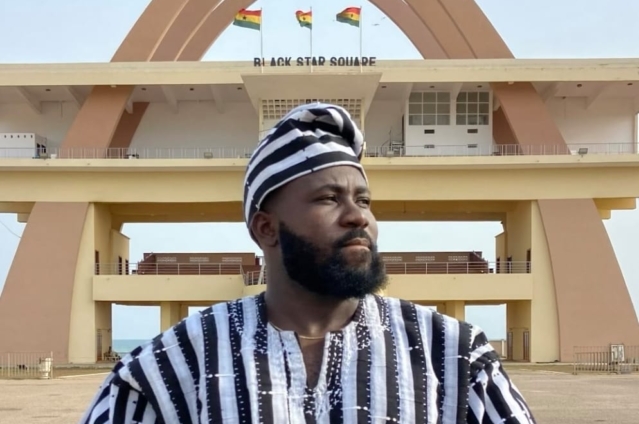
We see this nationalist pivot in the cultural sphere too; the President’s consistent donning of the Fugu is a powerful visual rejection of the colonial suit and tie, just as the policy shift to embrace local languages in schools attempts to decolonize the cognitive development of the Ghanaian child.
Yet, as stirring as these interventions are, they currently land as superficial tremors rather than a structural long term solution.
Take the cocoa nationalization and the Goldboard initiatives.
While they align perfectly with Nkrumaist ideology, they currently lack the holistic coordination required for long-term survival.
Announcing the nationalization of cocoa is revolutionary, but without a synchronized, aggressive industrialization plan to process that cocoa domestically and a diplomatic strategy to force open protectionist Western markets, the policy risks becoming a populist soundbite.
Similarly, refining gold locally is meaningless if the fiscal regimes governing the mining giants remain largely untouched, allowing the lion's share of profits to undergo capital flight before the gold is even smelted.
The same critique applies to our monetary sovereignty.
The President has hinted that the current IMF programme will be Ghana’s last- a "never again" moment.
We have seen the Cedi stretch and stabilize recently, reacting to these confident assertions.
But stability born of austerity and temporary fiscal discipline is not the same as stability born of production.
A promise to exit the IMF is not an economic structure.
Without a deliberate, legislated strategy to substitute imports with local production, the Cedi remains vulnerable to the slightest global sneeze.
The policies appear as isolated islands of nationalism in a sea of neoliberal dependency- lacking the connective tissue of a grand, long-term legislative agenda.
Even the cultural renaissance feels fragmented.
Promoting the Fugu is noble, but where is the massive state investment in the northern cotton industry to ensure the fabric is strictly Ghanaian- grown, not just Ghanaian- sewn?
Allowing local languages in schools is vital for "decolonizing the mind," but if the exams, the science curriculum, and the gateway to higher success remain rigidly Anglophone, we are merely decorating the prison cell, not unlocking the door.
This is the crux of our unfinished revolution.
We have the gestures of independence- the nationalized rhetoric, the traditional attire, the promises of fiscal autonomy- but we lack the substance.
We are attempting to run Sovereign Software on Colonial Hardware.
Real independence requires more than ad-hoc interventions.
It requires a total rewiring of the state.
It looks like a Ghana where "nationalizing cocoa" is not just a headline, but the start of a domestic chocolate cartel that dictates global prices.
It looks like a Goldboard that is backed by a military-industrial complex capable of defending our resources.
It looks like an education system where Twi and Dagbani are languages of physics and law, not just culture.
It looks like a government that doesn't just promise to avoid the IMF, but builds a tax base and production capacity that makes the IMF irrelevant.
Nkrumah gave us the vision in 1957.
The current administration has picked up the torch, but the flame is flickering in the wind of global capitalism.
The question for 2026 and beyond is not whether we have the will to be free, but whether we have the discipline to stop painting over the cracks of the colonial machine and finally, bravely, build a new engine entirely.
Until then, our independence remains a beautiful, unfinished paradox.
Written by:
Frank Quaye
Legal Activist
Latest Stories
-
Keep the money in Ghana – Gov’t enforces local cargo insurance
36 minutes -
US Army veteran charged with leaking classified information to journalist
54 minutes -
Dr. Dre joins Forbes billionaires list as second-richest hip-hop artist with $1 billion fortune
55 minutes -
Trump administration cannot nix legal status of 5,000 Ethiopians, US judge rules
1 hour -
Libya announces new oil and gas discoveries with three major energy companies
1 hour -
Oil rises as investors remain wary US-Iran ceasefire will open supply flow
1 hour -
Police arrest suspect over church threat video
3 hours -
Eight appear in court as police intensify crackdown on illicit drugs in Tamale
3 hours -
Motorist remanded in custody for hitting four-year-old girl
4 hours -
Mobile money vendor robbed at Ziope
4 hours -
Benin’s Finance Minister Wadagni seeks his own mandate in election
4 hours -
GNFS retrieves body of unidentified man from Asylum Down drain
4 hours -
CAF’s Motsepe to visit both Senegal and Morocco amid AFCON fallout
4 hours -
Edmond Boateng takes up secretary role at Honorary Consular Corps of Ghana
5 hours -
Armed men kill 20 and abduct others in northwestern Nigeria villages
5 hours