


Audio By Carbonatix
Hiding in a bush, draped in tamarind tree branches and waiting for a hapless goat to stroll by might seem an unlikely way to earn a dollar.
But grabbing a creature unawares while it is tucking into its favourite food is just one of the creative methods used by crafty thieves to snatch livestock in Antigua.
Theft of animals on the eastern Caribbean island is big business. And the traditional practice of allowing goats and sheep to roam free makes them easy prey.
Goats can sell for thousands of dollars each; two or three month's salary for many islanders. And it is putting local farmers out of business.
Goat snatching losses
Byron Lee's animals are kept penned but that has not deterred the crooks. He estimates he has lost $40,000 (£32,000) worth of livestock over the years; all the more galling in a country where $40 is a standard day's wage.
The last theft was keenly felt; his prize goat for which he had paid more than $3,000.
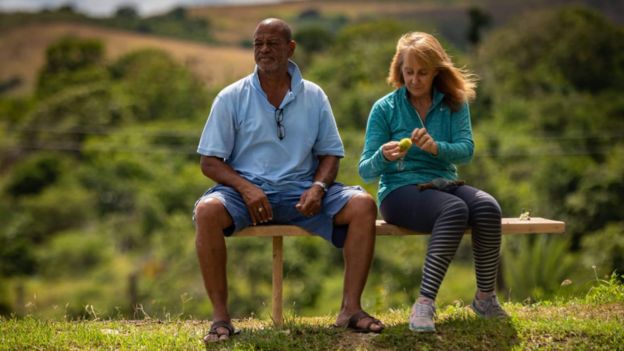
Lennox and Fiona Francis are trying new approaches to goat farming
At Goatland, Simon would likely be the first to spot an intruder. A hulking mass of muscle, milky fur and sharpened senses, this majestic Akbash dog with imposing height, and his sister Simple, are tasked with guarding Mr Francis' 3.5-acre farm and its 150 cloven-footed residents.
While Simon diligently scouts the perimeter, Simple watches her flock, a silent but steadfast sentry.
The electric fences and security cameras are an equally rare sight on Antiguan farms.
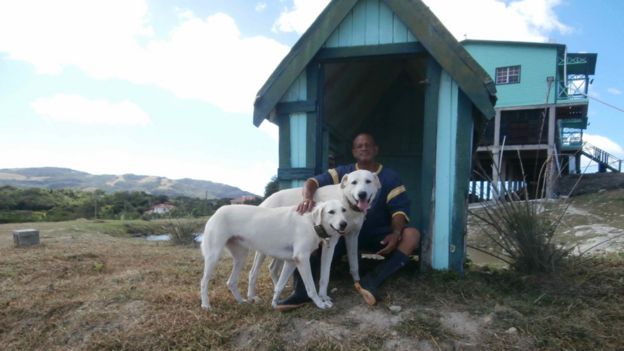
The Akbash dogs provide security for the goats
From poop to power
But Goatland's fresh approach to agriculture goes beyond its savvy surveillance systems.
Set on a former sugar plantation, it is eco-friendly throughout and more than half the creatures here have been hand-reared. The goats' two-storey "home" with solar-powered lighting is constructed almost entirely of upcycled shipping pallets, slathered with waste engine oil to preserve the wood.
Daily poop collection might not sound an enticing chore but it makes for a cheap, efficient and readily available source of energy. Each night, the faeces are loaded into a bio-digester that produces methane to power a cooking stove for staff.
Even better, the slurry created is an excellent organic fertiliser, says Mr Francis, gesturing to an adjacent field abundant with mango and soursop trees, avocado seedlings and coconut palms.
A handful of Goatland's other inhabitants will not be going anywhere near the abattoir. Bambi, the sole fallow deer, was brought to Mrs Francis' veterinary surgery from Antigua's sister island Barbuda with a broken leg after Hurricane Irma.
And Bob the Friesian bull, attacked by dogs at two weeks' old and nursed back to health, will also live out his years here.
Mr and Mrs Francis plan to develop a unique breed of goat, hardy enough to withstand the drought-prone climate which poses additional headaches for Antigua's embattled farmers.
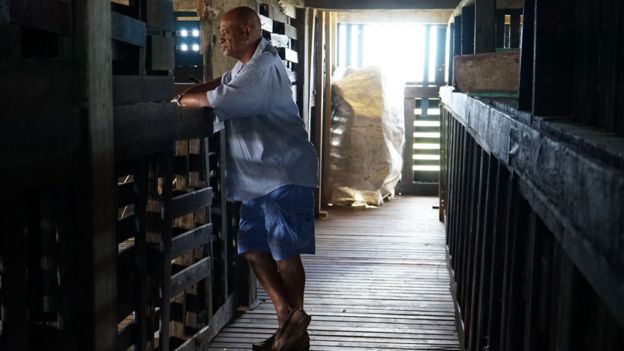
Old pallets were used to build the goat shed
For Mrs Francis, originally from Watford, England, the project followed extensive research to identify the best goat genes for the climes, and training in artificial insemination.
"My vision is to provide a supply of a superior breed stock of goat to Antiguans who wish to go into livestock farming, and to showcase a production method that's sustainable and profitable here," Mrs Francis, who also makes soap and cheese from the animals' milk, says.
Low-maintenance New Zealand Kiko goats, like the sturdy-looking horned couple nicknamed John and Tina, are being bred with local varieties, including some from the country's uninhabited third isle, Redonda.
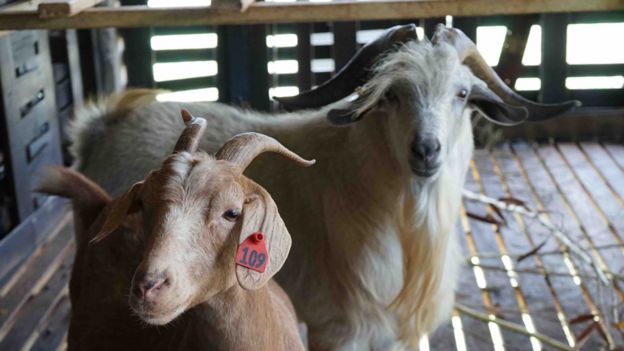
John and Tina seem right at home in Antigua
If successful, Goatland could help reduce Antigua's reliance on costly meat imports which topped $20 million in 2017.
Training the next generation
Training the next generation of farmers will be critical and visits by local schools are encouraged.
"We're trying to get children interested in agriculture," Mr Francis explains. "We're meat eaters in the Caribbean; everyone loves their curry goat and baked lamb. But someone has to look after those animals, and that means hard work.
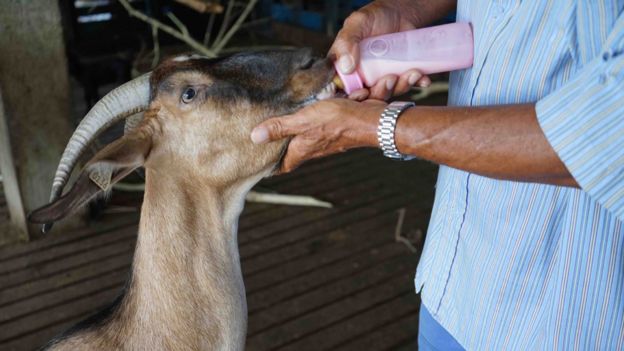
The goats are hand raised
"Farmers use so much energy searching for their animals when they let them roam," he continues. "Plus, wandering creatures cause road accidents and are always impacting someone else's garden or crops."
Owalabi Elabanjo, from the ministry of agriculture, hopes the proposed introduction of identification cards for farmers will bring greater control over the largely unregulated sector.
Educating local businesses about the requirement to see the cards before buying meat might deter people from becoming accomplices to the illegal trade, he says.
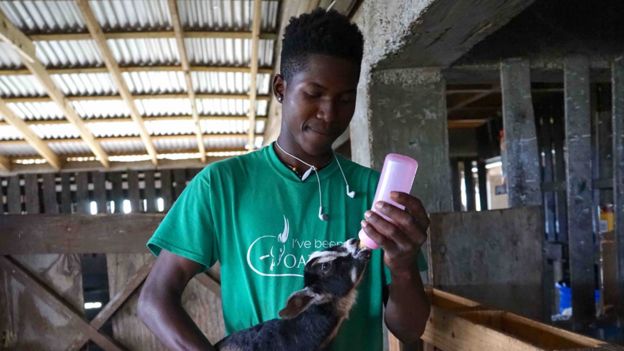
Lennox and Fiona Francis are keen to pass on their knowledge to youngsters on the island
"Livestock theft has been going on for decades. I don't believe there's a single farmer in Antigua who hasn't been a victim," Mr Elabanjo adds.
"The country doesn't yet produce enough goats to meet our demands but with better regulations, farmers could focus on production and help reduce our import bill. It would also mean they make more money and have a better life."
Latest Stories
-
Ghana–China Forum explores zero-tariff trade opportunities
15 minutes -
What is wrong with us?: A quiet truth we can no longer ignore
28 minutes -
What is wrong with us? : When sirens become symbols of power rather than protection and emergencies
47 minutes -
Businesses scramble to get noticed by AI search
1 hour -
From perk to performance: Why employee wellness must be a core business strategy
1 hour -
Bank of Ghana’s $1.3bn profit from gold sale could help narrow 2025 losses
2 hours -
Odau Twafohene Baffour Osei Afrifa appointed Regent of Akyem Chia
2 hours -
We are focused on engineering low interest rate regime – BoG Governor assures
2 hours -
How Sporting hero Gyokeres could end European run
2 hours -
The attack on Ghanaian traders in Burkina Faso and the blame game: Why Hybrid Security Governance Holds the Key (II)
2 hours -
Bayern face waiting game on ‘very special’ Kane
2 hours -
The Problem with Nutrition Advice on Social Media – Lessons from a study among University Students
2 hours -
Arteta calls for perspective as Arsenal look to avoid slump
2 hours -
Kasoa Old Market traders given final eviction notice ahead of redevelopment
2 hours -
GH¢15 sachet water price is a ceiling, not fixed – Producers clarify
2 hours