

Audio By Carbonatix
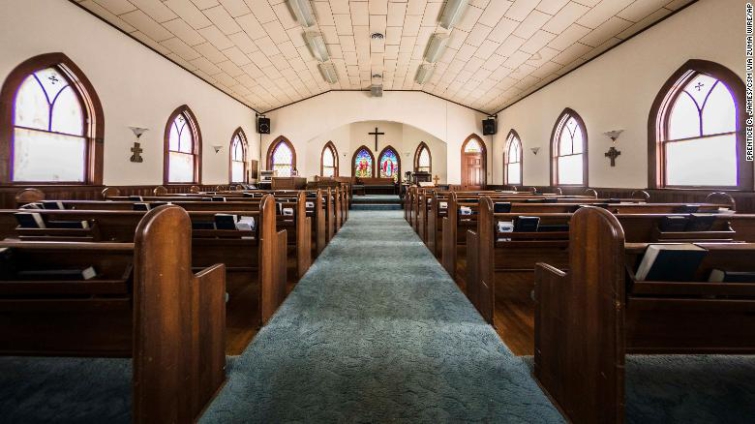
Churches all over Ghana have been hardly hit by the lockdown, government restrictions on social gathering and social distancing protocols. Many churches have had to forgo in-person services to follow government orders not to gather in large groups and maintain social/physical distance of at least 2 meters between individuals in an effort to curb the spread of the novel coronavirus.
These restrictions are set to continue for some time. Most churches have thus had a dip in their financial resources amidst the corona virus scourge and its unintended consequences. Whilst some of the churches have leveraged on Information Communication Technology (ICT) to at least fill the financial gap created by COVID 19, others are still stuck in a quagmire of finding solutions to fill the gap.
Most churches’ revenues are hinged around offertory, tithe and donations. Whilst Offertories are largely received every Sunday, tithes are received at the need of the month. This however depends on the church service arrangements of every church. Donations on the other hand come in periodically from members to assist in diverse church activities.
In the midst of this lockdowns and restrictions on physical distancing, churches have resorted to online streaming of their activities. This means that they will still need money in terms of the purchase of internet data to fund such activities and this will obviously add on to their already dire situation.
Churches have a unique way of managing their cash flows but what is peculiar to some of them and especially the orthodox churches are that, funds are remitted periodically from the lowest tiers to the head offices. These funds are to ensure that overhead expenses at the head offices are adequately taken care of.
For example, in the Methodist Church, societies remit a percentage of their revenue mobilization to the Circuit, Diocese and the Connexion (the highest of the tiers). Thus the higher tiers are greatly impacted if the society suffers. Meanwhile, these higher tiers need money to pay for salaries, stipends and other fixed administrative costs.
Ghana’s economy is largely informal and this means that individuals largely accrue revenue daily. These individuals who have been hardly hit by the lockdown and others restrictions are also members of the church. Some have even been laid off and are finding it difficult taking care of themselves.
Their daily stream of finance have been truncated and are meanwhile servicing other personal fixed cost such as electricity, water, housekeeping among others. The effect is that, individual funds such as offertories, tithes, donations, etc. which hitherto fed into the church’s pool of financial resources has dwindled.
The individual at this point will first look at his survival before the church’s interest hence the dwindling effect on the finances of the church. A recent poll on the United States released by the National Association of Evangelicals revealed that 65% of churches have had a decline in their givings. Other research works have shown that church closures due to the coronavirus have affected the bottom line of many churches.
I believe that in an attempt to cushion themselves, churches should be able to do the following:
Contingency funds should be set up by churches and at each level of the church’s tier for churches with tiers. A percentage of their resource mobilization should be paid into this fund periodically. This fund should solely be used in times of emergencies like this where means of raising funds are scuttled. Also, individual members should be encouraged to donate into this fund
In this regard, percentages that lower tiers remit to the upper tiers should be reduced so that they can resolve the challenges they face at the local level.
Churches should also be encouraged to employ the use of Information Technology in their resource mobilization effort. This will ensure that the church does not only have to wait till Sunday to receive money from their congregation but at all times.
It will also offer distant members the opportunity to directly fulfill their obligation without hiccups. Those with large gatherings can also rake in enough by creating accounts on YouTube and posting their sermons there to attract a lot of views.
In this vein, churches should provide their account numbers to their members and encourage them to either electronically wire their tithe, offerings and other donations to it or write cheques and deposit them in their account. Also, they should sign up for mobile money accounts and encourage members to use that channel to contribute to the church’s finance.
Churches should also use this period to reflect and decide ongoing into other ventures to augment their finances. In recent times, some churches have ventured into the production of sachet water and others into printing and publishing. But my advice is, churches should be wary of whatever venture they would want to engage in, especially looking at the sustainability and viability of the business. A wrong move would rather drain their finances.
In as much they would want to bolster their finances within this period, churches should also be conscious of the predicaments of their members. Some of them will have their income slashed and others laid off and this will hugely have an impact on them. Churches should, therefore, be in constant touch with members, know their personal financial situations and if possible, they should find a way of meeting the basic needs of the underprivileged, especially older members who may be at a higher risk. After all, it is these members who will come back later when all is said and done to release the church from its shackles.
This too shall pass for the battle is the Lord’s.
About the author: Maxwell Kwame Mawuli is the Grants Officer - USAID Strengthening the Care Continuum Project
Latest Stories
-
Asanko Gold supports road rehabilitation to ease transport challenges in Amansie West
22 seconds -
Drone strike hits wedding celebration in Sudan, killing at least 30 people
10 minutes -
UEW Public Lecture Series 2026: We’re preparing children for a past that no longer exists — Dr Ibn Chambas warns
16 minutes -
AMA to begin night enforcement against unscreened food vendors
17 minutes -
Nkawie Circuit Court remands 30-year-old mason over Mpasatia shop break-in
19 minutes -
Fintechs’ collaboration no longer optional – MMFL CFO
21 minutes -
KMA to prohibit other assemblies from accessing Oti landfill site over looming sanitation crisis
23 minutes -
GTA supported A Plus’ Gomoa Easter Carnival – Abeiku Aggrey
24 minutes -
GRA to tighten controls on importation of right-hand drive vehicles
42 minutes -
You can’t leave a bigger legacy than Petroleum Hub project – Western Regional Chiefs tell President Mahama
43 minutes -
Lawra MP cuts sod for GH₵11m multipurpose dining hall construction at Birifoh SHS
45 minutes -
Ghana defend African Schools Football Championship title after shootout win over Burkina Faso
48 minutes -
Ghana’s education system must evolve or risk becoming irrelevant – Patricia Obo-Nai warns
55 minutes -
Ghana Health Service responds to dead fish incident at Tema Port
1 hour -
David Vondee lauds Mahama for emergency Cabinet meeting and key resolutions
1 hour