

Audio By Carbonatix
An Economics lecturer at the University of Ghana says the recent cedi appreciation must be viewed with caution, warning that the underlying fundamentals of the economy have not changed.
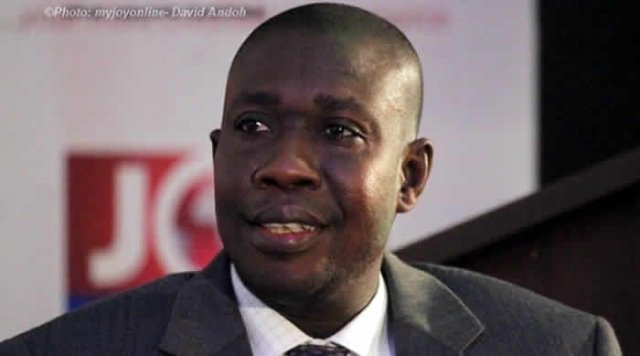
Professor William Baah Boateng, speaking on Joy News’ PM Express Business Edition on Thursday, May 8, cautioned against being carried away by the strengthening currency, especially when the structure of the economy remains unchanged.
“When you look at the structure of the economy, we still have the same structure as it used to be last year,” Prof. Baah Boateng said.
“But something is happening in terms of the fiscal. Government has tried as much as possible to manage expenditure, and that is one thing you cannot lose sight of.”
He clarified that the current policy posture should not be confused with aggressive cost-cutting.
“Government is not cutting expenditure. We have to differentiate between cutting expenditure and managing expenditure,” he said.
“Government is making sure that the expenditure it incurs will be supported by economic activity. That helps tame the fiscal side.”
Prof. Baah Boateng explained that such fiscal discipline is easing pressure on the monetary side.
“Now, if fiscal is putting its acts together, then it means that the mess will not be there for the central bank to come in. The central bank will have peace of mind to focus on monetary and exchange rate policy,” he explained.
He also weighed in on calls from some business leaders, particularly those in GUTA, who are celebrating the cedi’s strength and predicting further gains.
“I disagree with my friend from GUTA who said he would be happy to see the dollar go from ¢13.49 to ¢5,” he said pointedly.
“I’ll be happy if he says that when the dollar goes down, he will reduce his prices accordingly. But if that’s not going to reflect in the domestic market, then we have to be very careful.”
Prof. Baah Boateng was especially critical of traders who increase prices when the cedi weakens but fail to reduce them when it appreciates.
“If the cedi is appreciating, then they should reduce the price in anticipation of further appreciation,” he insisted.
“Importers always increase prices in anticipation of depreciation. Let’s see the same behaviour in reverse.”
On the role of the Bank of Ghana, the economist praised the central bank’s calm stance.
“What I see the central bank doing is watching and not just reacting,” he said.
“There’s no economy that has only demand and supply doing everything. There is always some regulation. So the Bank of Ghana’s posture is prudent.”
He cautioned again, “Don’t let us just talk about perfect competition or extreme monopoly. No economy is purely one or the other. There is always intervention.”
Prof. Baah Boateng emphasised that while the current economic environment appears to show signs of recovery, the fundamentals require sustained structural reforms and responsible fiscal management—not just short-term currency appreciation.
Latest Stories
-
Aggrieved cocoa farmers urge Parliament intervention
3 minutes -
Ghana launches first maternal mental health policy
6 minutes -
Mahama issues three calls to action at One Health Summit
11 minutes -
KNUST secures $2.3m funding for research activities
15 minutes -
Ayigboe residents fear disaster as ECG delays repairs on live faulty cables
20 minutes -
PIAC urges investment as oil production falls
23 minutes -
Heath Goldfields seals $2.8bn Trafigura deal to revive Bogoso-Prestea
54 minutes -
Trump says US military to stay around Iran; threatens action if Tehran fails to comply with deal
1 hour -
Only 6% insured locally – Prof. Gyampo exposes cracks in import regime
1 hour -
Thousands of containers lost at sea – GSA’s Prof Gyampo warns importers are exposed to risk
2 hours -
Keep the money in Ghana – Gov’t enforces local cargo insurance
2 hours -
US Army veteran charged with leaking classified information to journalist
2 hours -
Dr Dre joins Forbes billionaires list as second-richest hip-hop artist with $1 billion fortune
2 hours -
Trump administration cannot nix legal status of 5,000 Ethiopians, US judge rules
2 hours -
Libya announces new oil and gas discoveries with three major energy companies
3 hours