

Audio By Carbonatix
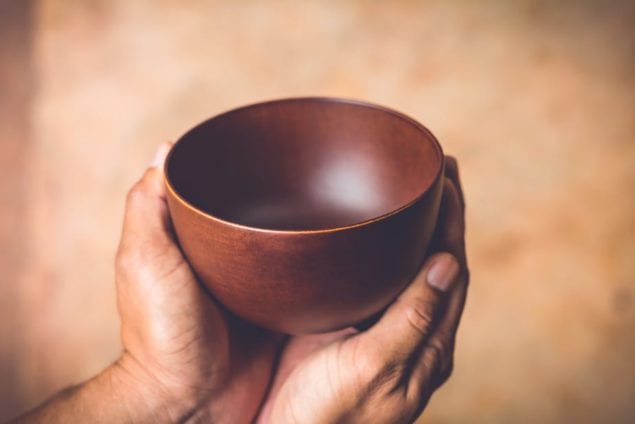
Afua was hungry. It wasn't an unfamiliar feeling to her. She was almost always hungry. Her parents would have fed her if she had been at home, but she wasn't at home. She was in boarding school. Grandma had spent good money to send her there, so she dared not show ingratitude by asking for money to buy food as well. No, she just wanted to study as hard as she could, to make her grandmother proud. But she was hungry.
Studying on an empty stomach was hard. Maths was complicated enough after a hearty dinner, but Esther hadn't eaten for two days. It was a pity though when there was so much fresh food at home: Yam, kontommire, plantain, tomatoes, eggs, fish… just thinking about it made her all the hungrier.
That weekend, she went home to visit her parents, and on her way back to school, brought along some fresh produce. The jeers and taunts of her school mates as she crouched over a makeshift hob to cook every day was the least of her worries. Her biggest concern was the fact that most of her fresh produce would often go bad before she had a chance to cook it. With time, she figured out that if she ground the tomatoes, parboiled her plantains and greens, smoked her fish, all in advance, and packed them airtight, not only did they last longer, but they took less time to cook. Afua now had the time - and strength - to study just as hard as her classmates.
The results were phenomenal. In 1936, Afua won a scholarship to Achimota School. She was now in the big leagues. But instead of savouring her achievements, Afua was worried about what to do for food, now that she was so far away from home. Her school mates were rich kids - children of diplomats and British expatriates with larders full of all manner of foreign goodies. Afua spent ages marvelling at exotic jars of marmalade and tins of sardines in her schoolmates' 'chop boxes'. How was it that the white man could make these foods last long enough to travel by ship from England to Ghana, and she couldn't make her kontommire last from Peki to Accra?
Well, if there was anything Afua could do well, it was adapt. Her parents hadn't named her Esther for nothing. Before long, she had started making Marmalade and Orange juice using the sweet local oranges. They tasted so good that her mates started buying from her. Soon, the teachers joined in, and by the time she graduated with a Cambridge School Certificate in 1941, Esther Afua Nkulenu had a contract to supply Achimota School with enough Marmalade and Orange Juice to feed their all their staff and students.
By 1949, Esther had a roaring enterprise. She was the first Ghanaian to run a formal food processing business in the country. With sponsorship from Achimota, Esther travelled to study cooking in London, and Food Preservation at Bristol University. When she returned, she immediately put her skills to use protecting local food producers from the cheap competition of imported foods. One year after independence, she organised the nation's first-ever Made In Ghana Exhibition. Kwame Nkrumah noticed her efforts and pushed her to stand for President of the Federation of Ghana Industries. And that was how Esther Nkulenu (now Ocloo) started an illustrious career of public service.
Most people find it hard enough to run a small business, but Esther Ocloo successfully managed and grew Ghana's biggest food processing company for many years, while holding several public offices at the same time. Through the fifties, sixties and seventies, she served as Executive Chairman of the National Food and Nutrition Board, adviser to the Council of Women and Development, a member of Ghana's National Economic Advisory Committee, and a member of the Council of State in the Third Republic of Ghana from 1979 to 1981.
Throughout the eighties, Esther devoted herself to the economic empowerment of Ghanaian women. She promoted the availability of credit to women as a founding member and the first chairman of Women World Banking from 1979 to 1985. By the time she died of Pneumonia in 2002.at the age of 83, the hungry girl from Peki had made such an impact, not only in the Ghanaian food processing industry but also in the economic lives of women around the world. She had evolved from the girl who struggled to feed herself into the woman who fed the nation. This Thursday morning on Ghana Week, we celebrate Esther Ocloo, a Great Ghanaian.
My name is Kojo Yankson, and what good is my personal success if I can't make it a national blessing?
GOOD MORNING, GHANAFO!
Latest Stories
-
‘It’s not easy’ – Mother of late Dr Omane Boamah breaks silence
26 seconds -
One dead, six maimed as bloody land feud tears Krachi Nchumuru apart
17 minutes -
Missing service member rescued by US forces after jet downed in Iran, Trump announces
39 minutes -
Gomoa Easter Carnival: Sarkodie, Kuami Eugene, Tinny, set festival ablaze as Day 3 ends on high note
1 hour -
“Feels amazing” – Antoine Semenyo reveals after Manchester City dismantle Liverpool
2 hours -
Mahama calls for emergency cabinet meeting over rising fuel prices
2 hours -
Asante Gold reports US$345million loss for 2025
3 hours -
Gov’t making progress in clearing $1.7bn power debt – Mahama
4 hours -
Justice is the engine of growth – Chief Justice
5 hours -
Meet us halfway – Trade Minister tasks private sector with AfCFTA success
5 hours -
After more than 14 years at Atletico Madrid, what next for Simeone?
5 hours -
Conquering the World – Building on the foundations laid by Otto Addo
6 hours -
[Playback] Sarkodie, Kwami Eugene, Tinny, Keche and others thrill fans at Gomoa Easter Carnival
6 hours -
Gomoa Easter Carnival: Experts charge indigenes to own festival to ensure sustainability
7 hours -
Gomoa Easter Carnival: Edem Agbana and Joy Prime fans shower festival with huge endorsements
8 hours