

Audio By Carbonatix
There is a quiet crisis eating away at the soul of Ghanaian society. It is not economic, nor infrastructural—it is existential. We are witnessing a disturbing obsession with titles: Dr., Prof., Engineer, Lawyer, and Architect—anything that offers a façade of prestige. In a culture where respect has become a currency tightly bound to labels, we have turned titles into idols. The result? A nation increasingly blind to substance, and drunk on symbols.
Today, one cannot walk through public life in Ghana without tripping over an avalanche of self-declared titles. “Dr. So-and-so,” “Prof. This-or-that,” even “Engineer” or “Lawyer” prefixed like divine seals to fragile names. And when the academic rigor required to earn these distinctions proves inconvenient, people resort to shortcuts: enrolling in unaccredited programs, purchasing fake PhDs, commissioning contractors to write dissertations, or publishing in predatory journals just to claw their way to “Professor.”
Honorary degrees—meant to honor those whose life’s work has made a significant contribution—have now become ego-badges brandished as if earned in the trenches of scholarship. The Ghana Tertiary Education Commission (GTEC) has rightly raised alarm over this escalating abuse. But regulation alone will not fix what is fundamentally a crisis of identity.
At its core, this is not merely about academic fraud—it is about insecurity disguised as ambition. A society where a person must attach a title to their name to be deemed worthy is a society that has lost sight of what truly commands respect: character, competence, and contribution. And where these are absent, performance must fill the void. We perform importance, we dress up mediocrity, and we decorate emptiness with academic robes.
But here is the truth—when a man becomes truly great, his name becomes greater than any title. Mandela. Achebe. Mother Teresa. Kofi Annan. Their names reverberate with honor, not because of a prefix, but because of a purpose lived out with integrity. The most influential people in history have rarely needed a title to command reverence. Their lives were their credentials.
The widespread misuse of titles is not just tacky—it is tragic. It signals that too many of us do not know who we are without external validation. It exposes a deep hunger not for excellence, but for approval. And so long as we continue to equate titles with value, we will cheapen both education and dignity.
The way forward is not merely to police fake degrees or penalize false claims—though that is necessary. The deeper work is to reorient our values: to teach our children that who you are is more important than what you’re called; that greatness is not conferred by a prefix, but by a life that speaks louder than any title ever could.
Until we cure the insecurity that makes titles feel like oxygen, we will keep choking on the very honors we seek.
-
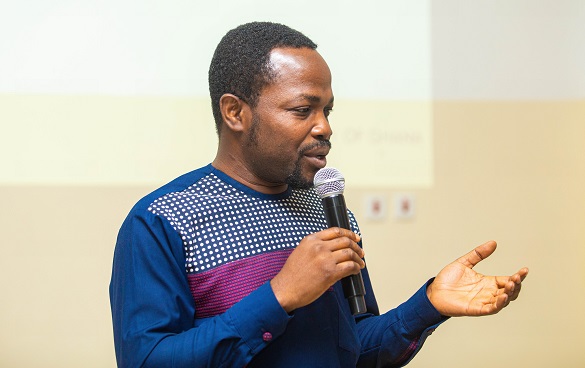
The author, Dr Fred Dzanku of the University of Ghana.
Latest Stories
-
Prudential Life settles GH¢100,000 medical bills under its PRUCares Valentine Experience Initiative
2 hours -
Wa West Picnic: Peter Lanchene Toobu champions peace, health and unity in landmark celebration
2 hours -
Dr Mensah Market flooded after downpour in Kumasi
2 hours -
Armed men reportedly storm Adjen Kotoku Onion Market amid tensions
3 hours -
Tecco Mensah writes: Why football fans must look beyond statistics
4 hours -
Police recover stolen Honda CR-V in Kumasi within 48 hours
4 hours -
Apetorku Gbodzi 2026 Festival opens in Dagbamete with development focus
5 hours -
President Mahama arrives in Lyon to co-chair One Health Summit
5 hours -
Beverly View Plus Hotel draws crowds amid coastal Easter rush in Volta
5 hours -
Maiden Zongo Festival held in Wa amid calls to tackle drug abuse among the youth
5 hours -
FDA warns of fake HIV test kits on Ghanaian market
6 hours -
Africa urged to build resilient health systems as donor support tightens
6 hours -
Easter gesture: Ablakwa settles medical bills for 85 North Tongu constituents
7 hours -
Africa must harness its population strength—Titus-Glover
7 hours -
Visa-free access doesn’t mean unlimited stay – Lom Ahlijah
8 hours