

Audio By Carbonatix
Truly, "We are not in normal times". This has been the cliché to calm all fears and to strengthen us as we fight the one enemy known as "coronavirus".
This enemy rose from an outbreak in Wuhan and now has become a devastating pandemic within a period of months. According to figures collated by John Hopkins University, the United States of America (USA) has, by far, the largest number of cases, with more than 85,000 fatalities, and also has the world's highest death toll.
Followed by France, Italy, Spain and the UK - the worst-hit European countries - with all of them recording more than 25,000 deaths. Ghana has recorded over 5,000 cases with few deaths and a good number of recoveries.
With great efforts to curb and eradicate this enemy, analysis and reports from the World Health Organization (WHO) outlined some directive health protocols which could reduce the spread of the virus. Some of these directives were to; practice social distancing, avoid social gathering - in effect, closing schools and other institutions, and placing limits on traveling. Reports have proven that these directives and others are yielding positive results in controlling the spread, but have we thought of its implications on students in rural areas?
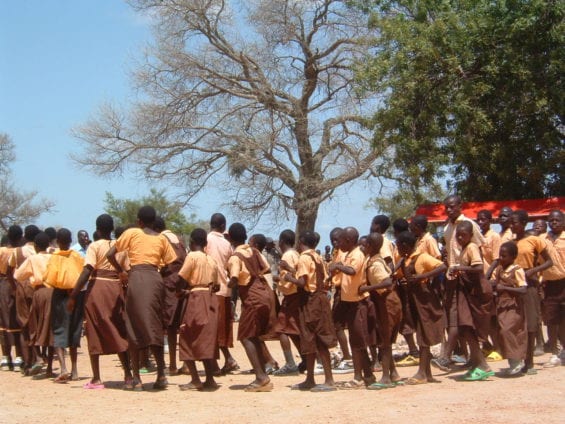
Most students study best on campus than at home. This is because of the availability of reading materials, and other resources. Students, because of the directives by which schools have been closed, are compelled to learn from home. This is a new culture creeping in and it has been very difficult for students especially those in the rural and the peri-urban areas who may not have access to books from a library and assistance of real teachers. This is making studies from such homes a burden for these students.
These same students living in the rural areas became alarmed when there was the introduction of online learning. Without access to electricity, the internet, smartphones and other technological devices, students have become handicapped. This has rather put stress on the students since they have no means of acquiring these devices and accessing the internet to study with their other colleagues.
In attempt to overcome the challenge of eLearning, students who chose to study on their own are gradually becoming independent in studies. The spirit of group work and collective studies is slowing down. If care is not taken, these students may gradually develop the habit of self-centeredness and extreme independence in studies.
As students become restless in prolonged waiting to return to school for studies, they begin to adopt and adapt to new lifestyles that might keep them busy or occupied. Female students who used to spend their vacation learning skills like baking or trading are now idle at home. Male students who used to play around with their other friends have their movements restricted. It is no doubt that in their youthful ages, they have very strong sexual desires. If not checked, these male students, having nothing else to do, might start exercising orgasms.
It could be observed that most students in the rural areas depend on relatives in the urban areas to support them. Such support often comes in the form of clothing, provisions, stationery, food, etc. These benefits have now reduced since there are limits on traveling and doing business. This is making life for the students very difficult.
Also, those families who took loans or sold properties to send their wards to school are living in despair. This is affecting their wards since their families now see them as burdens or the unfortunate ones in the family. These feelings of the students could lead to depression and other emotional, psychological and physical challenges with time.
In as much as the President strives to put these helpful measures in place to control the spread of the coronavirus, there is the need to look beyond and reach out to students in rural areas who are disadvantaged due to these laid-down measures.
Author: Rev. Fr. Stephen Kofi Sakpaku
Email: sonnichristus@yahoo.com
Latest Stories
-
Mustapha Abdul-Hamid declares bid for NPP National Vice Chairman
4 minutes -
NRSA boss defends planned closure of garages involved in illegal left-to-right steering conversions
9 minutes -
Invite more investors to explore Ghana’s oil and gas potentials – PIAC to gov’t
19 minutes -
Ghana, Egypt move to deepen cooperation in border security, counter-terrorism, cybersecurity
27 minutes -
Guggisberg Fiagbenu enters race for Central Tongu NPP Chairmanship in Volta region
41 minutes -
Today’s Front pages: Thursday, April 9, 2026
1 hour -
“Black Stars have what it takes to win the World Cup” – Sports Minister Kofi Adams
2 hours -
Bank of Ghana Governor to perform official tee-off at 3i Africa Invitational Tournament
2 hours -
Chamber of Bulk Oil Distributors urges caution amidst Special Prosecutor’s petroleum probe
2 hours -
NDC elections: Nat Tetteh eyes Eastern Regional Deputy Secretary position
2 hours -
Ablakwa highlights Ghana-France cooperation, praises Macron on reparatory justice
2 hours -
Protect people, not prices – Joe Jackson rejects fuel tax cuts and subsidies
3 hours -
Finance Ministry, BoG clarify false claims about Databank’s bond market specialist status
3 hours -
Lawyer petitions President to halt Terminal 2 refurbishment over value-for-money concerns
3 hours -
Sunyani Market traders urge government action amid surging ginger prices
3 hours