

Audio By Carbonatix
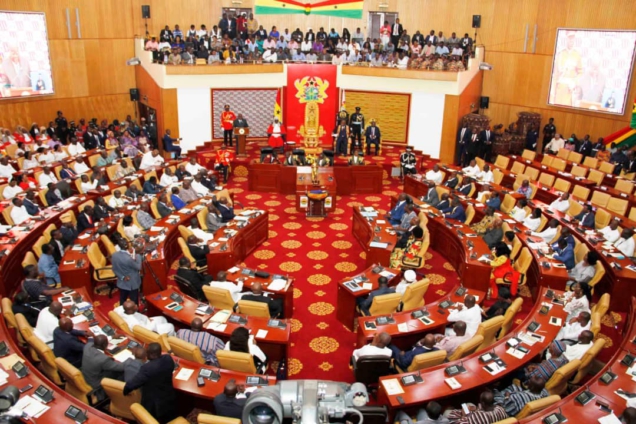
A parliamentary discourse analyst and research fellow, Prof Kwabena Sarfo Kantanka, says that the “law is too loose” and allows MPs to absent themselves from Parliament too easily.
According to him, the current allowance of fifteen days for MPs' absenteeism is too high, emphasising that MPs are supposed to be in Parliament to discuss government business.
Speaking on Top Story on Friday, June 21, Prof. Kantanka said that constituents should be angry if their MP, who is supposed to be in Parliament to conduct government business, is absent.
“If every worker in this country is doing the same thing, what do you think will happen? The country will come to a halt. The MPs are the ones making the laws for us and if they are doing this then what do they expect from other workers of this country,” he asked.
He stated that it is “unfair” and “uncalled for” what is happening, suggesting that the country should seek new initiatives to address the issue of MPs' absenteeism.
“The laws there are not biting. If you have 15 days and I absent myself for 13 days and I come on the 14th day, that is canceled, the law doesn’t hold me to anything.
“In fact in 2017 when Odikro did the absenteeism report, one of the suggestions that were made was that the 15 days was too high. If you have 15 days to be able to absent yourself from Parliament, that’s too high,” he said.
Prof Kantanka argued for a reduction in the number of days MPs can be absent from Parliament.
“..It should be reduced about 7 days. Laws can be passed, Parliament can do something about this,” he added.
The research analyst also noted that the Privileges Committee of Parliament has lost its ability to punish MPs because all its members are MPs themselves.
“...They [MPs] don’t have the strength to punish each other and therefore I feel that we need to take a second look at what is happening. If we have to pass legislation - Parliament is a law-making body. Something can be done about this so that bitter punishment can be metered out to those who absent themselves,” Prof Kantanka said.
Latest Stories
-
Knights and Ladies of Marshall group backs Catholic Bishops’ stance on anti-LGBTQ+
12 minutes -
Bright Simons writes: All the Filla in the Ibrahim Mahama/E&P – Gold Fields Saga
36 minutes -
Monetise Idiocy In Ghana
43 minutes -
The Ghanaian prophet and the mysterious death of his scottish wife Charmain Speirs
1 hour -
Nearly 400 sentenced in Nigeria for links to militant Islamists
2 hours -
Ghana’s recovery supported by gold strength despite global oil price pressures – Standard Bank Research
2 hours -
‘Excellence is our inheritance’ – Nana Sam Brew-Butler hails Mfantsipim’s 150-year reign in leadership
2 hours -
Kwaku Azar writes: A-G vs OSP
3 hours -
Mfantsipim–Adisadel rivalry built excellence, not division – Sam Jonah
3 hours -
Vice President launches Mfantsipim’s 150 years of shaping Ghana’s greatest mind
3 hours -
I assure Otumfuo, Mahama will join him to commission KNUST Teaching Hospital by end of this year – Haruna Iddrisu
4 hours -
Barcelona dominate derby to extend La Liga lead
4 hours -
Gov’t to roll out free special education for persons with disabilities from July 1 – Education Minister
4 hours -
Importers and Exporters Association declares full support for Publican AI port system
5 hours -
“We used it to test our officiating officials’ readiness” – Bawah Fuseini after CAA Athletics event
5 hours