

Audio By Carbonatix
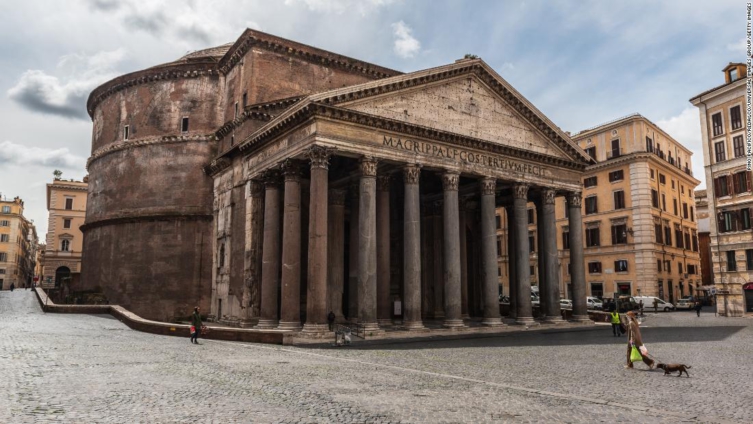
When visitors walk into the Pantheon in Rome and encounter its colossal dome, they may experience the same theatricality as its guests nearly 2,000 years ago.
"Anyone who steps inside the Pantheon immediately feels the crushing weight of human history, but also the incredible lightness of human creativity," said John Ochsendorf, professor of architecture at MIT and former director of the American Academy in Rome.
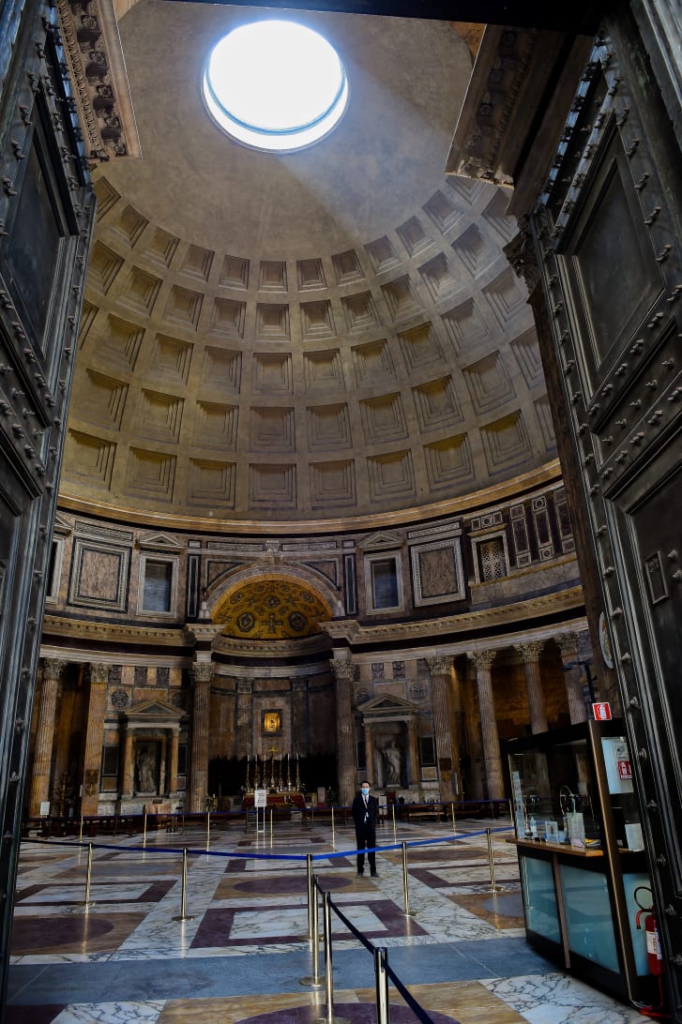
"You come into this grand space and you look up and you see the sky or a passing cloud. And you think: 'How could they have done this nearly two millennia ago?'
"The Pantheon is the oldest building in the world that's still in use today. Since the 7th century, it has been a Roman Catholic church.
Built around 125 A.D. by the Roman emperor Publius Aelius Hadrianus, it was actually the third iteration of the structure. The first Pantheon caught fire around 80 A.D. and was rebuilt shortly after, but it was struck by lightning and burned down again around 110 A.D.
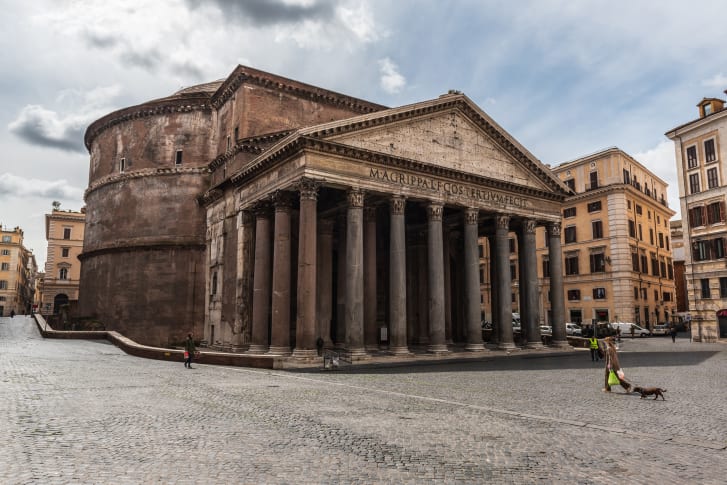
The buildings' ill fate led to rumors that the Pantheon was cursed.The facade of the completed structure riffed on ancient Greek motifs, with a portico entrance featuring a pediment -- a triangular top -- and two rows of Corinthian columns.
The interior was sweeping and airy, capped by a dome that to this day -- is still the largest unsupported concrete dome in the world.
What was it used for?
Pantheon means "all gods," and though it's commonly thought the structure was a site of worship dedicated to Roman deities, its original purpose is actually unknown.
With scant mentions of it in Ancient texts, historians have been left somewhat in the dark.
Though it could be a temple, Roman buildings were typically multi-purpose structures, said Lynne Lancaster, an architectural historian and humanities educator. "And so what actually went on in the Pantheon is hard to say."
Legends say it's the very site where Rome's founder, Romulus, ascended to heaven.
Others believe the Pantheon was where the Roman emperor could communicate with the gods.
Whatever the case, like many Roman architectural feats, the imposing structure was a show of might, an "important symbol of imperial power," said Luca Mercuri, the Pantheon's current director.
Indeed, Roman architecture of the time embodied wealth, strength and dignity.
Centuries later, Neoclassical architects would reference the Pantheon's portico and dome combination to imbue their buildings with those same values, from the US Capitol in Washington, DC., to the Somerset House in London.
How was it built?
The Pantheon was an architectural marvel of the Roman Empire.The oculus -- Latin for "eye" -- stretches 30 feet across, opening the structure to the heavens. The sun beams through the oculus, and when it storms, the rain comes down like a waterfall into the interior.
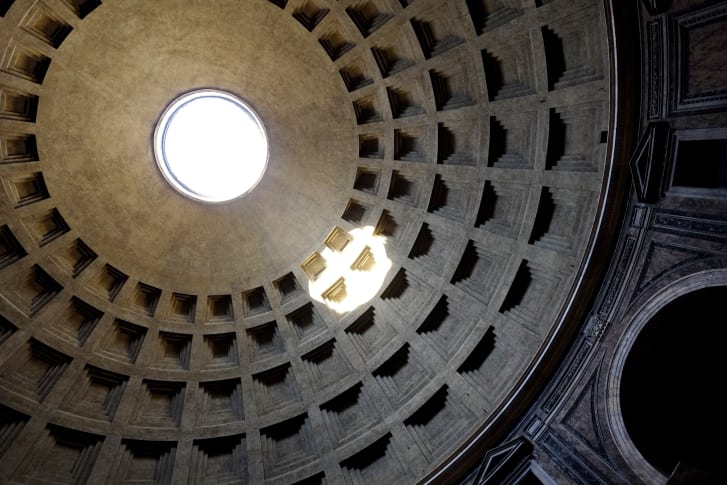
"The oculus at the center seemed to tempt fate and leave (the Pantheon) open to the sky," said Ochsendorf.
"But it also showed a mastery of geometry and construction -- that they could build domes on that scale and leave an oculus open at the center, in a way (that was) almost showing off."
During the Middle Ages, religious leaders, who were incredulous of the feat, cast doubt on the holiness of the Pantheon, believing it to be the work of the devil.But it wasn't Satan; it was engineering.
Though white, yellow, purple and black marble was imported from around the Mediterranean, it was concrete -- a Roman invention -- that allowed architects to do away with load-bearing columns and introduce spacious domes.
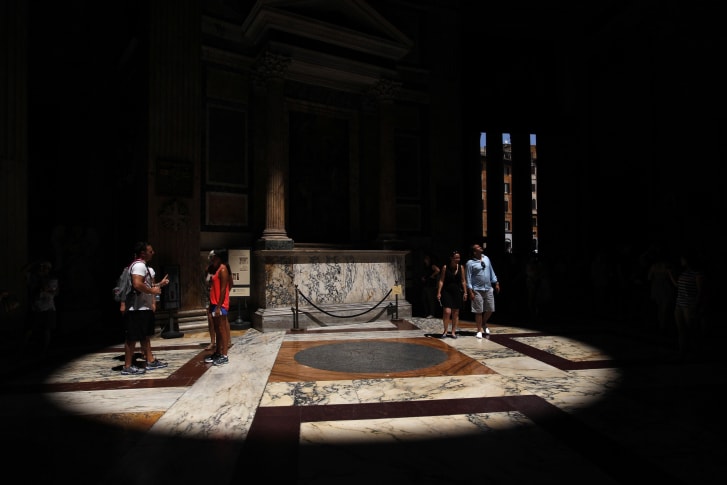
One trick to make a large dome stable was to use progressively lighter stone in the concrete mix as it reached the top. Heavy brick could be used at the base, with spongy, light volcanic rock around the oculus.
Though the Pantheon has revealed some of its design secrets, Lancaster said she still finds magic in the details. As the day progresses, the sun flickers around the dome's interior, casting light over its sunken grid like a giant sundial.
"It's one of the few places in the world (where) you can actually watch the Earth turn."
Latest Stories
-
AGI commends government’s move to resolve the power crisis in Volta and Oti Regions
16 minutes -
IBAG president alleges political interference driving kickbacks in insurance sector
50 minutes -
Trump agrees to two-week ceasefire, Iran says safe passage through Hormuz possible
1 hour -
Dozens killed as Angola flood death toll rises
1 hour -
Russia confirms deaths of 16 Cameroonians fighting in Ukraine war, Yaounde says
2 hours -
Plan to scrap presidential elections puts Zimbabweans at loggerheads
2 hours -
Guinea-Bissau transporters strike over higher fuel prices
2 hours -
Iran ceasefire deal a partial win for Trump – but at a high cost
2 hours -
Oil slides below $100 after Trump announces two-week ceasefire
2 hours -
Madagascar declares state of emergency over energy situation due to Iran war
2 hours -
Ex-Meta worker investigated for downloading 30,000 private Facebook photos
3 hours -
World Bank says Nigerian economy to grow in 2026 but Iran war lifts inflation
3 hours -
Ringleader of suspected human trafficking network arrested in Ethiopia
3 hours -
Alexander-Arnold fails to ease Tuchel concerns as Kane stars
3 hours -
Amad backs Carrick for Manchester United job
3 hours