

Audio By Carbonatix
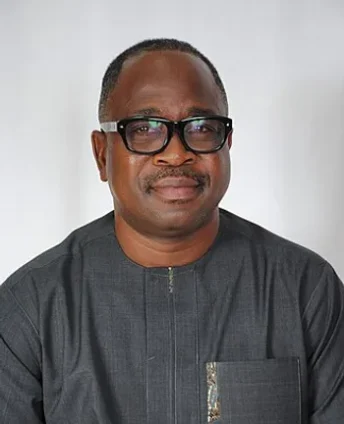
President John Dramani Mahama has once again shown his visionary leadership by appointing Hon. Issifu Seidu as Ghana's first-ever Minister of State for Climate Change and Sustainability.
This groundbreaking appointment highlights the President’s commitment to addressing the urgent challenges posed by climate change and steering Ghana towards a sustainable future.
Hon. Issifu Seidu, the Member of Parliament for Nalerigu/Gambaga Constituency in the North East Region, will now lead Ghana's climate agenda. As a senior government official and Cabinet member, he will play a crucial role in shaping and implementing policies that align with Ghana's development goals while addressing the global climate crisis.
The vision behind the appointment
President Mahama’s decision to create this new ministerial position reflects a deep understanding of the pivotal role climate change plays in Ghana’s development trajectory. By establishing a dedicated ministry for Climate Change and Sustainability, Ghana is positioning itself as a leader in Africa’s climate action efforts. The appointment of Hon. Issifu Seidu represents a significant step towards embedding climate resilience and sustainability into every aspect of national governance.
The work ahead
Climate Policy and Governance
One of Hon. Seidu’s priorities will be implementing a comprehensive national climate change policy. This will involve strengthening institutional frameworks to ensure the effective coordination and enforcement of climate laws, as well as integrating climate change priorities into national and local development plans. His leadership will be key to creating a policy environment that fosters innovation, accountability, and measurable progress in climate governance.
Renewable Energy and Energy Transition
Ghana’s energy sector is at a critical juncture, with an urgent need to transition from fossil fuels to renewable energy. Hon. Seidu must focus on promoting renewable energy sources such as solar, wind, and biomass. Encouraging private sector investment in clean energy technologies and advancing energy efficiency initiatives will reduce emissions, drive economic growth, and create jobs.
Climate Finance and Resource Mobilisation
Securing financial resources is crucial for implementing climate initiatives. Hon. Seidu will need to tap into international climate finance mechanisms such as the Green Climate Fund, Loss and Damage Fund, and Adaptation Fund, while fostering public-private partnerships to fund sustainability projects. Transparency and accountability in the utilisation of these funds will be essential to maintaining public trust and achieving tangible results.
Community resilience and adaptation
Ghana’s vulnerable communities are already feeling the severe impacts of climate change, including floods, droughts, and rising sea levels. Hon. Seidu must prioritise the development of climate-resilient infrastructure, such as flood defences and water management systems. Promoting sustainable livelihoods and enhancing disaster preparedness will be essential to building community resilience.
Mitigation strategies
Reducing greenhouse gas emissions is a cornerstone of climate action. Hon. Seidu will need to champion sustainable land use, afforestation, and reforestation projects, while addressing industrial emissions and promoting clean production technologies. Encouraging sustainable agricultural practices will be crucial in reducing deforestation and soil degradation.
Agricultural waste management and circular economy
Ghana’s agricultural sector generates significant waste, which can be transformed into valuable resources. Hon. Seidu has the opportunity to promote waste-to-energy initiatives and advance circular economy principles, which will reduce waste and maximise resource efficiency. These efforts will not only reduce emissions but also contribute to economic diversification.
Environmental protection and natural resources management
Combating deforestation, illegal mining, and pollution will be central to Hon. Seidu’s mandate. Strengthening laws and enforcement mechanisms to protect forests, water bodies, and ecosystems will ensure the sustainable use of Ghana’s natural resources, balancing conservation with development.
Public awareness and climate education
For climate action to be successful, public awareness and engagement are crucial. Hon. Seidu must lead efforts to raise awareness about the impacts of climate change and the solutions available through education campaigns. Engaging youth and community groups in sustainability initiatives will foster a culture of environmental stewardship across generations.
Regional and global collaboration
Ghana has the potential to become a regional leader in climate action. Hon. Seidu must work to position the country as a leader in ECOWAS and the African Union while representing Ghana at international climate forums such as COP meetings. This will be key to securing support and showcasing Ghana’s progress.
Monitoring, evaluation, and accountability
To ensure the success of climate initiatives, Hon. Seidu must establish robust systems to track progress, publish regular reports on achievements and challenges, and maintain transparency in project execution. These measures will help build confidence among stakeholders and the international community.
Collaboration with civil society organisations
Civil society organisations (CSOs) are vital partners in climate action. Hon. Seidu must work closely with CSOs to leverage their expertise, networks, and grassroots reach. Engaging these organisations will ensure that climate solutions are inclusive and community-driven.
A personal note
As someone deeply involved in climate change advocacy and sustainability, I am thrilled to celebrate Hon. Issifu Seidu’s historic appointment. Over the years, I have worked at local, continental, and global levels to advance climate action and fully appreciate the scale of the task ahead.
While the challenges are considerable, I am confident that his leadership will make a lasting impact. Those of us in the climate space are ready to support him in fulfilling his mandate and ensuring Ghana’s success in this critical area.
Conclusion
Hon. Issifu Seidu’s appointment as Ghana’s first Minister of State for Climate Change and Sustainability marks a transformative moment in the country’s governance and future sustainability. With a clear vision, strategic leadership, and collaboration, he has the opportunity to position Ghana as a beacon of climate action and sustainability. While the task ahead is enormous, the opportunity to create a sustainable future for generations to come is even greater.
Latest Stories
-
Gramps Morgan names Ghanaian business leader Monalisa Effah as Ghana-Jamaica Homecoming Ambassador
34 minutes -
CAF President urges faith in African football despite AFCON 2025 issues
52 minutes -
AFCON U-17: Black Starlets’ aim is to win trophy – Head Coach Prosper Ogum
56 minutes -
ENFA expands access to global capital for Ghanaian SMEs
1 hour -
Beyond security: Why mobile payment fraud has become a customer experience crisis
1 hour -
Former Effia MP demands full disclosure of Truedare AI deal, warns of ‘hidden risks’
2 hours -
Joseph Cudjoe raises alarm over potential revenue loss in Truedare AI Customs deal
2 hours -
Video: Awoshie-Anyaa Highway: Years of fatal crashes caused by faulty traffic lights
2 hours -
No financial transactions with Ghana Card yet, says NIA
2 hours -
Former Netherlands Fire Chief engages GNFS Tema Command on capacity building
2 hours -
Finance Ministry defends Publican AI rollout amid stakeholder concerns
2 hours -
Police arrest 5 in Asankrangwa robbery; cash and guns retrieved
2 hours -
Why I joined NPP – Jeneral Ntatia
2 hours -
Three UDS students remanded over alleged armed robbery
2 hours -
Kudus Mohammed at risk of missing World Cup 2026 after fresh injury blow
2 hours