

Audio By Carbonatix
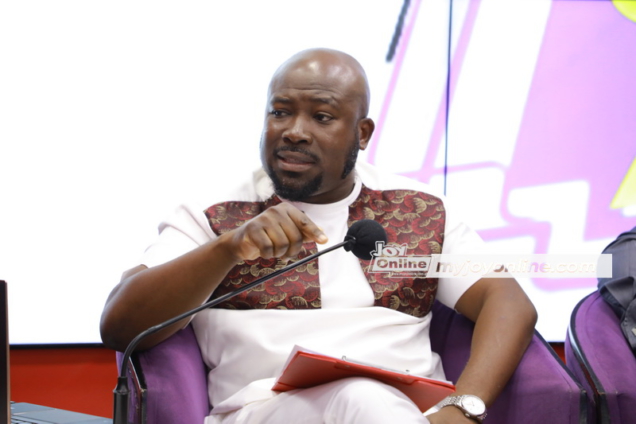
A convener of the Ghana Individual Bondholders Forum, Senyo Hosi, says the government's inclusion of individual bondholders in the domestic debt restructuring programme has the potential to land the country in an even worse economic crisis.
According to him, the debt exchange programme has the potential to crash the faith of individuals in government's financial instruments like bonds and treasury bills.
A phenomenon, he established, could lead to a direr economic crisis as the country is largely run on the funds of individuals and not just companies.
“Every economy has households and by that extent, we are talking about individuals as the primary source of loanable funds. It’s not the firms, it’s not government. Firms and governments actually take money to run the wheels of the economy and households actually provide money to the economy."
"So when you crash the confidence of households or individuals in investing in the economy, you are actually going to be transforming this crisis into a very big economic crisis,” Mr Hosi said on JoyNews’ Newsfile on Saturday.
He explained that it would be best if government explores the recommendations of the technical committee rather than take a decision which might cause people to lose trust in the financial system.
"What is even more critical is the savings and investment culture in the country. For every economy to really thrive it really needs savings to grow,” he said.
Senyo Hosi noted that while he understands the need for the debt restructuring exercise, its effect on households and livelihoods is too grave to be ignored.
“[The debt restructuring exercise] is one of the options that we have available and achieving the DDE (Domestic Debt Exchange) will also definitely help us attain the sustainability that is required and help trigger the reforms or the transformation of the economy."
"So conceptually we are not opposed to the DDE in principle. What we have argued is that to individuals, it is going to be economically catastrophic,” he explained.
Mr Hosi added that, unlike financial institutions which had structures to fall back on, individuals did not have any.
"So there is a financial stability fund, there are forbearances that have been granted them by the central bank; unfortunately, there is a reduction in their capital adequacy ratio, their cash reserve requirement all these things help them recover."
"But for individuals, there is no option like that. Your only option, your only recovery is to hit the floor really hard and pray you survive,” he added.
Latest Stories
-
A source of excellence across generations – Vice President Opoku-Agyemang lauds Mfantsipim
11 minutes -
(Photos) Mfantsipim School launches historic 150th anniversary
35 minutes -
Knights and Ladies of Marshall group backs Catholic Bishops’ stance on anti-LGBTQ+
2 hours -
Bright Simons writes: All the Filla in the Ibrahim Mahama/E&P – Gold Fields Saga
2 hours -
Monetise Idiocy In Ghana
2 hours -
The Ghanaian prophet and the mysterious death of his scottish wife Charmain Speirs
3 hours -
Nearly 400 sentenced in Nigeria for links to militant Islamists
3 hours -
Ghana’s recovery supported by gold strength despite global oil price pressures – Standard Bank Research
3 hours -
Methodist Church hails Mfantsipim@150; calls for “fresh consecration” to excellence
4 hours -
‘Excellence is our inheritance’ – Nana Sam Brew-Butler hails Mfantsipim’s 150-year reign in leadership
4 hours -
Kwaku Azar writes: A-G vs OSP
4 hours -
Mfantsipim–Adisadel rivalry built excellence, not division – Sam Jonah
4 hours -
Vice President launches Mfantsipim’s 150 years of shaping Ghana’s greatest mind
5 hours -
I assure Otumfuo, Mahama will join him to commission KNUST Teaching Hospital by end of this year – Haruna Iddrisu
5 hours -
Barcelona dominate derby to extend La Liga lead
5 hours