


Audio By Carbonatix
The Eisawy brothers share the number of discarded face masks they discover each day to bring awareness to the problem of PPE littering.
Not only has the coronavirus pandemic impacted the way we live, but it's also changed the way we litter.
Brothers Danny Eisawy, 11, and Jojo Eisawy, 9, have been picking up trash around their neighborhood in Tonbridge, England, a city southeast of London, for the past three years.
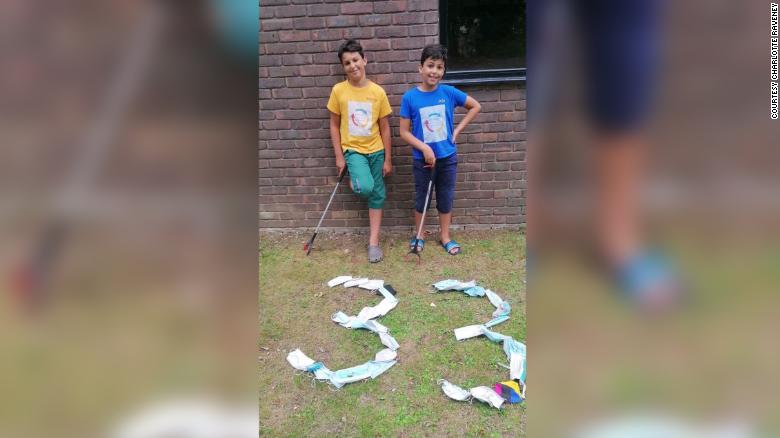
Known by their community as the "Litter Kickers," their passion for cleaning the environment is rivaled only by their love of soccer.
They typically find the usual litter: plastic bottles, cans, candy wrappers, and cigarette butts.
But as their family began to emerge from lockdown, they started to find something new: face masks.
"Why on earth are people dropping plastic gloves and masks in our town?" was the brothers' reaction when they first spotted a used face mask on the ground in May, Charlotte Raveney, their mother, told CNN.
News of our #facemaskmission has crossed the Atlantic - which is a whole lot further than any of the littered #masks we've picked up will now travel! https://t.co/5KiZrpSRmO
— Litter Kickers (@LKickers) September 2, 2020
For the young environmentalists, it was a strange discovery.
"They couldn't understand that people are wearing these things to keep themselves and other people safe ... but then as soon as you're done with wearing it you don't care anymore, and you drop it on the floor," said their mother.
"It's a danger to the person who has to pick it up, a danger to the wildlife, a danger to anyone who is walking past it," said Raveney.
Discarded personal protective equipment into the environment has also become a growing problem for wildlife in several parts of the world.
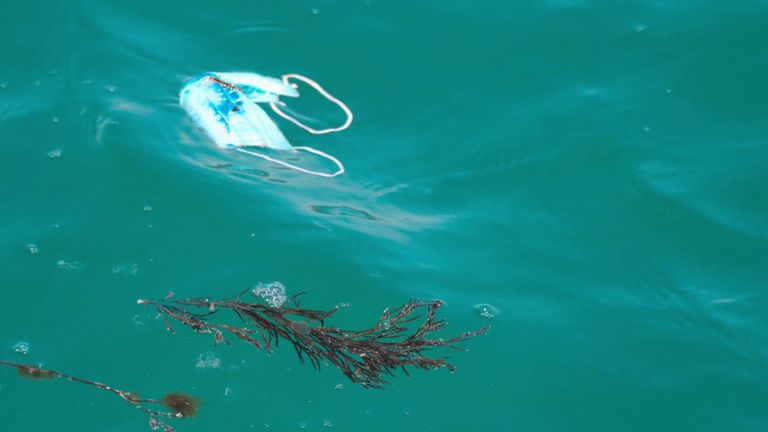
Discarded masks and gloves were found in the water of beaches on the French Côte d'Azur by divers of the nonprofit, Operation Mer Prope, in late June.

The organization that works to save biodiversity by cleaning the oceans of the Mediterranean warned about finding discarded PPE and hand sanitizer bottles in their sea cleanups.
In mid-July, the RSPCA brought in a young seagull with a disposable face mask tangled around its legs to the South Essex Wildlife Hospital.
The mask caused the bird's limbs and joints to swell, according to a Facebook post made by the hospital.
"We have to take this very seriously," Julie Hellec, a spokesperson for Operation Mer Proper told CNN.
"A simple gesture like not throwing a glove on the ground is to save the planet."
Each day the Eisawy brothers grab their litter pickers and trash bags on a mission to see what garbage has been strewn on the streets.
The disposable masks are easy to spot -- they see a flash of blue and dive in with a picker to grab it.
Once it became required to wear a mask at shops, Raveney said the number of people who made the environment a waste bin for their used masks seemed to grow.
Well, sadly we were right & yesterday's #facemask record didn't stand for long. 33 today, from carparks around @sainsburys and @Poundland in #Tonbridge. But we were also lucky enough to uncover some far more rewarding litter too! #COVIDLitter #facemaskchallenge #lovewhereyoulive pic.twitter.com/RRt2m87mRC
— Litter Kickers (@LKickers) September 1, 2020
Last week, when it felt like they had already cleared over 100, the brothers began to count.
"The first time he counted them they were 14. And then the next time 18. And then 22. And then 28 yesterday and 33 today. So it's going up and up. They are everywhere you look."
The Eisawy brothers post updates on social media of how many discarded face masks they find littering the area.
They hope this will bring awareness to the problem of PPE littering and the threat it poses to the environment.
The duo finds the most face masks in parking lots. But their mother says they find them everywhere along their walks especially off the shopping streets.
After finding the soiled discarded masks, the team arranges them into the shape of the number that they found for the day because they want to make a statement to their community.
Afterwards, they properly dispose of the litter in a trash bin and give their hands a thorough washing.
"A lot of people will walk by and ask what they're doing and think 'Ah, I hadn't realized it had gotten so bad,'" said Raveney.
Latest Stories
-
Women and children among those killed in Sudanese army shelling of wedding celebration
2 minutes -
President Mahama is not sincere with Ghanaians on LGBTQ bill matter – Hassan Tampuli
19 minutes -
Gov’t to establish Prison Industrial Hub to equip inmates with income-generating skills – Prison Service boss
38 minutes -
Alhassan Tampuli donates cement, roofing sheets to support storm victims in Gushegu
39 minutes -
Alhassan Tampuli appeals for urgent support for storm victims in Gushegu
41 minutes -
The hypocrisy must stop; pass Anti-LGBTQ+ Bill now – Alhassan Tampuli to Mahama
45 minutes -
Imprisonment should be rehabilitative, not punitive – Ghana Prisons boss at UNGA
1 hour -
Ga Adangbe traditional priests petition Mahama over McDan aviation licence revocation
1 hour -
Anti-LGBTQ Bill: NDC’s arrogance is worrying – Hassan Tampuli
1 hour -
Let’s give OSP time to mature, not to scrap it – Hassan Tampuli
2 hours -
Nigeria convicts 386 Islamist militants in mass trials
2 hours -
Djibouti president wins election with 97.8% of vote, state media says
2 hours -
We don’t have mandate to deduct tax from rent allowance of security services personnel – Interior Ministry clarifies
2 hours -
Ablakwa receives Presidential Special Envoy on Reparations to advance global agenda
2 hours -
Christina Koch becomes first woman to travel around the moon on Artemis II
2 hours