

Audio By Carbonatix
Good Governance Africa, a non-profit pan-African research and advocacy centre, is facilitating the actualization of the full benefits of the African Continental Free Trade Area (AfCFTA) through a public stakeholder sensitization program.
The organization says entrepreneurs in Ghana could be missing out on the opportunities the continental policy presents as majority of them are oblivious of its importance.
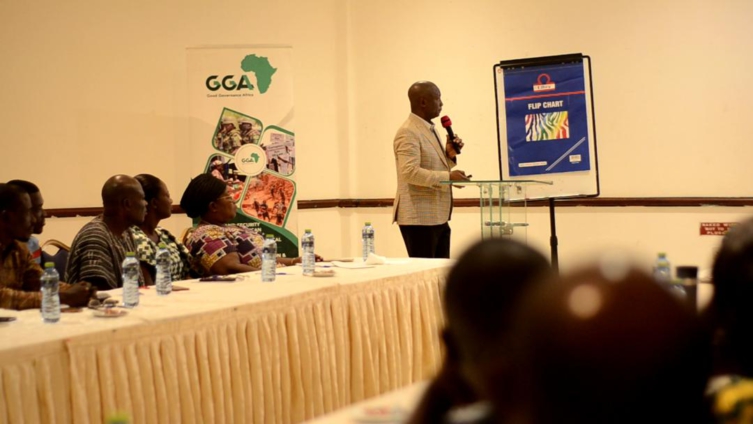
In a bid to acquaint businesses with the trade agreement, the organization embarked on a two-day workshop to reiterate the detailed action plan and benefits of having a single market for Africans.
The African Continental Free Trade Area (AfCFTA), established in 2018, seeks to create a single continental market to boost intra-African trade with free movement of businesses and investments.
The trade agreement, which forms part of the African Union’s Agenda 2063, aims at promoting, enhancing and advancing digital trading and electronic commerce.
But a recent research revealed that about 34% of enterprises in Ghana with majority being women-led are unaware of the policy after its full implementation in January 2021.

Research Coordinator at the West African regional office of Good Governance Africa, Edward Teye Sarpong, emphasized the need to position micro, small and medium scale enterprises to take advantage of the AfCFTA.
“We are following the implementation processes of the National Secretariat. We are looking for pieces of information that are critical for businesses to act on. We package those information sets then create platforms for the businesses to get to know them,” he said.
With Africa’s population pegged at 1.2 billion, the single market is expected to generate an estimated USD 3.4 trillion.
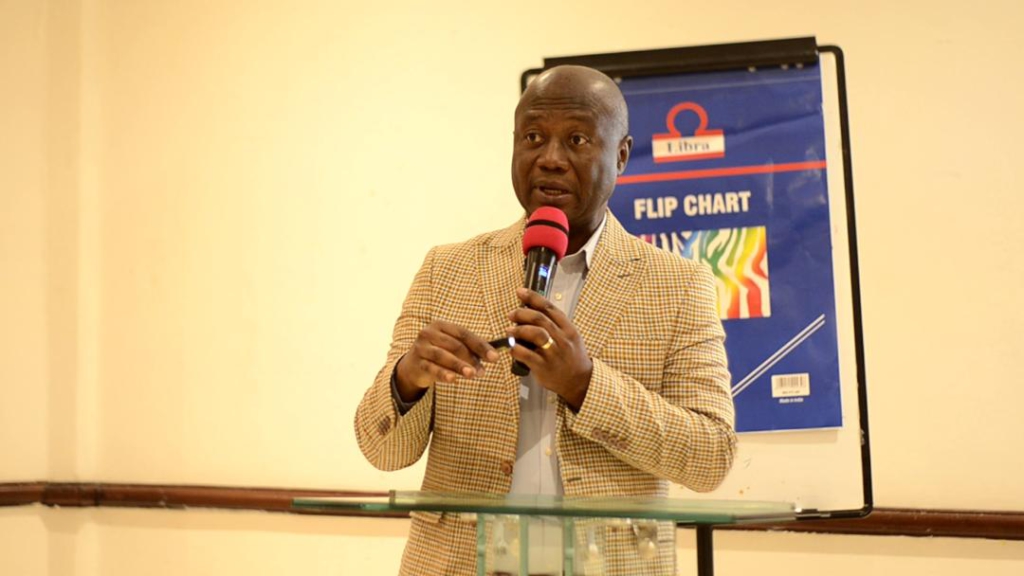
Lecturer at the Department of Planning, KNUST, Professor Dan Inkoom, is advocating a change of mindset and the implementation of policies by the government to create internal demand for locally-made goods.
He believes this approach would avert the taste for foreign goods and help promote AfCFTA.
“The mindset change is very importance. If you’re developing any product, the first thing you have to think about is how to sell it. So you do the business with your consumer in mind. But sometimes the Ghanaian consumer prefers foreign goods to the local ones. One of the biggest steps government can do is to create the biggest demand. Government can introduce policies to ensure we do not import some products,” he said.
The two-day workshop brought together representatives from the business, trade, and commerce community.
Some participants who spoke to JoyNews assured of disseminating the benefits of the trade agreement to businesses in the region.
“AfCFTA is particularly for the business community. Our ability to communicate this policy to them will help make this agreement a success,” a banker said.
Latest Stories
-
We can tackle multiple priorities – Sam George defends Anti-LGBTQ Bill push
34 minutes -
Statement: Ghana Chamber of Mines’ Response to Claims in Joe Jackson’s “Ananse Stories about the Economy of Ghana”
35 minutes -
GES opens 2026 teacher recruitment for licensed B.Ed graduates
37 minutes -
Ghana must value skilled trades, build resilient learners — Ibn Chambas
46 minutes -
Ghana must rethink education around relevance, resilience and responsibility — Ibn Chambas
48 minutes -
Prince Harry faces defamation lawsuit from charity he co-founded
50 minutes -
South Korea deploys thermal cameras to track escaped zoo wolf
52 minutes -
Calls for royal meeting with Epstein survivors grow ahead of US visit
55 minutes -
Ibn Chambas advocates blend of technology and human values in education
57 minutes -
UMA improves healthcare access in Asutifi North with GH₵700k ‘Kim Taylor Legacy’ Walkway
1 hour -
Scholarships Authority and Fanaka University offer sponsorship for procurement and supply chain studies
1 hour -
Bisa Kdei drops new single ‘Go N Look’ featuring Medikal
1 hour -
Benin facing rising terrorism in north as French military presence faces growing criticism
1 hour -
UEW Public Lecture Series 2026: Education debate ‘about the soul of Ghana’s future’ — Dr Ibn Chambas
1 hour -
EU fingerprint and photo travel rules come into force from today
2 hours