

Audio By Carbonatix
US President Donald Trump has said the country's navy will protect ships in the Middle East "if necessary" in a bid to stop the energy supply crunch sparked by the war with Iran.
Trump added that the government will provide "at a very reasonable price, political risk insurance and guarantees for ALL Maritime Trade, especially Energy, travelling through the Gulf".
He said his plan "will ensure the FREE FLOW of ENERGY to the WORLD", but experts warn these assurances might not be enough to ease shipping firms' concerns in the region.
Trump made the announcement on social media as global oil and gas prices continued to surge, sparking global concerns about the impact on household prices.
Oil has jumped 10% since the US and Israel launched their campaign over the weekend, reaching the highest level since last June.
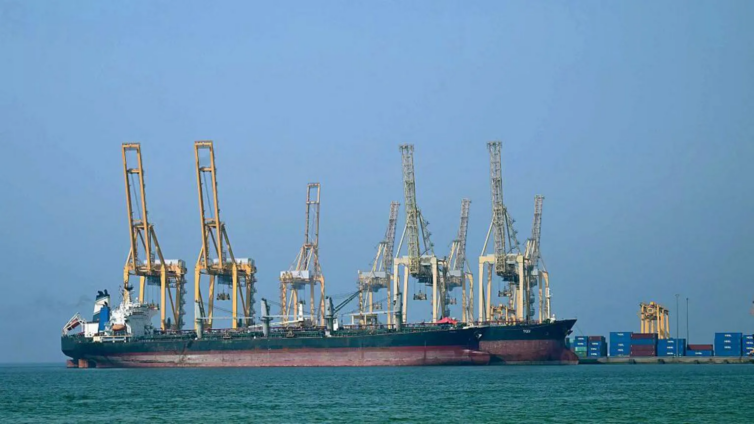
A fifth of the world's oil and gas flows through the Strait of Hormuz, a narrow waterway wedged between Iran and the United Arab Emirates.
But traffic has come to a halt after several vessels were attacked in recent days.Some insurance companies have since hiked the price of policies for ships in the region.
Roughly 200 crude oil and product tankers are now stranded in the Gulf region, according to data from Lloyds List Intelligence.
Trump on Tuesday said he had ordered the United States Development Finance Corporation (DFC) to provide the risk insurance to all shipping lines and pledged military escort "if necessary... as soon as possible".
Oil prices dropped back after the announcement, which came as Trump was due to meet with Energy Secretary Chris Wright and Treasury Secretary Scott Bessent to discuss plans to address the energy issues.
Despite Trump's announcement, Richard Meade, editor-in-chief of shipping journal Lloyds List, said it remained unclear if the US president would be able to address the safety concerns driving the supply crunch.
He noted that Houthi attacks on the ships in the Red Sea in recent years prompted many shipping firms to avoid the passage with longer, more expensive routes, despite intervention by the US military.
"There was never really a point at which insurance alone would have prevented ships from going through the Strait of Hormuz," he said, adding "Just because you've got a naval escort doesn't mean to say you're safe."
Analysts have warned that a prolonged disruption could send crude oil prices above $100 a barrel, which would have a major impact on petrol prices, even in the US, where significant domestic production has tended to mute the impact of global price movements.
Speaking to reporters at the White House on Tuesday, Trump defended the war, saying "something had to be done" about the Iranian regime.
He conceded it might lead to high oil prices "for a little while" but brushed off long-term impact.
"As soon as this ends, those prices are going to drop, I believe lower than even before," he said.
Latest Stories
-
GFA urged to move for Welbeck, Nketiah amid injury concerns
1 minute -
KGL to honour 2025 Corporate Income Tax obligations with GHC150m April payment
21 minutes -
KiDi, Kuami Eugene, Adina, others billed for Okyeame Kwame’s 50th birthday celebration
24 minutes -
Akwapim-Akropong Chieftaincy Clash: One dead after Police shoot-out
26 minutes -
Israel and Hezbollah continue strikes as US-Iran ceasefire faces collapse over Lebanon
28 minutes -
Asanko Gold supports road rehabilitation to ease transport challenges in Amansie West
28 minutes -
Drone strike hits wedding celebration in Sudan, killing at least 30 people
38 minutes -
UEW Public Lecture Series 2026: We’re preparing children for a past that no longer exists — Dr Ibn Chambas warns
44 minutes -
AMA to begin night enforcement against unscreened food vendors
45 minutes -
Nkawie Circuit Court remands 30-year-old mason over Mpasatia shop break-in
47 minutes -
Fintechs’ collaboration no longer optional – MMFL CFO
48 minutes -
KMA to prohibit other assemblies from accessing Oti landfill site over looming sanitation crisis
51 minutes -
GTA supported A Plus’ Gomoa Easter Carnival – Abeiku Aggrey
51 minutes -
GRA to tighten controls on importation of right-hand drive vehicles
1 hour -
You can’t leave a bigger legacy than Petroleum Hub project – Western Regional Chiefs tell President Mahama
1 hour