

Audio By Carbonatix
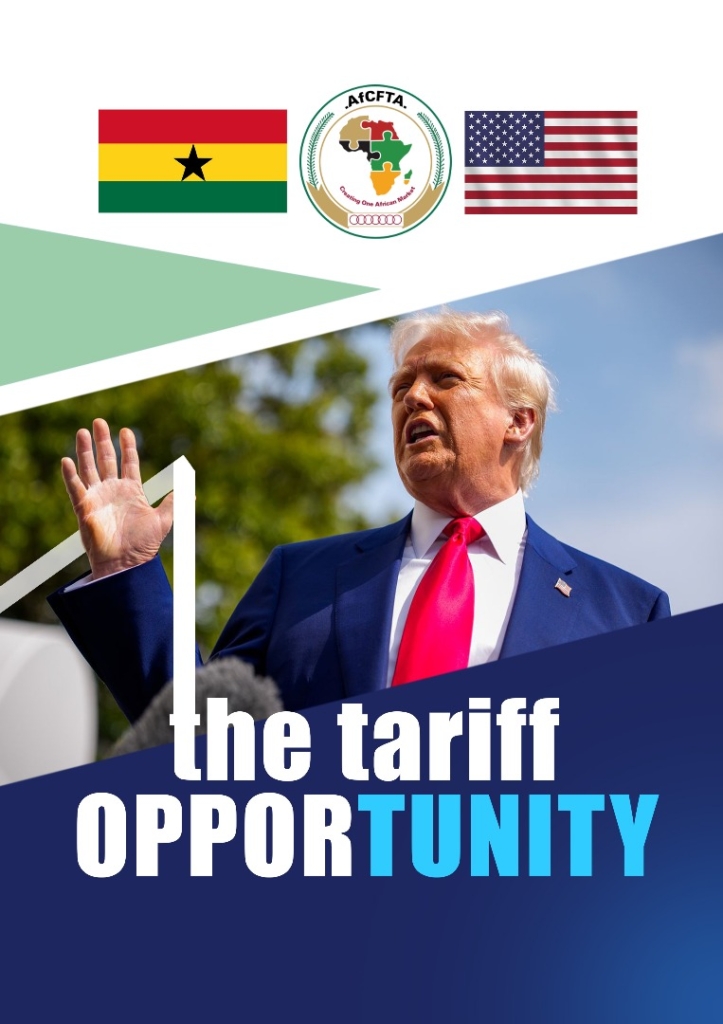
In response to the tariffs imposed by the United States as part of its strategy to reduce its trade deficit with the rest of the world, the Trump administration has implemented a minimum tariff of 10% on exports from several countries to the USA. This is likely to impact heavily on the cost of exports from Ghana and other Sub-Saharan African countries, and this is likely to create challenges for exporters in the region.
Even though this does not appear to be favorable to Ghana in the short term, when compared to other African countries facing even higher tariffs, it presents a very unique opportunity long-term. This relatively lower tariff rate positions Ghana as an attractive destination for international investors seeking to minimize costs while accessing the U.S. market.
Ghana's free zones also offer powerful incentives for export manufacturing companies, including exemptions from taxation, streamlined customs regimes, and a business-friendly regulatory environment. All these are fertile ground upon which manufacturers can establish themselves in Ghana and utilize its strategic position to export products not only to the U.S. but also to other markets around the globe. Through the African Continental Free Trade Area (AfCFTA), manufacturers can tap into the large African market while simultaneously benefiting from Ghana's favourable trade terms with Western economies, including the U.S.
Ghana is also strategically positioned for investors due to our huge ports, particularly the ports of Tema and Takoradi, which help to reduce costs through easier trade facilitation and cheaper costs, as they grant easier connectivity and market access to both the African Continental Free Trade Area and many global regions.
According to the Office of the United States Trade Representative, Africa exported a total of $40 billion in goods to the USA, of which Ghana benefited from only $1.2 billion. This presents a huge opportunity for trade partnerships, which can translate to trade volumes of about $10 - $20 billion progressively in the next ten years.
This can be done by placing Ghana as a pre-manufacturing destination for companies in the USA and with corresponding repackaging companies for some key opportunity zones like North Carolina, North Pennsylvania, and other economic areas.
In addition, Ghana provides access to a pool of inexpensive, skilled labor, further positioning it as a favorable place to locate as a manufacturing hub. This combination of inexpensive labor, good trade policies, and strategic geographic placement positions Ghana as a prime investment site for export-oriented industries. By taking advantage of these possibilities, foreign producers and investors can counteract the impacts of U.S. tariffs while promoting Ghana's economic development and growth.
Latest Stories
-
We can tackle multiple priorities – Sam George defends Anti-LGBTQ Bill push
23 minutes -
Statement: Ghana Chamber of Mines’ Response to Claims in Joe Jackson’s “Ananse Stories about the Economy of Ghana”
25 minutes -
GES opens 2026 teacher recruitment for licensed B.Ed graduates
27 minutes -
Ghana must value skilled trades, build resilient learners — Ibn Chambas
35 minutes -
Ghana must rethink education around relevance, resilience and responsibility — Ibn Chambas
38 minutes -
Prince Harry faces defamation lawsuit from charity he co-founded
40 minutes -
South Korea deploys thermal cameras to track escaped zoo wolf
42 minutes -
Calls for royal meeting with Epstein survivors grow ahead of US visit
45 minutes -
Ibn Chambas advocates blend of technology and human values in education
46 minutes -
UMA improves healthcare access in Asutifi North with GH₵700k ‘Kim Taylor Legacy’ Walkway
51 minutes -
Scholarships Authority and Fanaka University offer sponsorship for procurement and supply chain studies
54 minutes -
Bisa Kdei drops new single ‘Go N Look’ featuring Medikal
1 hour -
Benin facing rising terrorism in north as French military presence faces growing criticism
1 hour -
UEW Public Lecture Series 2026: Education debate ‘about the soul of Ghana’s future’ — Dr Ibn Chambas
1 hour -
EU fingerprint and photo travel rules come into force from today
1 hour