

Audio By Carbonatix
A Technical and Vocational Education and Training (TVET) Consultant, Dr Stephen Turkson, says TVET is a critical instrument for national development and it should not be downplayed by political actors.
He said countries that prioritized TVET concepts had made significant economic gains, which implied that vocational training must not be politicized by any country, which was eager to develop and create employment for its youth.
“We should not politicize TVET, because it is for national development, whichever party that comes into power, the focus should be there, because that is where we should go as a country”, he stated
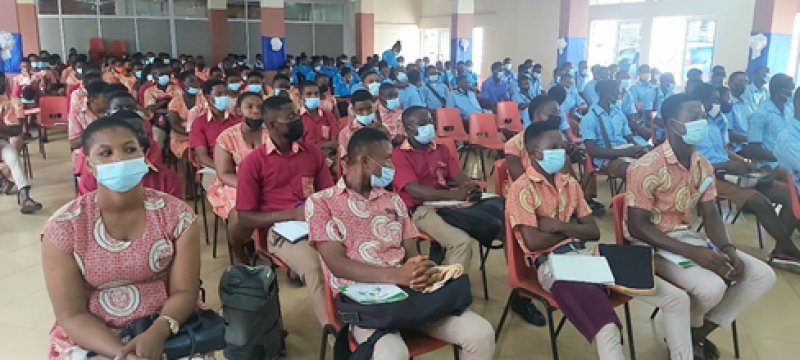
Dr Turkson was speaking at a job/career fair organized for some selected technical and vocational training institutions in the Ashanti region.
The fair was organized by Vocational Training for Females (VTF) programme, a church-based NGO dedicated to creating employment opportunities in TVET for the youth, especially females.
It was attended by students from the Kumasi Technical Institute (KTI), Community Development Technical Institute (CODTECH) at Kwamo, National Vocational and Technical Institute at Suame, Methodist Women Training Centre and Ramseyer Vocational/Technical Institute.
The World Bank, according to Dr Turkson projects that 80 percent of worldwide activities was centered on TVET which depicted that it was a powerful tool for development.
He cited the Asian countries as those that had used TVET as their national agenda, pursued it for economic growth and dominance over other parts of the world.
Dr Turkson pointed out that if Ghana had attached seriousness to TVET policy which was made way back in 2007, the country would have made headway.
He, however, commended the government for putting policies and structures in place to promote vocational education in recent times.
Dr Turkson urged parents to identify the potentials of their wards to prevent pushing children into liberal and humanities fields which might have not been their pitch of expertise.
VTF Director, Linda Agyei, said the transition from school to the labour market had become a problem due to a number of reasons, and was now worse due to the current disruptions all over the world as a result of the COVID-19 pandemic.
Aside from this, she said, there was a defective educational structure which only focused mainly on knowledge acquisition without emphasis on industrial skills.
She called on the government to be more concerned about the situation and forge ways to provide vocational and technical skills to the youth to make them self-employable
Latest Stories
-
NPP revises internal election guidelines to strengthen transparency and inclusiveness
18 minutes -
NACOC set to issue licences to qualified applicants for cannabis cultivation – Deputy Director-General
26 minutes -
Easter Outreach: Victory Bible Church offers free healthcare, NHIS support to hundreds
29 minutes -
NPP cannot pressure Mahama to sign a bill not yet received—Solomon Owusu
39 minutes -
MPs, institutions deepen support for Ghana Sports Fund with fresh contributions
46 minutes -
Four people die trying to board boat in Channel crossing attempt
53 minutes -
Abirem MP announces GH₵500,000 education fund to support needy students
53 minutes -
African stakeholders call for stronger ‘One Health’ action on climate and health crises
55 minutes -
DVLA to commission 5 new service centres in Greater Accra
1 hour -
Agenda 111 and the right to health: A broken social contract
1 hour -
Bawa-Rock Ltd funds GH¢400,000 free surgeries for 102 vulnerable patients
1 hour -
Lambussie MP awards over GH¢200,000 in scholarships to students
1 hour -
Vice President expresses gratitude after double enstoolment in Volta Region
1 hour -
Beyond the Noise: Rebuilding trust in journalism in a digital age
1 hour -
I have to follow the law – CAF president tells Senegal regarding AFCON saga
1 hour