


Audio By Carbonatix
Learner drivers in England and Wales could face a minimum period of up to six months between sitting their theory and practical tests, the BBC can reveal.
The government will unveil the measure, which will be subject to consultation, as part of its broader road safety strategy launched on Wednesday.
The strategy will include proposals to lower the drink-driving limit in England and Wales to bring them in line with Scotland.
The shake-up of driving laws is aimed at reducing the number of people killed or badly injured on Britain's roads by 65% over the next decade, and by 70% for children under 16.
Around a fifth of all deaths or serious injuries from crashes involved a young car driver in 2024.
The government believes a minimum period between sitting the theory test and the practical test would help learner drivers develop their skills, including driving in different conditions.
The Department for Transport will consult for three or six months for the minimum learning period.
It would include any informal learning they may do with parents or guardians, as well as formal lessons with a driving instructor.
Evidence from other countries suggests that minimum learning periods could reduce collisions by up to 32%. Currently, learner drivers can take lessons from 17 and book a practical test as soon as they have passed a theory exam.
The majority of driving tests in Britain are taken by under-25s. In 2024-25, about 55% of tests were taken by drivers aged 17-24.
Learner drivers currently face a waiting time of around six months to take their practical tests anyway, due to a backlog from the Covid pandemic. The backlog is expected to last until late 2027.
The proposed changes could see an end to teenagers passing their tests days after turning 17, meaning the youngest drivers would be at least 17 and a half.
Graduated driving licences
There have been vociferous campaigns for "graduated driving licences" (GDLs) to be introduced in the UK. Different countries have varying types of GDLs, such as not allowing newly qualified drivers to carry passengers or not letting them drive at night.
Proponents of GDLs include some parents of young people who have died on the roads.
Sharron Huddleston started campaigning for GDLs to be introduced eight years ago after her daughter Caitlin was killed in a crash aged 18.
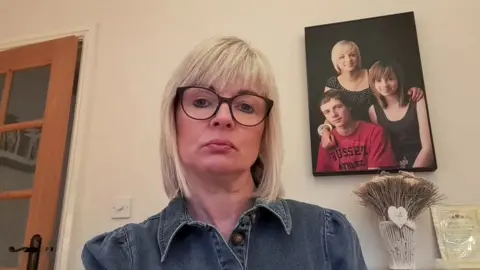
Sharron supports the proposed minimum learning period but said: "We need the post-test safety precautions as well."
The driver, Skye Mitchell, who was also killed, had passed her test four months earlier.
Sharron believes Caitlin "would still be here" if the UK had graduated driving licences which forbade newly qualified, young drivers from carrying passengers their own age.
"All the girls [in the car] were 18," she said.
"This is the strongest element of a graduated driving licence that would save many young lives."
The AA has welcomed the measures announced by the government, but said not introducing GDLs was "a missed opportunity".
Its president, Edmund King, told the BBC that "all the evidence, from Australia, from Canada, from other countries" shows that limiting the number of same-age passengers in a car for six months "will save lives".
He said of the learning period: "That will help, but the question is: does it go far enough?"
The road safety strategy also contains plans to cut deaths by reducing speeding, drink and drug driving, not wearing seat belts and mobile phone use.
As well as bringing the legal limit in line with Scotland, novice drivers would have an even lower limit, which is already the case in Northern Ireland.
Technology, including built-in breathalysers that would prevent drunk drivers starting cars, will form a key plank of the strategy.
The government is also proposing new powers to suspend driving licences for people suspected of drink or drug-driving offences.
The BBC revealed in October that further research into headlight glare would be included in the strategy.
Twenty-one-year-old Alisa Fielder from Surrey passed her test as a teenager but crashed a year ago as she was trying to overtake a lorry on a motorway. Nobody was injured, but her car was written off.
"I took too long checking the blind spot, and all the cars in front had stopped," she said.
"If I had maybe taken some more lessons, then I would know that you can't really take that long."
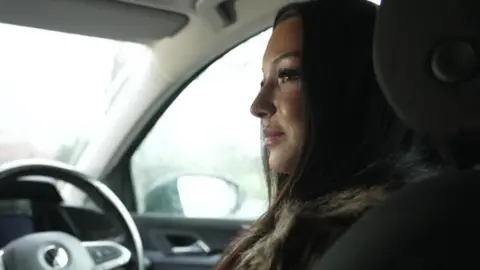
She didn't drive for a year after the crash. She has since completed an informal assessment with the charity IAM RoadSmart to boost her confidence and identify what she needs to work on.
"I wasn't driving to the best standard, and that's why I had a crash."
Alisa said the process of becoming a better driver should continue after a person passes their test. "Maybe more lessons that you're required to take with a professional."
Local Transport Minister Lilian Greenwood said young people make up just 6% of all drivers, but are involved in nearly a quarter of fatal and serious collisions.
"Inexperience puts drivers, their passengers, and other road users at greater risk," she said.
The proposed learning period "is all about supporting young drivers to develop the confidence they need to stay safe and giving them more time to build their skills and gain experience in different driving conditions".
Latest Stories
-
President Mahama to attend One Health Summit in France, hold bilateral talks with Macron
37 minutes -
Mahama endorses ADB at Kwahu Business Summit
2 hours -
Every gram will be tracked – Gold Board unveils traceability push to deal with illegally-mined gold
2 hours -
Analysis: Why the Bank of Ghana sold half its gold reserves
2 hours -
Buy wrong gold, face prosecution – Gold Board CEO cracks down on rogue dealers
2 hours -
Africa pushes integrated health agenda ahead of One Health Summit in Lyon
3 hours -
We own the strategy, its not head office decision – GCB MD positions bank as engine of Ghana’s economy
3 hours -
No more waiting for head office – GCB boss pushes Ghana-first banking
3 hours -
Mahama lauds Julius Debrah for shaping Kwahu Business Forum
4 hours -
Why actors beg in difficulty – Patience Ozokwor on Nollywood financial struggles
4 hours -
Any man who apologises to woman deserves to suffer – Brymo
4 hours -
Nigerian artistes no longer put effort into making music – Omah Lay claims
4 hours -
‘I’m now skeptical about going into politics’ – Davido
4 hours -
Nigeria’s Seplat Energy resumes operations as oil workers halt strike action
5 hours -
Nigeria launches manhunt after abductions by bandits in northwest Zamfara
5 hours