

Audio By Carbonatix
For years, residents of Woe, Kporkporgbor, Fuveme, Anloga, and Dzita-Agbledomi have watched the sea inch closer to their homes.
Each tide brings with it more than waves; it carries the fears of families who have lost land to erosion, the anxiety of fishermen whose livelihoods depend on a coastline under siege, and the uncertainty of a future shaped by climate change.
Now, hope is arriving in the form of a global partnership. The United Nations Human Settlements Programme (UN-Habitat), working with the Anloga District Assembly, is rolling out a climate change and urban resilience project aimed at transforming the way these coastal communities live, work, and protect themselves against the environment’s growing threats.
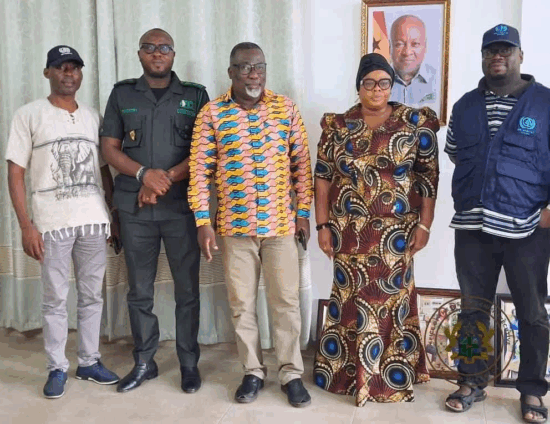
The initiative was formally introduced on Thursday when the District Chief Executive for Anloga, Sandra Seyram Kpedor, welcomed the Program Specialist for Climate Change and Urban Resilience, Daniel Kofi Abu, UN-Habitat, and his team to her office.
“This program is more than a development project—it’s a lifeline,” Ms. Kpedor said. “It will help us address sea-level rise, coastal erosion, and flooding, while also creating green jobs, building eco-friendly infrastructure, and strengthening our people’s ability to adapt.”
For fishermen in Woe and Tegbi, the project’s promise of sustainable urban planning could mean better protection for landing beaches, and eco-friendly infrastructure could safeguard livelihoods from tidal destruction.
In Dzita-Agbledomi and Anloga, green job opportunities could help keep young people employed within their communities instead of seeking work elsewhere.
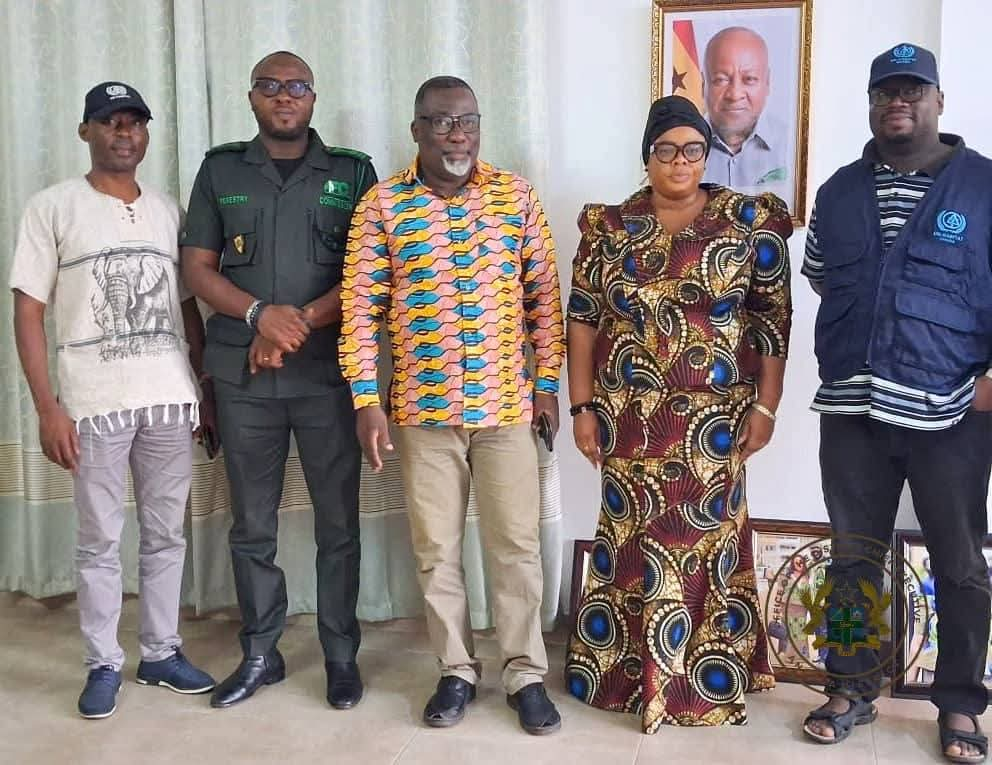
Mr. Abu stressed that the program’s success will depend on active collaboration with local leaders and residents.
“Resilience is not built from the top down—it grows from within communities. That is why we are working closely with stakeholders here to ensure the solutions we develop are locally driven and lasting,” he explained.
As the waves continue to lap at the shores, the people of these coastal towns are now looking to a future where science, planning, and community effort converge to safeguard their homes.
With UN-Habitat and the Anloga District Assembly joining forces, the vision is clear: safer, more inclusive towns that can stand strong against the forces of climate change
Latest Stories
-
President Mahama is not sincere with Ghanaians on LGBTQ bill matter – Hassan Tampuli
5 minutes -
Gov’t to establish Prison Industrial Hub to equip inmates with income-generating skills – Prison Service boss
24 minutes -
Alhassan Tampuli donates cement, roofing sheets to support storm victims in Gushegu
24 minutes -
Alhassan Tampuli appeals for urgent support for storm victims in Gushegu
27 minutes -
The hypocrisy must stop; pass Anti-LGBTQ+ Bill now – Alhassan Tampuli to Mahama
31 minutes -
Imprisonment should be rehabilitative, not punitive – Ghana Prisons boss at UNGA
53 minutes -
Ga Adangbe traditional priests petition Mahama over McDan aviation licence revocation
1 hour -
Anti-LGBTQ Bill: NDC’s arrogance is worrying – Hassan Tampuli
1 hour -
Let’s give OSP time to mature, not to scrap it – Hassan Tampuli
1 hour -
Nigeria convicts 386 Islamist militants in mass trials
1 hour -
Djibouti president wins election with 97.8% of vote, state media says
1 hour -
We don’t have mandate to deduct tax from rent allowance of security services personnel – Interior Ministry clarifies
2 hours -
Ablakwa receives Presidential Special Envoy on Reparations to advance global agenda
2 hours -
Christina Koch becomes first woman to travel around the moon on Artemis II
2 hours -
Epstein survivors’ calls to meet King Charles and Queen harder to ignore as US visit approaches
2 hours