

Audio By Carbonatix
Diplomatic efforts between Washington and Tehran faced a critical test on Tuesday at United Nations headquarters in New York. Top American and Iranian officials engaged in high-level discussions on the sidelines of the annual General Assembly. The diplomatic breakthrough occurred on the same day President Donald Trump issued a stern ultimatum regarding the ongoing conflict. Mediation efforts were led by Qatari diplomats who shuttled messages between the two delegations. The negotiations marked the first formal contact of this nature since a brief June ceasefire collapsed.
Coercive Strategy And Ultimatums
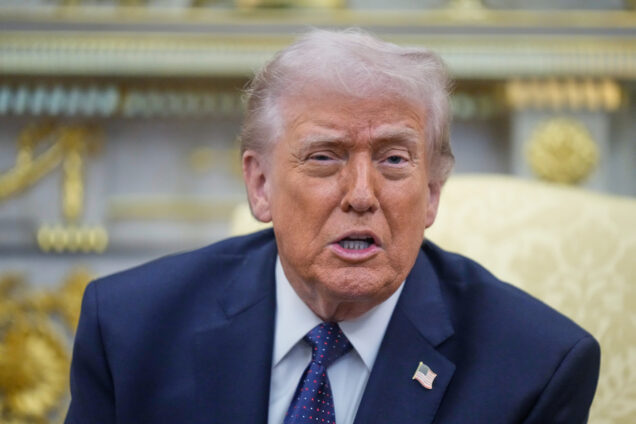
President Trump used his address to the General Assembly to defend the military campaign against Iran. He argued that the intervention successfully prevented Tehran from acquiring a nuclear weapon. The American leader framed his foreign policy around peace through strength rather than traditional compromise.
Addressing the global assembly, President Trump outlined his stark choice for the leadership in Tehran:
"Will a deal be made with Iran that lets them rebuild and create a far greater country than it ever was before?"
He followed this inquiry with a direct threat of military force:
"Or do I annihilate the Islamic Republic and do it quickly, never giving them a chance to kill and destroy people and countries again? Do I drive them into hell?"
Indirect Talks And Mediated Channels
While the rhetoric remained sharp, backchannel diplomacy moved forward through Qatari intermediaries. US Special Envoy Steve Witkoff and presidential adviser Jared Kushner participated in the oversight of the discussions. Iranian state media confirmed that Foreign Minister Abbas Araghchi communicated Tehran's core demands through the mediators.
Special Envoy Witkoff characterised the diplomatic engagement in a statement on social media, noting:
"Today, on the sidelines of the United Nations General Assembly, we engaged in lengthy talks with the Iranian delegation through the mediators, who shuttled between the two sides throughout the day."
Witkoff further expressed optimism regarding the process:
"They successfully completed a round of discussions that we hope will prove constructive and promising. The mediators will continue their work."
Regional Conflict And Economic Pressures
The urgency behind the diplomatic track stems from severe disruptions across the Middle East. The conflict escalated significantly after US and Israeli air strikes targeted Iranian infrastructure on February 28. Tehran responded by striking regional assets and restricting navigation through the strategic Strait of Hormuz.
The closure of the waterway choked off vital oil and liquefied natural gas shipments, triggering wild market fluctuations. Iranian officials maintained that any permanent resolution must include the complete cessation of hostile acts. Meanwhile, the White House continues to balance domestic political pressures ahead of the November congressional elections while managing a complex web of regional escalations.
Market Impact And Commodity Shifts
Global energy markets reacted swiftly on Wednesday to the diplomatic developments in New York, as easing supply disruption concerns drove crude prices downward. Futures for international benchmark Brent crude for November delivery dropped 0.71% to $98.55 a barrel—approximately GH₵1,141.22—as of 3:04 a.m. ET. Concurrently, U.S. West Texas Intermediate futures for November fell 1.26% to $89.36 per barrel, translating to roughly GH₵1,034.80 based on prevailing exchange rates of about 11.58 GHS per USD. President Trump noted that American officials held a three-hour meeting with the Iranian delegation that he deemed very productive. Reuters reported that Tehran could reopen the vital Strait of Hormuz within a week if the United States lifts its port blockades and eases military pressure. Paolo Broccardo, chief executive officer at private digital bank BankPro, remarked that regional mediation efforts—including initiatives from Pakistan—helped mitigate the threat of broader escalation. Broccardo observed that prices had retreated by almost 12% over five consecutive sessions, stepping back from the intervention zone above $100 (approx. GH₵1,158.01) where intensive peace-building efforts historically intensify.
As international mediators navigate the fragile channels between Washington and Tehran, the ultimate trajectory of regional security depends on whether high-stakes coercion can successfully transition into sustainable diplomatic compromise.
Latest Stories
-
NPP rejects Emelia Agbenyo’s appointment as Deputy EC Chair, demands withdrawal
3 minutes -
EOCO grants Suame MP John Darko enquiry bail in GH¢27m SIC investigation
6 minutes -
NPP cannot question EC appointment after appointing own people to Commission – Kwakye Ofosu
12 minutes -
BoG deepens public trust with regional stakeholder forum in Techiman
21 minutes -
‘We have turned the tide’ – Ato Forson says Ghana is ready to take off
26 minutes -
Police arrest man captured in viral video assaulting wife in Agona Nkwanta
28 minutes -
KATH Mother and Baby Unit construction stalled for 14 months over unpaid contractor arrears
42 minutes -
Government wanted to ‘tilt the balance’ with new EC appointments – Kwakye Ofosu
48 minutes -
Angry Tema Community 25 residents threaten to sleep at GWL over water shortage
1 hour -
BoG takes financial literacy drive to Techiman, vows to protect depositors
1 hour -
‘Stop the distractions’ – Akosua Manu demands answers over GH¢49.7m South Africa evacuation cost
1 hour -
Formula 1 to return to Africa with Rwanda Grand Prix in early 2030s
1 hour -
Mahama says Ghana is safer today as he commissions 85-bed ward at Police Hospital
1 hour -
LA 2028: Black Queens face Zambia in final Olympic qualifier
1 hour -
WAFU Zone B: Black Starlets seal semifinal place with 3-1 win over Benin
1 hour