


Audio By Carbonatix
The US's top diplomat for Africa is going to Sudan this week amid unrest, the state department said on Monday.
Tibor Nagy, the US assistant secretary for Africa, will "call for a cessation of attacks against civilians".
Workers have staged a national strike, which began on Sunday, to pressurise the ruling military government to make way for civilian rule.
Four people were killed on the first day of the strike after security forces fired tear gas and live ammunition.
The state department said Mr Nagy would "urge parties to work towards creating an enabling environment" for talks between the two sides to resume.
He will also discuss the situation with the Ethiopian Prime Minister, Abiy Ahmed, who has been trying to mediate between the military council and the opposition in Sudan, before later travelling to Mozambique and South Africa.
What happened during the strike?
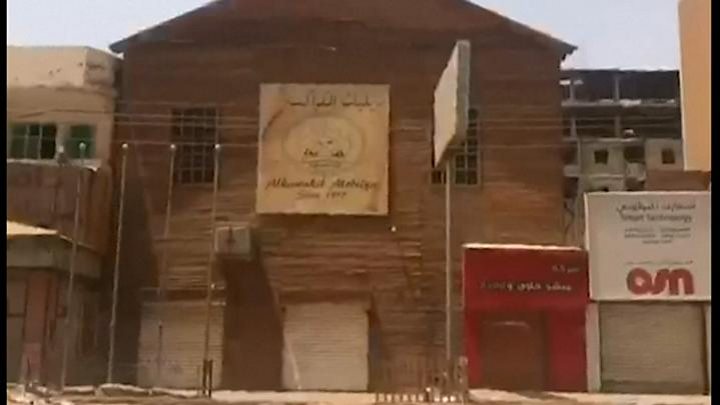
Monday remained quiet in Khartoum, although some businesses started to reopen and a few buses were running.
Most shops, markets and banks in the capital, as well as in several other cities, remained closed on Monday as staff followed instructions from the Sudanese Professionals Association (SPA), the pro-democracy opposition, to not attend work.
The SPA called the strike after more than 100 peaceful protesters were killed by a paramilitary group, the Rapid Support Forces (RSF), on 3 June.
"The civil disobedience movement will begin Sunday and end only when a civilian government announces itself in power on state television," the SPA said in a statement.
"Disobedience is a peaceful act capable of bringing to its knees the most powerful weapons arsenal in the world."
Protesters have set up roadblocks across the capital. Social media users with access to a connection reported that the country's internet was blocked by the ruling military government.
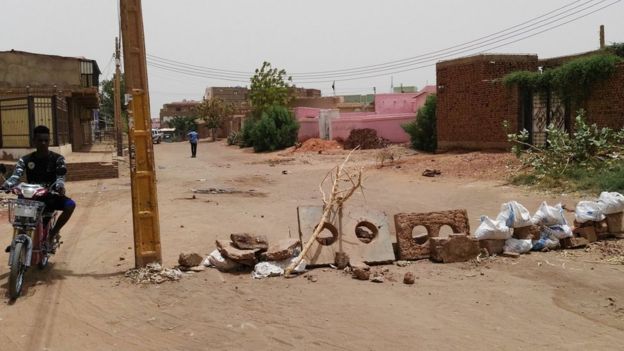
Image caption: A man navigates around a makeshift roadblock
In another development, three rebel leaders were deported from the city to South Sudan.
One of the three, Yasir Arman, had only returned to Sudan last month after years in exile after he was sentenced to death in absentia.
What's the background?
The military ousted long-time President Omar al-Bashir in April following months of protests against him. A military council promised a transition to civilian rule.
But pro-democracy campaigners say the military council cannot be trusted after Monday's crackdown against a sit-in demonstration in Khartoum - and they have rejected an offer of talks.
Latest Stories
-
CAF U-17 AFCON: Ghana draws Senegal, South Africa and Algeria in Group D
32 seconds -
Manhyia South MP decries unchecked commercialisation of residential areas, warns of extinction
54 seconds -
U-17 AFCON 2026: Ghana drawn in tough group as Black Starlets eye World Cup return
3 minutes -
NRSA recommends strict enforcement of laws banning right-hand drive imports
10 minutes -
‘Don’t belittle our intelligence’ – Methodist Bishop criticises Kwakye Ofosu over LGBTQ comment
10 minutes -
Ghana’s crude oil output declines for 6th consecutive year – PIAC
13 minutes -
$434m in oil revenue allocated to Big Push Programme — PIAC
14 minutes -
Ghana’s oil production hits 694 million barrels since 2010 – PIAC report
22 minutes -
Ghana records 7.5% economic growth in January 2026, services sector leads expansion
26 minutes -
One-cedi levy essential to keep power sector afloat- Ben Boakye
28 minutes -
Nii Noi marks Easter with donation of medical equipment to Taifa Polyclinic
29 minutes -
Police arrest man over viral video that sparked public fear
30 minutes -
Tamale water crisis a “major headache”, but government will fix it — Haruna Iddrisu
32 minutes -
Finance Ministry directed SOEs to do business with SIC but order was verbal, says SIC Life MD
33 minutes -
Cabinet to decide on fuel measures amid rising prices – Edudzi Tameklo
36 minutes