

Audio By Carbonatix
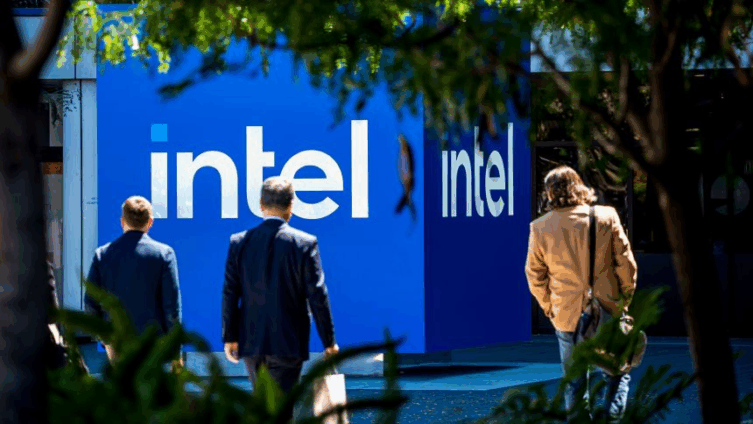
The White House confirmed on Tuesday that the Trump administration is working on a deal that could see the US government taking a 10% stake in chip giant Intel.
"The president wants to put America's needs first, both from a national security and economic perspective," White House press secretary Karoline Leavitt told reporters.
The potential deal could involve swapping government grants for Intel shares, according to US Commerce Secretary Howard Lutnick.
The highly unusual move could help Intel as it struggles to compete with rivals like Nvidia, Samsung and TSMC, particularly in the booming artificial intelligence (AI) chip market. Intel has been contacted by the BBC for comment.
The US wants a stake Intel in exchange for grants approved during the Biden administration, Lutnick said on CNBC on Tuesday.
"We should get an equity stake for our money," he added. "We'll get equity in return for that... instead of just giving grants away."
The potential deal, which was first reported last week, aims to help Intel build a flagship manufacturing hub in the US state of Ohio. At the time, a White House spokesman told the BBC that the reports "should be regarded as speculation" unless officially announced.
Last week, Intel did not comment directly about reports but said it was "deeply committed to supporting President Trump's efforts" to strengthen manufacturing and technology in the US.
On Monday, Japanese investment giant Softbank said it would buy a $2bn (£1.5bn) stake in Intel, in a move that some analysts said is a sign of confidence in the firm's turnaround.
After that announcement,the firm's shares rose by almost 7% in New York on Tuesday.
Intel is one of the few US companies capable of producing high-end semiconductors at scale but the company has fallen behind global rivals.
The government potentially taking a stake in Intel reflects the firm's "unique position" as America's main producer of high-end chips domestically, said Dan Sheehan from Telos Wealth Advisors.
But political involvement could slow down decision making and shift priorities, adding challenges to an already tough turnaround for Intel, said Mr Sheehan.
Some other experts have expressed concerns over the potential deal and whether companies may be pressured to follow political agendas.
The developments came as the US chip industry is under intense scrutiny by the White House.
Last week, Nvidia and AMD agreed to pay the US government 15% of their Chinese revenues as part of an unprecedented deal to secure export licences to China.
Latest Stories
-
Middle East crisis shows Ghana needs to diversify energy sources – Energy expert
17 minutes -
Government of Ghana Internal Revenue Generation cannot fund Big Push in Four Years
25 minutes -
EPCG Moderator urges leaders to serve with courage and humility in Easter message
57 minutes -
The Cobra at the gate: When good intentions overrun the system
1 hour -
Easter service disrupted in Nyanyano as suspected land guards storm church event
1 hour -
Price surge exposing NDC gov’ts dishonesty -Titus Glover
1 hour -
Afigya Kwabre North MP urges Finance and Energy Ministers to submit energy sector report
1 hour -
Deliver quality or face sanctions — GETFund administrator cautions contractors
2 hours -
Kwahu Easter festivities trigger condom shortages; Health teams boost awareness
2 hours -
Victims of a legend: The women Daddy Lumba left behind
2 hours -
Mahama vows to prioritise roads, social amenities in Savannah region
2 hours -
Mahama sets up 18-member panel to advance Africa-led global health reforms
3 hours -
Ghana Medical Trust Fund Administrator urges hope and compassion in Easter message
3 hours -
Traders, Freight forwarders push back against planned cargo tracking policy
3 hours -
BoG Governor highlights tough trade-offs in monetary policy decisions
3 hours