

Audio By Carbonatix
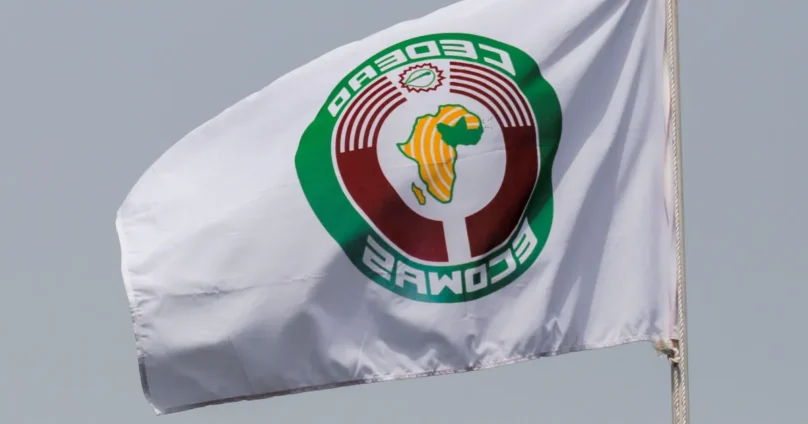
The Economic Community of West African States (ECOWAS) has expressed "deep concern" over the rapidly escalating military hostilities in the Gulf region, warning that the conflict could trigger a devastating collapse of global energy and food supply chains.
In a formal statement issued on Saturday, 28th February 2026, ECOWAS—currently under the chairmanship of H.E. Dr. Julius Maada Bio, President of Sierra Leone—aligned itself with the African Union Commission in calling for an immediate de-escalation of violence.
It follows attacks by US and Israel on Iran, with retaliatory action that has affected several Gulf states hosting US military bases.
The bloc warned that the intensification of military action risks widening instability across the Middle East, with "serious consequences" for international peace and the global economy.
The regional body highlighted that Africa is particularly vulnerable to the ripple effects of the conflict.
With the Strait of Hormuz—a critical corridor for global oil and liquefied natural gas (LNG)—facing disruption, ECOWAS noted the direct threat to trade and the survival of vulnerable regions.
“The intensification of military action risks widening instability in the Middle East, with serious consequences for international peace and security in general and for global energy markets, trade, and food supply chains, especially for Africa and other vulnerable regions,” the statement noted.
ECOWAS urged all warring parties to exercise "maximum restraint" and return to the principles of international law. The leadership emphasised that any resolution must respect sovereignty, territorial integrity, and the United Nations Charter.
Key demands from the ECOWAS statement included:
- Paramount Protection: The safety of civilian lives and critical infrastructure must be prioritised above military objectives.
- Renewed Diplomacy: A call for urgent dialogue within established international and regional frameworks to restore stability.
- Multilateralism: Reaffirming West Africa's commitment to the peaceful resolution of disputes rather than armed confrontation.
The Abuja-based Commission fully endorsed the African Union's previous declarations on the development, presenting a united African front against the rising global tensions.
The statement, signed in Abuja, serves as a significant diplomatic signal that West African leaders are bracing for the economic shocks of the Middle Eastern crisis, particularly regarding fuel costs and imported food prices that have already shown signs of volatility in early 2026.
Latest Stories
-
Prudential Life settles GH¢100,000 medical bills under its PRUCares Valentine Experience Initiative
4 hours -
Wa West Picnic: Peter Lanchene Toobu champions peace, health and unity in landmark celebration
5 hours -
Dr Mensah Market flooded after downpour in Kumasi
5 hours -
Armed men reportedly storm Adjen Kotoku Onion Market amid tensions
6 hours -
Tecco Mensah writes: Why football fans must look beyond statistics
6 hours -
Police recover stolen Honda CR-V in Kumasi within 48 hours
7 hours -
Apetorku Gbodzi 2026 Festival opens in Dagbamete with development focus
7 hours -
President Mahama arrives in Lyon to co-chair One Health Summit
7 hours -
Beverly View Plus Hotel draws crowds amid coastal Easter rush in Volta
7 hours -
Maiden Zongo Festival held in Wa amid calls to tackle drug abuse among the youth
8 hours -
FDA warns of fake HIV test kits on Ghanaian market
8 hours -
Africa urged to build resilient health systems as donor support tightens
8 hours -
Easter gesture: Ablakwa settles medical bills for 85 North Tongu constituents
10 hours -
Africa must harness its population strength—Titus-Glover
10 hours -
Visa-free access doesn’t mean unlimited stay – Lom Ahlijah
10 hours