

Audio By Carbonatix
The US has imposed its first nationwide limits on several harmful chemicals found in tap water across the country.
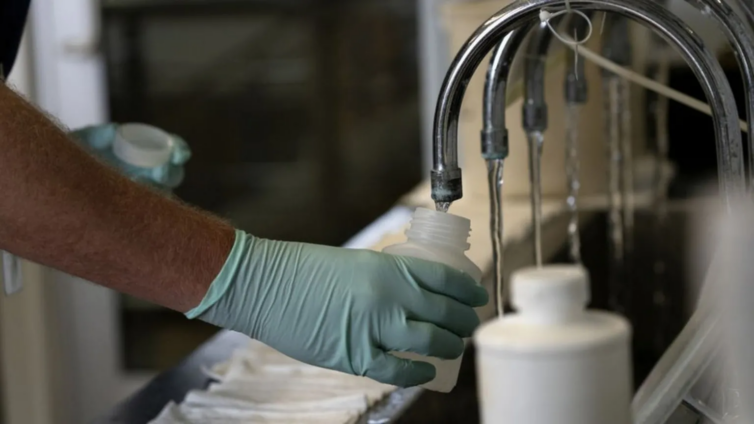
Research suggests millions of Americans likely drink water contaminated with PFAS chemicals, which are linked to a host of health issues including cancer.
On Wednesday, officials finalised a rule that requires local governments to remove six versions of the chemicals from water systems.
The government has allocated an extra $1bn (£794m) to help cover the costs.
In a statement, the US Environmental Protection Agency (EPA) said the new rule would provide long-lasting health benefits for Americans.
"Drinking water contaminated with PFAS has plagued communities across this country for too long," said EPA administrator Michael Regan. "Today, I am proud to finalise this critical piece of our roadmap, and in doing so, save thousands of lives and help ensure our children grow up healthier."
The new regulations give local municipalities three years to monitor for the chemicals in their water systems. If harmful levels of the so-called forever chemicals are found, governments have five years to reduce the amount of PFAS in the water supply.
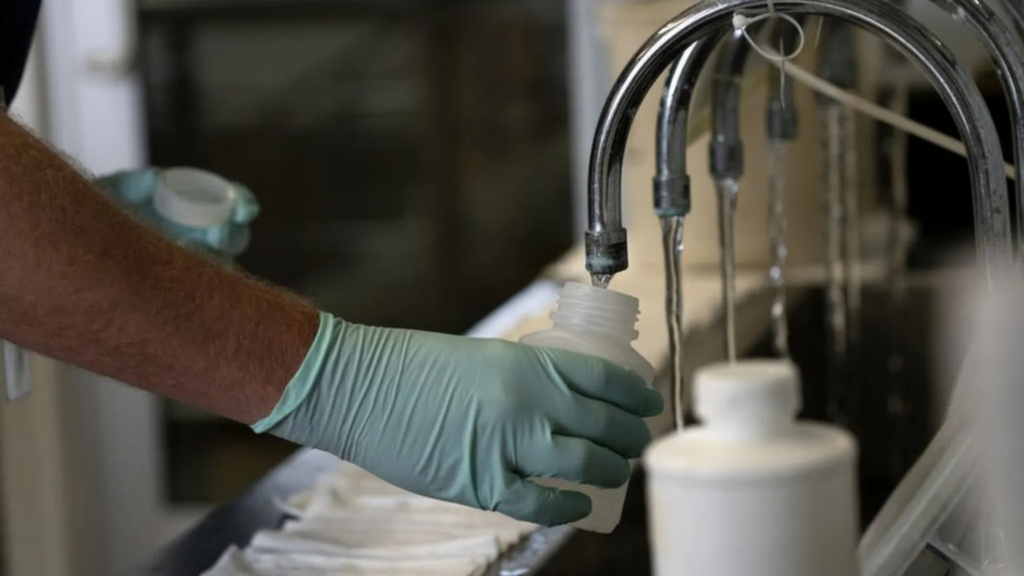
The EPA says between 6% to 10% of 66,000 public drinking water systems across the US may have harmful levels of pollutants.
PFAS, which stands for per- and polyfluoroalkyl substances, are a class of thousands of chemicals. The pollutants, which repel water, oil and grease, are used in hundreds of everyday products from dental floss to cookware to firefighting foams.
They are called "forever chemicals" because they remain widespread in the environment due to their lack of degradation, despite the fact most US companies have phased out manufacturing of the most well-studied types.
Common household filters - such as those made by Brita - are not designed to remove PFAS from drinking water, though more expensive systems that go under the sink, such as reverse osmosis filters, have been shown to reduce PFAS levels.
The EPA has found that almost no level of exposure to PFAS is safe. As well as cancer, the chemicals have been linked to reproductive issues, decreased immune function, thyroid disease and asthma.
Experts previously told the BBC that communities with poor drinking water systems stand to reap the most benefits from the new limits, but could also struggle to pay for the new treatment systems, which can cost millions of dollars for smaller towns.
The Biden administration says $9bn is available through the Bipartisan Infrastructure Law - passed in 2021 - to help communities address PFAS, as well as $12bn for general drinking water improvements.
Latest Stories
-
AGI commends government’s move to resolve the power crisis in Volta and Oti Regions
15 minutes -
IBAG president alleges political interference driving kickbacks in insurance sector
49 minutes -
Trump agrees to two-week ceasefire, Iran says safe passage through Hormuz possible
1 hour -
Dozens killed as Angola flood death toll rises
1 hour -
Russia confirms deaths of 16 Cameroonians fighting in Ukraine war, Yaounde says
2 hours -
Plan to scrap presidential elections puts Zimbabweans at loggerheads
2 hours -
Guinea-Bissau transporters strike over higher fuel prices
2 hours -
Iran ceasefire deal a partial win for Trump – but at a high cost
2 hours -
Oil slides below $100 after Trump announces two-week ceasefire
2 hours -
Madagascar declares state of emergency over energy situation due to Iran war
2 hours -
Ex-Meta worker investigated for downloading 30,000 private Facebook photos
3 hours -
World Bank says Nigerian economy to grow in 2026 but Iran war lifts inflation
3 hours -
Ringleader of suspected human trafficking network arrested in Ethiopia
3 hours -
Alexander-Arnold fails to ease Tuchel concerns as Kane stars
3 hours -
Amad backs Carrick for Manchester United job
3 hours