

Audio By Carbonatix
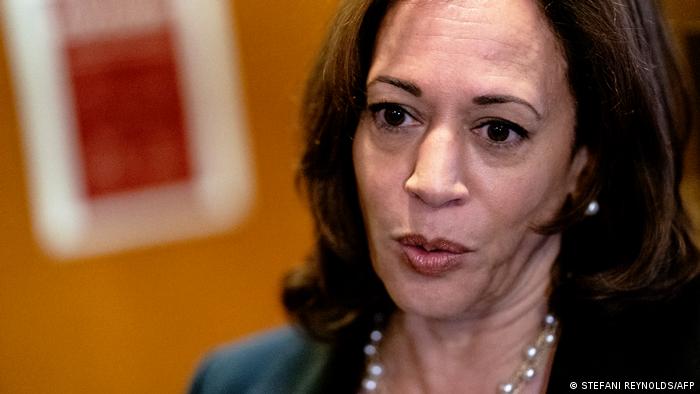
The US Senate started on Sunday passed a $430 billion (€422.3 billion) climate change, healthcare and tax bill, after Vice President Kamala Harris voted in favor of the Democrats to break a tie against unanimous Republican opposition on Saturday.
The package, called the Inflation Reduction Act, will earmark $430 billion in new spending along with raising more than $700 billion in new revenues.
The legislation will now be sent to the Democratic-controlled House of Representatives, which intends to take it up on Friday, after which President Joe Biden could sign it into law.
The bill was approved after a 27-hour weekend session of debate and Republican efforts to derail the package.
"The Senate is making history," Senate Majority Leader Chuck Schumer said. "To Americans who’ve lost faith that Congress can do big things, this bill is for you," he said. "This bill is going to change America for decades."
Bill to cut carbon emissions
Democrats say the legislation would address climate change by reducing US carbon emissions by 40% by 2030.
The bill also calls for billions of dollars to encourage the production of more electric vehicles and foster clean energy, offering businesses and families large incentives to encourage purchases of electric vehicles and energy-efficient appliances.
It also seeks to spur new investments in wind and solar power.
Medicare to push back on drug prices
The most popular element of the bill allows Medicare, the government health insurance program for the elderly, to negotiate drug prices as a way of reducing costs. A Reuters/Ipsos poll found 71% of respondents support the measure, including 68% of Republicans.
Expiring subsidies that help millions of people afford private insurance premiums would also be extended for three years.
Democrats repelled more than two dozen Republican amendments, points of order and motions, all intended to scupper the legislation. However, they were unable to muster the votes necessary to retain a provision to cap soaring insulin costs at $35 a month on the private health insurance market
New taxes on corporations and the wealthy
The bill's tax provisions include a new 15% minimum tax on some corporations with yearly profits above $1 billion.
Reflecting Democrats' calls for tax equity, it also aims to close loopholes that the wealthy can use to avoid paying taxes.
The bill also imposes a new tax on stock buybacks, expecting to raise an additional $70 billion in tax revenue per year, according to lawmakers.
The US tax agency IRS budget would receive more funding to boost its tax collection.
Latest Stories
-
T-bills auction: Government exceeds target marginally; yield on 91-day bill remains unchanged
2 hours -
GPL 2026/27: 10-man Aduana hand Kotoko defeat in Kumasi
2 hours -
GPL 2026/27: Medeama ease past Basake Holy Stars
3 hours -
Appiah Adomako writes: Why DVLA must stop treating every expired licence holder as delinquent
3 hours -
Localization must transfer decision-making power, not just project responsibilities
3 hours -
Modernising Ghana’s traditional markets through the 24-Hour Economy markets initiative
3 hours -
New economy will boost local production and create jobs – Finance Minister
3 hours -
Real-Time VAT on cross-border digital services – not a new tax and does not violate double taxation principle
4 hours -
Digitalisation, AI key to Ghana’s tourism transformation – GHATOF
4 hours -
Stronger GTA-private sector partnership needed to grow tourism – GHATOF
4 hours -
Amazon eyes Ghana for broadband expansion after talks with Mahama
5 hours -
National Investment Quiz 2026: Six schools qualify for quarter-finals
5 hours -
‘Do not let Russia pay for its madness with lives of your people’ – Zelensky to Ghana, 46 other countries
5 hours -
6,079 promotion cases fully processed and paid – CAGD says amid nationwide teachers’ strike
6 hours -
Teacher unions to meet government Monday over nationwide strike
6 hours