

Audio By Carbonatix
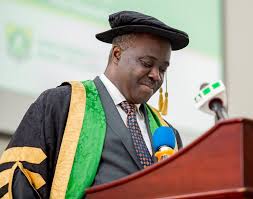
The Vice Chancellor of the University of Health and Allied Sciences, Professor John Owusu Gyapong, says the government’s decision to wean public universities off its payroll was first suggested by the University Teachers Association of Ghana (UTAG).
According to him, UTAG is hoping that such an initiative would help address the fiscal challenges public universities and lecturers face while performing their duties.
As put by the University of Ghana’s UTAG Secretary, Ransford Gyampo, in an earlier interview, weaning public universities off state funds, would allow these institutions charge appropriate fees in order to be run effectively and efficiently.
He had said, “Some of the proceeds can be used to pay lecturers or beef up the infrastructure of these various universities, rather than always waiting for government subvention that delays and government subvention that are woefully inadequate that are not able to do anything for the university and for expanding their infrastructure.”
Speaking on PM Express, Prof Gyapong noted that the suggestion which was made by UTAG was an attempt to address the poor conditions of service which had culminated into their strike action.
“This suggestion came from the UTAG side, that a better management system is giving the university the grants that it requires to be able to run the university. So I guess in the expectation of UTAG, if for instance government is giving us 5 million cedis for salaries every month, then over the year it will be about 60 million.
“So government will give the university the 60million and say you manage it and don’t come to me. I conjecture that that was the expectation. So it is not to say that government was going to take away all the funds that it gives to the universities.
“Of course in that discussion it became clear that it wasn’t going to be the total 100% that will come to the university but as to what proportion will come, nobody discussed that. I mean the subject was broached, it wasn’t discussed in detail.”
The Finance Minister, Ken Ofori-Atta is yet to release the full details of how the government intends to wean off the tertiary institutions, and how the block grant will be administered.
Meanwhile, the Minority have expressed their opposition to the suggestion.
A Deputy Ranking Member of Parliament’s Education Committee says that the proposal to wean public tertiary institutions off government payroll “will invariably restrict access to tertiary education.”
Dr Clement Apaak says implementing the proposal will create a financial barrier, which would add to the existing infrastructure challenges and “prevent the poor and marginalised from accessing tertiary education.”
Latest Stories
-
I assure Otumfuo, Mahama will join him to commission KNUST Teaching Hospital by end of this year – Haruna Iddrisu
15 minutes -
Gov’t to roll out free special education for persons with disabilities from July 1 – Education Minister
37 minutes -
“We used it to test our officiating officials’ readiness” – Bawah Fuseini after CAA Athletics event
1 hour -
Volleyball emerges as Ghana’s fastest rising sport
1 hour -
National Sports Fund needs strong leadership from the top – Administrator David Wuaku
1 hour -
JoySports Exclusive: Steve McLaren in talks with GFA after expressing interest in Black Stars job
2 hours -
Fire guts auto parts warehouse at Bubuashie, one fire officer injured
2 hours -
I owe my victory to coach Ofori Asare – Allotey after winning WBA Africa Gold Super Flyweight belt
2 hours -
Church of Pentecost supports over 2,000 BECE candidates in Obuasi with career guidance seminar
3 hours -
Brandon Asante and Coventry all but promoted to Premier League despite Sheffield Wednesday draw
4 hours -
GPL 2025/26: Late Kwartemaa strike downs Hearts in Tema
4 hours -
Ghana Faces Sierra Leone Moment as Prosecutorial Powers come under strain
4 hours -
Don’t consume fish or seafood from Tema Shipyard until further notice – FDA warns
4 hours -
Why volunteering might be Africa’s most underrated career accelerator
4 hours -
ActionAid Ghana raises concern over gender gaps in Feed Ghana Programme
4 hours