

Audio By Carbonatix
The Vatican has returned 62 indigenous artefacts to Canada, 100 years after they were taken from tribes to appear in a missionary museum in Rome.
The items were given by Pope Leo XIV on Saturday to the Canadian Conference of Catholic Bishops (CCCB), which says it plans to return them to their original native communities.
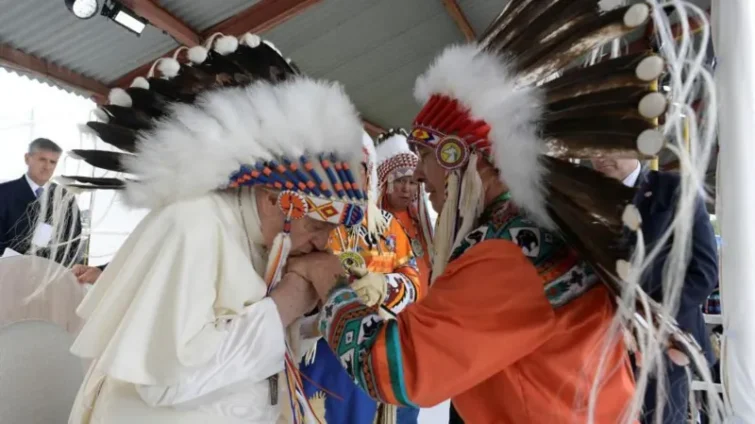
The move comes three years after Pope Francis issued a historic apology to Canada's First Nations for the church's role in the "genocide" and suppression of indigenous identity through the residential schools programme.
A joint statement from the Vatican and the CCCB says the Pope "desires that this gift represent a concrete sign of dialogue, respect and fraternity".
The statement adds that the artefacts "bear witness to the history of the encounter between faith and the cultures of the indigenous peoples".
The items, which came from several different communities around Canada, had been sent by missionaries to Rome to appear in a 1925 exhibition that displayed over 100,000 items.
Among the artefacts being returned is an Inuit kayak that had historically been used to hunt whales in Canada's far north, and a set of embroidered gloves that came from the Cree Nation.
Canada's ambassador to the Holy See told CBC News that the items are currently in storage in Rome, and will be flown back to Canada on 6 December.
In 2022, Pope Francis made a "penitential pilgrimage" across Canada, where he offered an apology to local tribal leaders. During the trip, the communities requested the return of their artefacts.
The CCCB says the items will be transferred to Canada's National Indigenous Organizations which "will then ensure that the artefacts are reunited with their communities of origin".
The cost of repatriating the items has been prepaid by the tribes, which plan to hold ceremonies before they can be officially returned, according to CBC.
Canadian Foreign Minister praised the move, calling it, "an important step that honours the diverse cultural heritage of Indigenous peoples and supports ongoing efforts toward truth, justice, and reconciliation".
The items had been held in the Vatican Museum's ethnographic collection, known as the Anima Mundi museum. The church has described the items as "gifts" that were given by tribal leaders. Critics have disputed this characterisation, given the power imbalance at the time they were transferred.
The items were taken to Europe during a time when Canadian law, as well as Catholic decrees, prohibited native spiritual practices, leading to a ban on certain items used during ceremonies.
Latest Stories
-
We can tackle multiple priorities – Sam George defends Anti-LGBTQ Bill push
27 minutes -
Statement: Ghana Chamber of Mines’ Response to Claims in Joe Jackson’s “Ananse Stories about the Economy of Ghana”
29 minutes -
GES opens 2026 teacher recruitment for licensed B.Ed graduates
31 minutes -
Ghana must value skilled trades, build resilient learners — Ibn Chambas
39 minutes -
Ghana must rethink education around relevance, resilience and responsibility — Ibn Chambas
42 minutes -
Prince Harry faces defamation lawsuit from charity he co-founded
44 minutes -
South Korea deploys thermal cameras to track escaped zoo wolf
45 minutes -
Calls for royal meeting with Epstein survivors grow ahead of US visit
49 minutes -
Ibn Chambas advocates blend of technology and human values in education
50 minutes -
UMA improves healthcare access in Asutifi North with GH₵700k ‘Kim Taylor Legacy’ Walkway
55 minutes -
Scholarships Authority and Fanaka University offer sponsorship for procurement and supply chain studies
58 minutes -
Bisa Kdei drops new single ‘Go N Look’ featuring Medikal
1 hour -
Benin facing rising terrorism in north as French military presence faces growing criticism
1 hour -
UEW Public Lecture Series 2026: Education debate ‘about the soul of Ghana’s future’ — Dr Ibn Chambas
1 hour -
EU fingerprint and photo travel rules come into force from today
2 hours