

Audio By Carbonatix
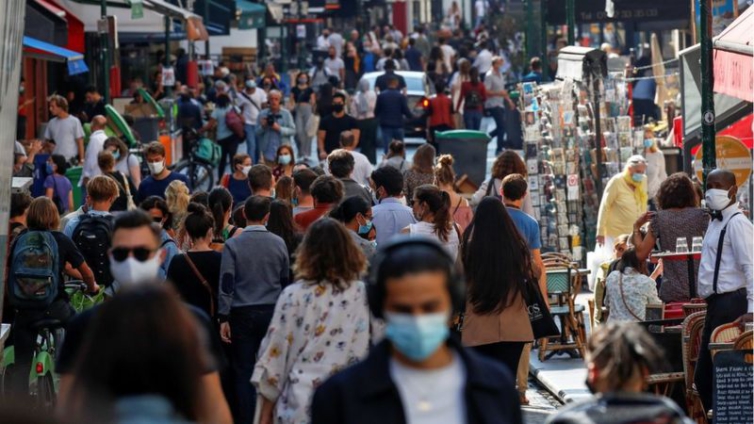
French President Emmanuel Macron says his country will be fighting the virus until at least the middle of next year as cases there surged past a million.
On Friday France recorded more than 40,000 new cases and 298 deaths. Other nations including Russia, Poland, Italy and Switzerland also saw new highs.
The World Health Organization said the spike in European cases was a critical moment in the fight against the virus.
It called for quick action to prevent health services being overwhelmed.
Daily infections in Europe have more than doubled in the past 10 days. The continent has now seen a total of 7.8m cases and about 247,000 deaths.
"The next few months are going to be very tough and some countries are on a dangerous track," WHO chief Tedros Adhanom Ghebreyesus told reporters.
Globally there have been more than 42m cases and 1.1m deaths.
Scientists have warned that although progress is being made at unprecedented speed to create a vaccine, it would not return life to normal in spring. A vaccine could take up to a year to roll out, they have suggested.
What is happening in France?
Speaking on a visit to a hospital in the Paris region, Mr Macron said scientists were telling him that they believed the virus would be present "at best until next summer", he said.
But he said it was still too early to say whether France would go into a new full or partial lockdown.
An overnight curfew in the country is being extended to about two-thirds of the country - 46 million people - from Friday night for six weeks.
The curfew could be relaxed when new infections dropped back down to between 3,000 and 5,000 a day, Mr Macron said - a level of infection that was last seen at the end of August.
Meanwhile the head of a Paris hospital group warned that the second wave of infections could be worse than the first.
"There has been a perception in recent months that a second wave does not exist, or that it is a small wave. The situation is the opposite," Martin Hirsch, the head of the AP-HP hospital group, told local media.
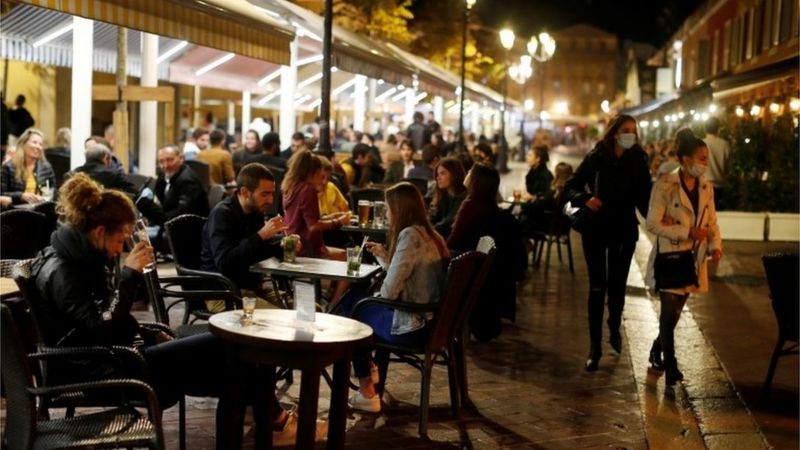
Many of those currently in intensive care in his hospitals were older people who had been self-isolating but had become infected when their children visited them, Mr Hirsch said.
"There are many positive people, infectious, in the streets without knowing it and without anyone else knowing it," he added.
Covid patients currently occupy nearly half of France's 5,000 intensive care beds.
And Prime Minister Jean Castex said a further influx of patients was likely - "The new cases of today are the hospitalised patients of tomorrow. The month of November will be difficult," he said.
Latest Stories
-
Teacher unions to meet government Monday over nationwide strike
14 minutes -
Photo story: Republic Bank-JoyNews Habitat Fair clinic wraps up after three days of housing solutions, expert engagement
18 minutes -
National Peace Council urges investment in youth to sustain Ghana’s peace
40 minutes -
Afenyo-Markin urges youth to speak up against injustice
50 minutes -
CAF annuls Edo Queens victory, orders WAFU B final to resume from extra time
1 hour -
Interior Minister urges traditional authorities to enforce anti-bushfire bye-laws
1 hour -
3rd Republic Bank-JoyNews Habitat Fair Clinic ends on a high note after three days of strong patronage
1 hour -
Ten climbers missing after avalanche hits Himalayan base camp
2 hours -
NPP had more permanent fuel relief measures than current GH¢2 diesel cut – Amin Adam
2 hours -
Photos from the 3rd Republic Bank-JoyNews Habitat Fair Clinic
2 hours -
Ethiopia’s army promises restraint amid fears of new civil war
2 hours -
Amin Adam calls for review of fuel taxes as diesel prices remain above GH¢18
3 hours -
World Vision Ghana, Ahafo districts sign MoU for universal WASH coverage
4 hours -
When the gold engine stutters: What Ghana’s Cedi and reserves are telling us about the new economic architecture
4 hours -
Two reportedly die after being trapped in mining pit at Juaboso
4 hours