

Audio By Carbonatix
Founding director of the West Africa Centre for Crop Improvement (WACCI) Prof. Eric Danquah says the vision for a hunger-free and poverty-free Africa will only be met through investments in science, technology, and innovation (STI), and strong political will by governments.
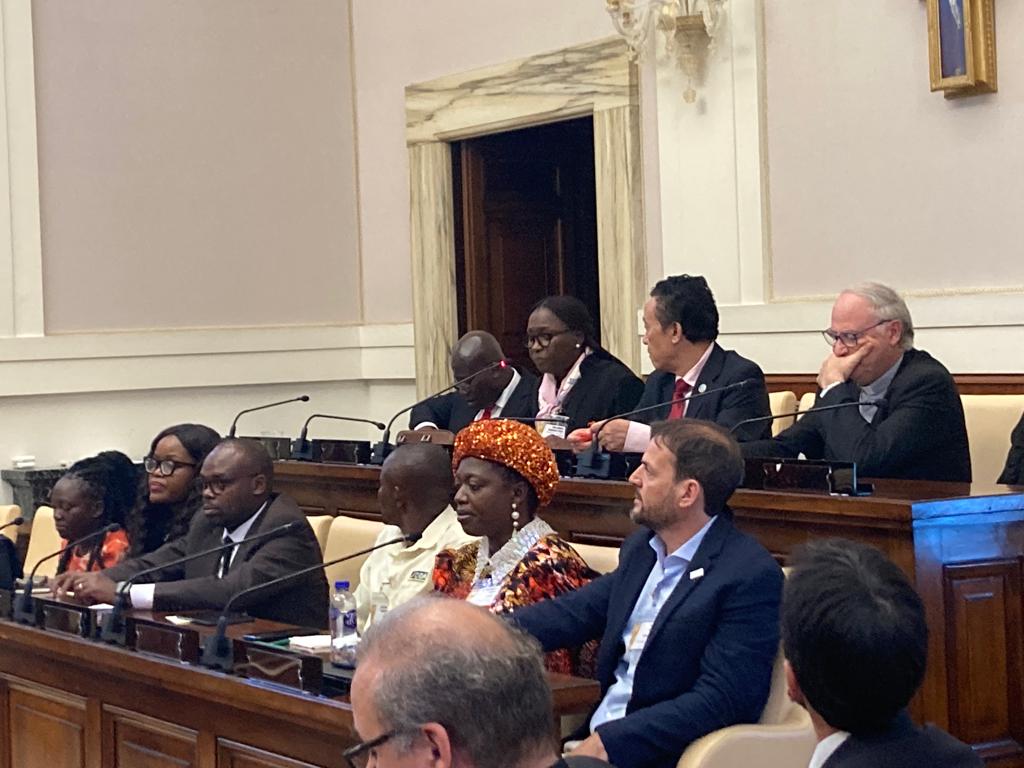
Speaking at a roundtable discussion by African farmers at the Pontifical Academy of Sciences, Vatican City, the University of Ghana scientist observed Africa has the potential to not only feed itself sustainably but also feed the rest of the world.
“African governments must be accountable for fulfilling their continental promises. Neglecting the role of STI in development strategies should be viewed with utmost seriousness. Governments that neglect STIs should be charged with crimes against humanity,” he said.
“The fact is that Africa is not going to use a different pathway to develop. If we fail to invest in
STI and do business as usual, we shall be the only continent that will not meet SDG 2 on zero hunger and several other SDGs,” he added.
With only seven years left to fulfil the United Nations Sustainable Development Goal 2 on zero hunger, an estimated 278 million people on the African continent are estimated to face hunger.
Prof. Danquah said challenges like rapid growth in population, low agricultural productivity, escalating food imports, climate change, regional conflicts, and global crises like Covid-19, demand immediate and significant action.
Speaking on the theme, “Leveraging Science and Innovation to Foster Sustainable Food Systems and Prosperity in Africa,” Prof. Danquah said Africa needs to develop resilient, nutritious, and high-yield varieties of its staple foods, with a focus on achieving two to five-fold increase in current yields by 2030. This, he said, can only be done through investments in Africa’s human resources.
“There is a pressing need for a new generation of scientists, proficient in advanced technologies like biotechnology and genome editing.
"These professionals need to be trained at African Centers of Excellence like WACCI, where they can use cutting-edge methods to develop improved crop varieties for African farmers,” he said.
He called for the establishment of an African Academy of Agricultural Sciences with a proposed endowment of $150 million in a phase one project with the current leading African Centres of Excellence in Plant Breeding as focal institutions.
“A rejuvenation of agricultural education is paramount. This revitalization should focus on three core areas: research, development, and outreach,” he said.
Prof. Danquah called for urgent collaborations between public and private sectors to catalyze genetic innovation, improve seed systems, and enhance commodity value chains.
“Streamlining of policies that are vital for agricultural growth including ensuring farmer’s rights, facilitating their access to credit, and promotion of innovations,” he said, are necessary to improve food security.
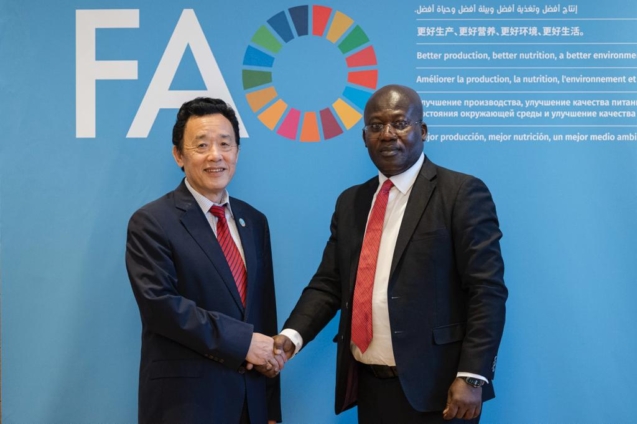
FAO director general Dr. QU Dongyu in his address agreed that technology can deliver great potential in the effort to deal with Africa’s food insecurity challenges.
“We must ensure that it is accessible for everyone,” he said. He expressed concern Africa is not on track to meet the global goals on food security and nutrition set out in the 2030 Agenda, nor the goals of the Malabo Declaration by African heads of state in 2014 that aimed to end hunger on the continent by 2025.
The African farmers who participated in the roundtable discussion called on governments to roll out agricultural policies “that are focused on outcomes, open towards technologies and practices, and based on scientific evidence.”
Malawian farmer Collina Msongole, Nigerian farmer Patience Koku, Zimbabwean farmer Ruramiso Mashumba, Kenyan farmer Michael Waciira, and Sierra Leonean farmer Jorge Lopez Menendez spoke at the roundtable.
“We advocate for the adoption of agricultural technology policies that are outcome-driven, technology-neutral, and grounded in evidence-based approaches.
"Policies should neither allow nor prohibit specific agricultural technologies and practices nor should they favour one over another,” they said.
“Remaining open and neutral, policies will nurture a diversified technological ecosystem, enhancing farmers’ adaptability and resiliency to local conditions by giving access to all the tools in the toolbox – be them traditional, modern, organic, biotechnology, biological, chemical, biochemical, mechanical, or digital tools – to implement locally tailored and flexible solutions,” they added.
Head of Public Affairs, Science, and Sustainability at Bayer Africa, Mildred Nadah Pita, said it is crucial for policymakers to listen to the solutions farmers ask for to help them deal with the challenges they face.
Chancellor of the Pontifical Academy for Life Renzo Pegoraro said “Agricultural development must be sustainable from a socio-economic and environmental point of view.”
Latest Stories
-
President Mahama puts mining firms on notice over 2030 raw mineral ore export ban
2 minutes -
Ghana’s fuel consumption rises 12.24% to 4.06 billion litres in first half of 2026
2 minutes -
Global oil shock tests Ghana’s shift towards domestic fuel production
6 minutes -
Roads Ministry threatens legal action against utility companies over excavation of completed roads
7 minutes -
Mammography available in only 5 regions, making breast cancer screening difficult – Radiologist
17 minutes -
Pastor Daniel Amoateng pays for release of 23 Nsawam prison inmates
19 minutes -
Government to equip health facilities with mammography, radiotherapy machines – Deputy Health Minister
21 minutes -
Floodwaters recede in Hohoe as residents begin returning home – NADMO
32 minutes -
Celine Dion kicks off Paris Fashion Week with surprise performance
32 minutes -
4 years of kidney failure: 28-year-old nurse appeals for $100,000 to undergo life-saving kidney transplant
41 minutes -
Hohoe flood: About 5,000 affected as NADMO begins emergency relief
42 minutes -
Why must I renew my vehicle’s registration number every 2 years?
44 minutes -
Parliamentary Privilege and the Limits of Personal Liberty: A study on the immunity of members of parliament from arrest in Ghana
45 minutes -
Kwabenya Court denies bail to six accused in alleged 3.9-tonne cocaine shipment
46 minutes -
Ghana opposes calls to abolish ICC, urges stronger action against crimes against humanity
53 minutes