


Audio By Carbonatix
In our series of letters from African writers, journalist and former Ghana government minister Elizabeth Ohene writes that Zimbabwe's ex-President Robert Mugabe, who has died aged 95, had a special place in the hearts of Ghanaians.We in Ghana called Robert Mugabe our in-law. It was in Ghana that he met his first wife, Sarah Francesca Hayfron. He married her in 1961, and she became known as Sally Mugabe.She was one half of a set of female twins and she was teaching in Takoradi city in Ghana's Western Region when Mr Mugabe met and fell in love with her.Ghana had achieved its independence from the UK in 1957, and Mr Mugabe had come to "to find himself" and experience the dream of an independent African state.The unofficial story was that he had received training on how to wage the struggle for independence in what was then Rhodesia.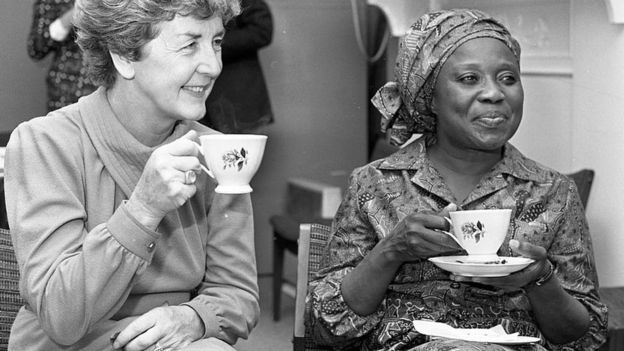 Robert Mugabe's first wife, Sally, pictured here in Ireland in 1983, died in 1992Those were heady days in the newly independent Ghana and the Hayfron family was educated, political, well-connected and part of high society.The father was a well-trained horticulturist and his home was famous for well designed gardens.Sarah Francesca Hayfron was certainly quite a catch for the then unknown and struggling Robert Mugabe.As it turned out, his new wife turned out to be a veritable political partner and activist, when he took her back to his home country.
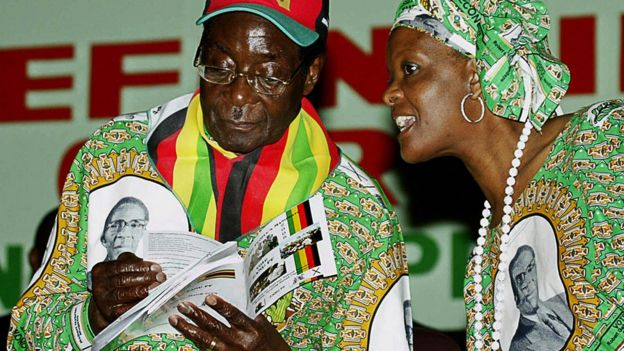 Robert Mugabe's second wife, Grace, was seen as a ruthless political operatorThis was to have far reaching consequences because by the time husband and wife were together again, they could not have another child.In 1987, Mr Mugabe started an affair with his secretary, Grace Marufu, 41 years his junior, because, according to him, he felt he had to provide grandchildren for his mother. It was not because of his desires.Sally stayed by her man, continuing as a political activist and earning the well-deserved title of Amai, or Mother, by the time Mr Mugabe became prime minister in 1980, and First Lady when he became president in 1987.We in Ghana felt we had a special status in newly independent Zimbabwe and it was suddenly the place to go.The 1980s were not good times in Ghana and many top professionals - including medical doctors, university professors, and judges - went to live and work in Zimbabwe.They were anxious for Zimbabwe to learn the lessons from Ghana, and other African countries, which had attained independence earlier and were struggling politically and economically.They admired the orderliness of the Zimbabwean towns and cities, and their hosts admired their self-confidence.But on a reporting trip to Zimbabwe in 1987, I found that many of the Ghanaians were expressing anxieties about Mr Mugabe's decision to transform his position from prime minister to president. They said they feared for Zimbabwe's future.Zimbabweans were welcoming to Ghanaians and I remember arriving at the main airport in the capital, Harare - now known as the Robert Gabriel Mugabe International Airport - and the immigration officer smiling when he saw my Ghanaian passport and saying: "Welcome, our in-law."By the beginning of the 1990s, some tensions were surfacing as the emerging Zimbabwean black middle class began to resent the presence of Ghanaian professionals.
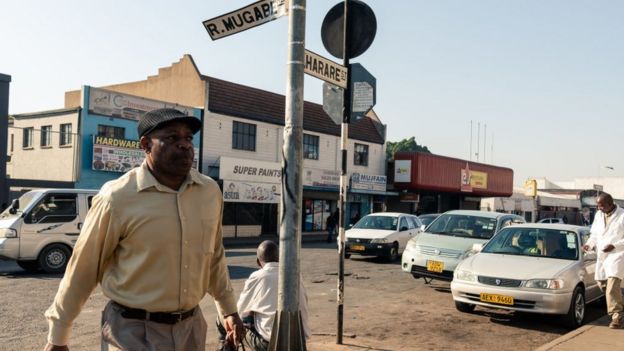 Robert Mugabe's critics believe he ruined Zimbabwe's economyBut the respected in-law position remained. Indeed, Zimbabwe granted Ghanaians visa-free entry, and the arrangement still exists.We in Ghana silently cheered Sally's firm but tender hold on her husband and it was widely felt that she was his moral anchor, who kept him on the straight and narrow.Sally's death in January 1992 was felt keenly in Ghana and a large delegation went to her funeral in Harare.Our son-in-law looked bereft and he gave a most touching and powerful eulogy at the burial ceremony.
Robert Mugabe's first wife, Sally, pictured here in Ireland in 1983, died in 1992Those were heady days in the newly independent Ghana and the Hayfron family was educated, political, well-connected and part of high society.The father was a well-trained horticulturist and his home was famous for well designed gardens.Sarah Francesca Hayfron was certainly quite a catch for the then unknown and struggling Robert Mugabe.As it turned out, his new wife turned out to be a veritable political partner and activist, when he took her back to his home country.Mugabe's extra-marital affair
The story of the couple's struggles in Rhodesia - including their incarceration - have become the stuff of legend.In the midst of it all, and when Mr Mugabe was in prison, their son, Nhamodzenyika, died of malaria in Ghana.Robert Mugabe's second wife, Grace, was seen as a ruthless political operatorThis was to have far reaching consequences because by the time husband and wife were together again, they could not have another child.In 1987, Mr Mugabe started an affair with his secretary, Grace Marufu, 41 years his junior, because, according to him, he felt he had to provide grandchildren for his mother. It was not because of his desires.Sally stayed by her man, continuing as a political activist and earning the well-deserved title of Amai, or Mother, by the time Mr Mugabe became prime minister in 1980, and First Lady when he became president in 1987.We in Ghana felt we had a special status in newly independent Zimbabwe and it was suddenly the place to go.The 1980s were not good times in Ghana and many top professionals - including medical doctors, university professors, and judges - went to live and work in Zimbabwe.They were anxious for Zimbabwe to learn the lessons from Ghana, and other African countries, which had attained independence earlier and were struggling politically and economically.They admired the orderliness of the Zimbabwean towns and cities, and their hosts admired their self-confidence.But on a reporting trip to Zimbabwe in 1987, I found that many of the Ghanaians were expressing anxieties about Mr Mugabe's decision to transform his position from prime minister to president. They said they feared for Zimbabwe's future.Zimbabweans were welcoming to Ghanaians and I remember arriving at the main airport in the capital, Harare - now known as the Robert Gabriel Mugabe International Airport - and the immigration officer smiling when he saw my Ghanaian passport and saying: "Welcome, our in-law."By the beginning of the 1990s, some tensions were surfacing as the emerging Zimbabwean black middle class began to resent the presence of Ghanaian professionals.Robert Mugabe's critics believe he ruined Zimbabwe's economyBut the respected in-law position remained. Indeed, Zimbabwe granted Ghanaians visa-free entry, and the arrangement still exists.We in Ghana silently cheered Sally's firm but tender hold on her husband and it was widely felt that she was his moral anchor, who kept him on the straight and narrow.Sally's death in January 1992 was felt keenly in Ghana and a large delegation went to her funeral in Harare.Our son-in-law looked bereft and he gave a most touching and powerful eulogy at the burial ceremony.DISCLAIMER: The Views, Comments, Opinions, Contributions and Statements made by Readers and Contributors on this platform do not necessarily represent the views or policy of Multimedia Group Limited.
Tags:
DISCLAIMER: The Views, Comments, Opinions, Contributions and Statements made by Readers and Contributors on this platform do not necessarily represent the views or policy of Multimedia Group Limited.
Latest Stories
-
7 dead, 2 missing after boat capsizes on Volta Lake
5 minutes -
Miss Diaspora Ghana 2026 launched to deepen diaspora ties and drive development
11 minutes -
US warns citizens to reconsider Nigeria travel on safety grounds
36 minutes -
Ivan Toney questions refereeing in Saudi Pro League title race after Al-Ahli draw
37 minutes -
Angola appoint Aliou Cissé as new head coach
49 minutes -
Virtual Security Africa showcases digital security vision at Kwahu Business Forum
54 minutes -
EBID strengthens regional integration role amid global economic uncertainty
1 hour -
Two assault rifles, ammunition retrieved in Police probe of Tamale gang attack
1 hour -
EBID records strong financial growth with $722m disbursements in 2025 – President, Dr George Donkor
1 hour -
EBID to mobilise $2.69bn under new 2026–2030 growth strategy – Dr George Donkor
2 hours -
An open letter to telcos, regulators and security agencies on mobile money fraud in Ghana
2 hours -
Mobile Money Merchants are driving fraud
2 hours -
Alban Bagbin declines minority’s motion to investigate sale of gold reserves at BoG
2 hours -
NACOC leadership tours drug testing centres in Accra
2 hours -
OSP’s power to prosecute without AG’s authorisation unconstitutional – AG files at Supreme Court
2 hours