

Audio By Carbonatix
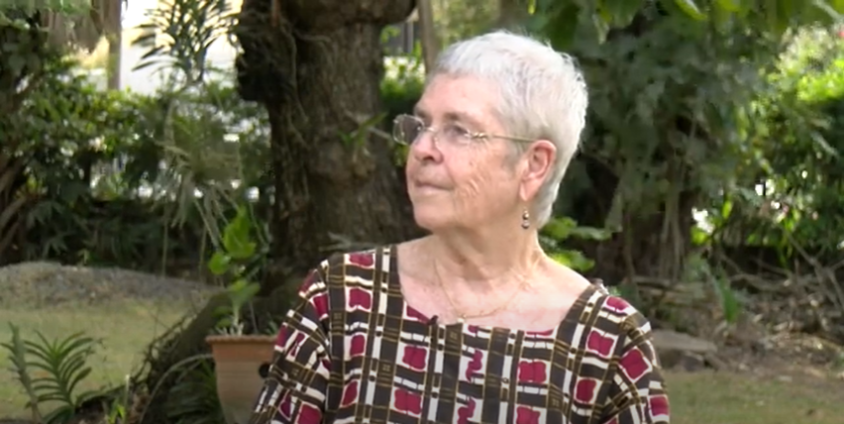
Former Head of the Child Health Unit at the University of Ghana Medical School and Korle Bu Teaching Hospital, Professor Janet Neequaye, says the worst period in her time as a healthcare provider in Ghana was during the 1983 drought.
Ghana experienced its worst drought in modern history from 1981 to 1983. The drought peaked in 1983 and was compounded by substantial bush fires and the expulsion of large number of Ghanaians from Nigeria in the same year. Food production dropped dramatically in 1983 leading to widespread food shortages.
According to Prof. Neequaye, for hospitals and other healthcare centres, essential drugs for treatment were in dire shortage thus putting the lives of patients at risk of death.
“Well, the worst period was in 1983 round about there, 1984, after the military coups when everything was very very bad in Ghana. There were severe shortages of medical equipment, drugs, food, even kenkey you couldn’t buy,” she said.
The situation was further compounded by long power outages due to the failure of the Akosombo Dam to produce enough electricity to power the nation as a result of the low water levels from the drought.
“At the same time there was shortage of water, in this area you couldn’t get water, shortages of petrol, and then because of lack of rainfall the Akosombo Dam, the lake, run out of water so they couldn’t power the electricity generators properly. So we had prolonged electricity blackouts. Sometimes we were on for 12 hours and off for 24 hours, it was even worse than dumsor.
“So at times, in those days people didn’t have generators, so at times I had to send the mothers from Korle Bu back home to bring in kerosene lamps so we could work. It was very bad. And because there was a shortage of medicines, it was very hard to actually treat patients.
“Sometimes they had to go to town to buy penicillin or even anti-malarials. And around that time the government brought in cash and carry. If you didn’t have any money, it was difficult to buy anything in the hospital,” she said.
Prof. Neequaye said some reprieve came when the British High Commission flew in essential drugs from the UK to Ghana.
The drugs were meant to support the influx of returning Ghanaian immigrants from Nigeria following their expulsion. It was thought then that they would be housed in a refugee camp, however, upon arrival, most of them moved back to their villages.
"So we had a lot of drugs and so on which kept us running for about a year," she said.
Latest Stories
-
Ghana to honour astronaut Christina Koch with University of Ghana ties after Artemis II mission
4 minutes -
The Pulse of accountability: Navigating medical negligence in Ghana, as an emerging challenge in healthcare.
10 minutes -
Borders by Design: How the world controls who moves and who stays
16 minutes -
UNFPA Ghana recognised with Head of State award
36 minutes -
Berekum Chelsea winger Dominic Frimpong dies after armed robbery attack on team bus
52 minutes -
Armed robbers attack Berekum Chelsea team bus, forward Frimpong killed
1 hour -
FIFA refuses Iran request to move games to Mexico amid US conflict
1 hour -
Man City cut Arsenal’s lead at top of Premier League to six points after beating Chelsea
2 hours -
Star Oil posts strongest growth to cement market leadership in 2025
2 hours -
TTAG raises alarm over recruitment of 7,000 teachers; says it’s inadequate to clear backlog
2 hours -
Bawumia mourns former Savannah Regional Minister Salifu Braimah
2 hours -
First Lady inspires young women at 2026 Young Singles’ Rally at Sakumono
2 hours -
Savannah NPP suspends all activities over death of Salifu Adams Braimah
2 hours -
Greater Accra Minister disowns Kaajaano demolition exercise
2 hours -
Kwahu Easter 2026 records low crime, improved sanitation
2 hours