

Audio By Carbonatix
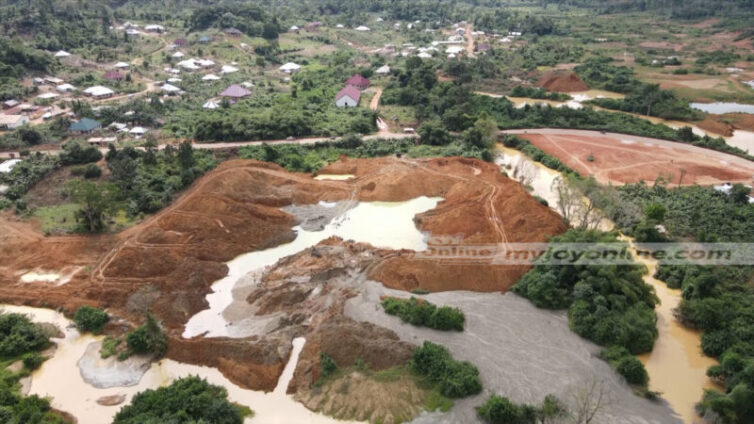
A policy analyst and gender advocate, Dr Araba Etrew, has called for the declaration of a state of emergency in Ghana to address the alarming situation of illegal mining, commonly known as galamsey.
According to Dr Etrew, the galamsey crisis is escalating, and if immediate action is not taken, the country will face consequences it may not be able to manage in the near future.
“What I want to see that I’m not seeing is a state of emergency, we haven’t declared that. If we can declare a state of emergency and say the ministry has locked up our ocean and for the sea to rest, then we can declare a state of emergency over our forest belt, on our water bodies so that the rivers will rest, the forest belt will also rest,” she said.
Speaking on Newsfile on Saturday, October 5, she said that the government needs to demonstrate strong political will and avoid turning the fight against galamsey into partisan politics.
Dr. Etrew warned that the country cannot afford to wait until the situation worsens, especially as the mining practices currently in use are unsustainable.
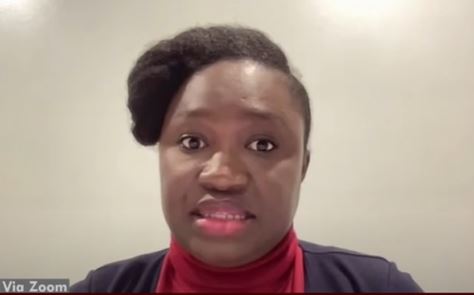
She further highlighted the inconsistency in the country’s approach, pointing out that while Ghana recently signed the Presidential Compact on Water, Sanitation, and Hygiene (WASH), which aims to provide $1.7 billion annually for WASH services, the country’s water bodies are being destroyed by galamsey.
“It is as if we’re just signing onto international treaties without concrete action back home,” she stressed.
Dr Etrew also questioned how Ghana could fulfill the commitments of the compact when its water bodies and forests are already being devastated by illegal mining, noting that Ghana is the first country in West Africa to sign onto the compact.
“I feel that if organised labour is the way to go, then we need to sacrifice. Our ancestors did the sacrifice for us to get independence,” she said.
She reiterated the need for a collective effort, urging all sectors of society to unite in the fight against galamsey.
“We need civic education and massive reforms everywhere across board in both the private sector and private sector. NCCE and civil society organisations, media organisations and educational sectors, everybody has to come on board on this,” Dr Etrew added.
Latest Stories
-
Catholic Bishops say moral values must match economic priorities in Anti-LGBTQ+ debate
20 minutes -
IGP Yohuno urges merit and hard work ahead of Police Academy exams
33 minutes -
Queendalyn Yurglee releases debut album ‘Clouds of Glory’
1 hour -
UDS moves to clear MPhil student wrongly linked to robbery case
1 hour -
Vodza Regatta 2026: Prof Audrey Gadzekpo rallies investors for coastal tourism growth
1 hour -
Introduction of 100 new Metro Mass buses won’t affect transport unions – GPRTU
2 hours -
Deputy Transport Minister backs Yellow Line traffic initiative
2 hours -
MTN Ashanti-Fest music concert set to hit Kumasi on Saturday
2 hours -
Authorities probe discovery of dead fish at Tema shipyard
2 hours -
Minority welcomes fuel tax cuts, demands accountability for GH¢1 levy
2 hours -
It remains a priority — Sam George on Anti-LGBTQ bill
2 hours -
Police arrest Nigerian national seen in viral videos wearing police uniforms
2 hours -
Free golf training empowers underprivileged girls in Accra
2 hours -
Why SIGA’s reset is not a market sin, but a national necessity
3 hours -
SIGA Directive: Beyond the theatre of institutional displacement
3 hours