

Audio By Carbonatix
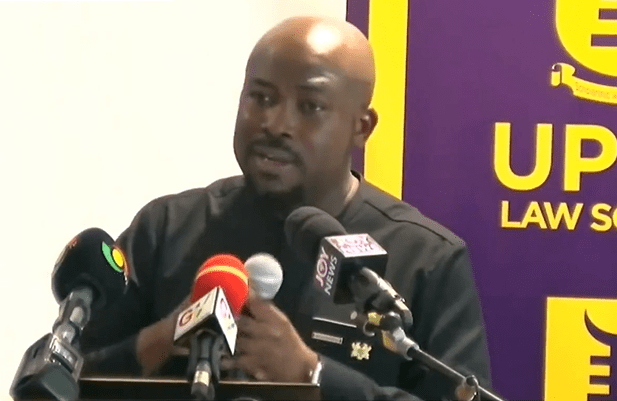
Chief Executive of the Chamber of Bulk Oil Distributors (CBOD) says the huge socioeconomic impact that will be felt following the imminent transport fares hike by 30% is as a result of poor economic policies by successive governments.
According to Senyo Hosi, whereas the government will never be able to control the rise and fall of fuel prices, what it could have done was to provide structures that would have cushioned Ghanaians from the devastating impact.
Speaking on JoyNews’ PM Express, he stated that with the near ₵7billion the government accrued as revenue annually from the petroleum sector alone, the government could have invested it into rail infrastructure among others for the country.
“The monies we have actually spent, the revenue we have generated from petroleum in the last ten years …is been so much but there has been very weak policy planning by successive governments. What we’re suffering today is a function of weak policymaking by successive governments.
“What I would have expected governments to have done for the revenue that we have here, because we know there will definitely be a future problem, what we should rather have been doing was invest in diversifying and deepening our mass exportation sector which would make the implication for these minimal increases very very little,” he said on Monday.
He added that “I was on your set the last time and I said it makes no sense that in this country after 65 years of independence thereabout we can’t boast of a rail that’s connecting Dodowa all the way to Circle, connecting anywhere around Ada through Tema all the way to Kasoa?
“The nexus, we’ve not been able to connect anything. Go to Kumasi, it’s a disaster. We all have to depend on the roads; we all have to depend on our trotros which are more expensive to run.”
He explained an investment in such infrastructure would have placed more power in the hands of government to control how much brunt the Ghanaian people would feel from the fossil fuel price hikes and now the transport fares hike.
“You know the implications are less, they’re minimal, they’re more within the control of government,” he said.
Meanwhile, he revealed that Ghana loses about a billion or more to leakages in the revenue collection process, annually.
“Government today is raising close to ₵7 billion in petroleum taxes. It’s supposed to be more. There’s a lot of leakages that’s going on I think possibly another billion and a half to two billion could be generated.
“Petroleum accounts for around 12% of our total domestic tax revenue. It’s a very important tax-generating feature in our tax or our physical structure. Government sees the revenue side and sometimes loses sight on the social implications for it,” he said.
Latest Stories
-
David Vondee lauds Mahama for emergency Cabinet meeting and key resolutions
28 seconds -
Universities should focus on churning out impactful graduates rather than merely adding new programmes — UEW VC
3 minutes -
Publican AI system is speeding up trade, not slowing it — GRA Boss
7 minutes -
Government to construct a FIFA category 2 stadium in the Volta Region – James Gunu
16 minutes -
CAF to introduce reforms to fix AFCON final controversies – Patrice Motsepe
17 minutes -
EOCO defends probe into Kwamigah-Atokple
19 minutes -
Fuel tanker accident at Breku Forest spills thousands of litres of diesel
25 minutes -
IEAG backs Publican AI system after concerns addressed
28 minutes -
No new taxes or charges- GRA boss assures importers over rollout of Publican AI system
28 minutes -
Egypt goalkeeper banned for striking referee
29 minutes -
Police restore calm following clashes between Asisiriwa and Brodekwano
30 minutes -
Education sector job seekers must submit certificates for verification – GTEC
32 minutes -
Volta Lake accident highlights lax safety regulations — Savannah Regional Minister
32 minutes -
UEW Vice-Chancellor calls for rethink of Ghana’s education system at 2026 Public Lecture
38 minutes -
Health expert urges enough sleep, rest to control hypertension
39 minutes