

Audio By Carbonatix
With more than 6000 Covid-19 cases reported in Africa, the virus is threatening fragile health systems on the continent. Infections are increasingly spreading not only between African countries but within different localities in the hardest-hit countries.
For instance, in the Democratic Republic of the Congo, where Covid-19 cases were at first confined to Kinshasa, now a handful of cases have been reported in the easternmost regions of the country that were until recently in the grip of an Ebola outbreak. In South Africa, all provinces have now reported cases. The outbreaks in Burkina Faso, Cameroon and Senegal are also widespread.
“Case numbers are increasing exponentially in the African region,” said Dr Matshidiso Moeti, the World Health Organization (WHO) Regional Director for Africa “It took 16 days from the first confirmed case in the Region to reach 100 cases. It took a further 10 days to reach the first thousand. Three days after this, there were 2000 cases, and two days later we were at 3000.”
To contain Covid-19, many countries in Africa are implementing measures, which restrict gatherings and the movement of people. Nationwide lockdowns are in effect in Kenya, Uganda, the Republic of the Congo and elsewhere. However, governments must use these measures in a considered, evidence-based manner, and make sure that people can continue to access basic necessities.
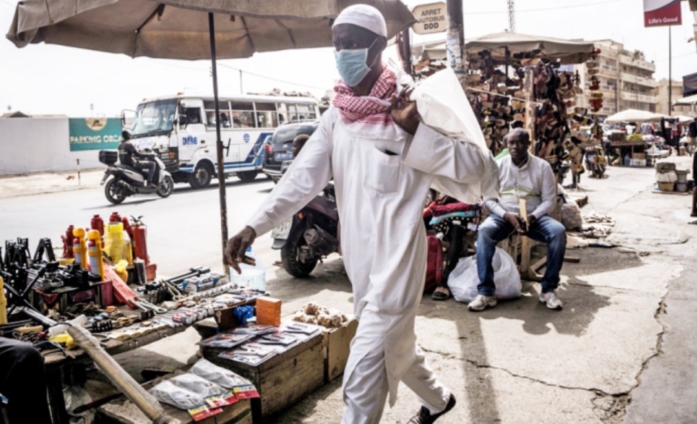
As many people in the region live in crowded conditions or work in the informal sector and need to earn money daily to survive, it is important that countries make provisions to ensure that people can still access essential services.
WHO is working closely with national governments and United Nations partners including the World Food Programme (WFP) to plan for these needs.
Dr Moeti and Ms Lola Castro, the WFP Regional Director for Southern Africa, addressed the restrictive measures during a virtual media briefing held today by the WHO Regional Office for Africa with the support of the World Economic Forum.
“For socially restrictive measures to be effective, they must be accompanied by strong, sustained and targeted public health measures that locate, isolate, test and treat Covid-19 cases,” Dr Moeti pointed out.
“It’s vital that ports continue to operate to receive food and other essential humanitarian cargo; that borders and roads stay open so it can be moved where it is most needed; and that distributions to vulnerable people are conducted safely,” said Ms Castro.
“It’s also crucial that the international community promptly provide the considerable funding needed to maintain and scale up assistance programmes.”
As well as ensuring basic needs are met, WHO is pursuing innovative solutions to the region’s pressing public health problems.
On 1 April 2020, WHO hosted an online training session on the clinical management of Covid-19 cases.
Nearly 500 attendees from across Africa logged in to learn about issues including case characterization and triage, treating severely ill cases, infection prevention and control, and how to quarantine and manage cases in the community.
WHO also hosted a three-day ‘hackathon’, bringing together Africa’s brightest minds to find solutions to some of the problems Covid-19 has presented.
Latest Stories
-
Manhyia South MP demands PPA board minutes on ‘Big Push’ sole-sourcing approvals
6 minutes -
Today’s Front pages: Tuesday, April 7, 2026
9 minutes -
President Mahama praises GWL MD Adam Mutawakilu over Damongo Water Project progress
11 minutes -
Ghana–China Forum explores zero-tariff trade opportunities
29 minutes -
What is wrong with us?: A quiet truth we can no longer ignore
42 minutes -
What is wrong with us? : When sirens become symbols of power rather than protection and emergencies
1 hour -
Businesses scramble to get noticed by AI search
1 hour -
From perk to performance: Why employee wellness must be a core business strategy
2 hours -
Bank of Ghana’s $1.3bn profit from gold sale could help narrow 2025 losses
2 hours -
Odau Twafohene Baffour Osei Afrifa appointed Regent of Akyem Chia
2 hours -
We are focused on engineering low interest rate regime – BoG Governor assures
2 hours -
How Sporting hero Gyokeres could end European run
2 hours -
The attack on Ghanaian traders in Burkina Faso and the blame game: Why Hybrid Security Governance Holds the Key (II)
2 hours -
Bayern face waiting game on ‘very special’ Kane
2 hours -
The Problem with Nutrition Advice on Social Media – Lessons from a study among University Students
2 hours