

Audio By Carbonatix
An Associate Professor at the School of Law, University of Ghana, Professor Kwadwo Appiagyei-Tuah has stated that the right to demonstrate is deeply entrenched in the 1992 Constitution of Ghana and supported by the Public Order Act.
According to him, the participants in the Democracy Hub protests had the legal right to protest.
Speaking on Top Story on Wednesday, September 25, Prof Appiagyei-Tuah raised concerns about human rights violations in the way the protesters were handled by the Ghana Police Service.
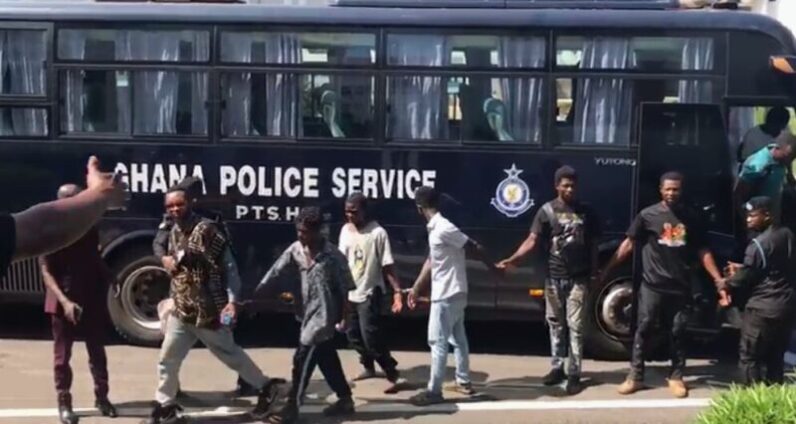
He mentioned key issues such as the reasons for the arrests, the transfer of protesters between prisons without notifying their families or lawyers, and the fact that some were brought to court without any formal charges, saying that these are critical human rights issues that touch on the dignity of the individual.
This, he questioned the nature of the offense that would warrant the denial of bail to the arrested protesters.
“Of course, bail conditions are supposed to be directed by the court on an individual case-by-case basis so it is not that we say that everybody should be granted bail but what is the nature of the offense?
“Sometimes the nature of the offense and the circumstances surrounding it determines if a person should be granted bail or not. And if you look at the surrounding circumstances where these alleged violators were scattered at various police stations and were not allowed access by their lawyers, they constitute various violations of the rights and dignities of these demonstrators,” he said.
Commenting on the police claim that the protesters engaged in unlawful assembly, he argued that the demonstrators were simply exercising their right to assemble as part of their protest.
“So if they go on demonstration, they are assembling and so what is the unlawfulness about this?
“...But if it is unlawful, it could mean that they may have violated some laws which include vandalising property or doing anything that obstructed the rights of other people. I don’t have the facts to speak to that but that may be a case where you can talk about unlawful assembly," he said.
Prof Appiagyei-Tuah added that if the police have evidence to show that the demonstrators engaged in such activities, they have the right to charge them and even request that bail be denied "but the situation where some are denied opportunity or access to a lawyer, these are serious violations.”
A good number of protesters are facing trial after the police arrested them and accused them of breaking various public order provisions.
Latest Stories
-
Oil traders bet millions minutes before Trump’s Iran talks post
2 hours -
Fortnite-maker Epic Games lays off 1,000 more staff
2 hours -
Philippines declares energy emergency over Iran conflict
2 hours -
China dials back on fuel price hikes to ‘reduce burden’ on drivers
2 hours -
Elon Musk’s Starlink blocked from operating in Namibia
2 hours -
Kwame Dadzie: Did Stonebwoy’s ‘Jejereje’ really give NDC “significant” electoral impact?
3 hours -
Facebook offering TikTok and YouTube creators $3,000 to post content
4 hours -
Meta told to pay $375m for misleading users over child safety
4 hours -
‘I’m no longer interested in Grammy, Western validations’ – Davido
4 hours -
Six politicians I prayed for in 2023 all won their elections – Pete Edochie
4 hours -
Two granted bail for illegally interfering with ECG’s network
4 hours -
Court exonerates Gabriel Tanko Kwamigah-Atokple and rebukes EOCO for abuse of power
4 hours -
Customer sues bank over alleged breach of confidentiality
5 hours -
Lands and Mines Watch Ghana commends Armah-Kofi Buah for transparent Damang Mine Lease Transition
5 hours -
GTVETS announces resumption of work as PSWU strike is called off
5 hours