


Audio By Carbonatix
Even if you have never worked for a big company, you will probably have an idea what the HR and IT departments do.
Human resources (HR) deal with people, IT deal with the technology.
It might seem like an obvious management division, but some companies are merging the responsibility for those departments under one leader.
And a big part of that is to do with the introduction of AI.
Some 64% of senior IT decision makers at large companies expect their HR and IT functions to merge within five years, according to a survey by Nexthink, a firm that makes workplace software.
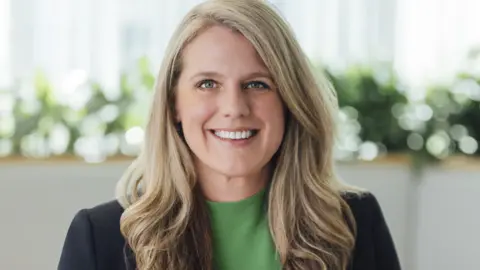
Tracey Franklin is the chief people and digital technology officer at biotech company Moderna, which has more than 5,000 employees.
"I am responsible for the entire HR function and the entire IT function," she says.
"That's both what you would think of as core IT for the company, as well as the digital technology required to do drug development, manufacturing and commercialisation."
"Traditionally, HR departments would say, 'we're going to do workforce planning, so we're going to count how many humans we need to get tasks done'. And then the IT team would take requests [for] the systems that we need," she says.
In contrast, she thinks of her role as being an architect of how work is done.
"It's [about] how work flows through the organisation, and what should be done with technology – whether that's hardware or software or AI – and where you complement human skills around that.
Moderna has a partnership with OpenAI, the creator of ChatGPT, and has trained all employees in using it.
"We're saying, 'here are the tools to rewrite how work gets done,'" she explains. "Having employees learn how to learn, be masters of AI, and recreate their own workflows."
Before taking on her current role in November 2024, Ms Franklin led HR at the company. She took some IT training for her new job, but she has two IT managers reporting to her.
"I don't think the leader of this function has to be an expert in one area or the other, but what they have to do is set direction, provide vision, do capital allocation, remove obstacles, set culture, and do employee engagement," she says.
Although the leadership structure has changed, the people within the HR and IT teams continue to do the work they are experts in. "I haven't turned an HR person into an IT person or vice versa," she says.
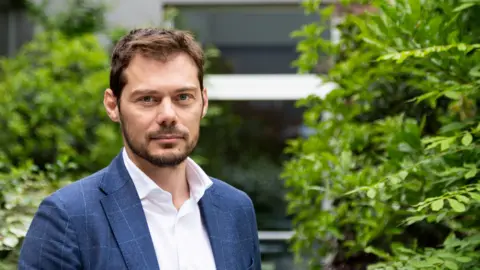
Covisian provides software and services for customer care. Most of the company's 27,000 employees work in call centres, answering customer calls for Covisian's clients.
The company merged its IT and HR teams in April 2023 under the leadership of Fabio Sattolo, chief people and technology officer. He was previously CTO.
"We're talking about developing people on one side and developing IT on the other," he says.
"If we bring these two together, we can have a common vision for how technology can have an impact on people and how people can adapt and evolve to leverage the new technology."
One example is in the call centre, where AI will increasingly be used. People will still answer the calls and work out the customer's problem, Mr Sattolo says, but they will then delegate the process for fixing it to AI.
"We are developing AI considering that a human agent will use it," he says. "But you also need to develop the human agent to make sure that they are aware of how to use this technology."
Previously, HR and IT departments might have butted heads over what HR wanted and what IT thought it could deliver.
Now, there is one decision-maker in charge. "The effectiveness and speed of developing things is much higher," says Mr Sattolo.
If there are technical barriers, Mr Sattolo can often adapt the HR process as a workaround.
One success was an internal job postings tool, which gives call centre agents an opportunity to move into other roles in the company. The new tool, developed by the combined HR/IT organisation, doubled responses to job adverts.
"Making people speak the same language was the hardest part, because IT and HR people are really different," Mr Sattolo says.
While HR people are good at listening, IT people aren't always good at talking, he says. "I remember many meetings where I was asking the questions because they were not talking to each other."
To help the HR and IT teams work together, he identified people who were not closely associated with either discipline to lead the multidisciplinary teams. "It's like a judge who makes them negotiate to find the proper solution," he says.
David D'Souza is director of profession at the CIPD, the professional body for HR and people development.
He sounds a note of caution about the trend: "The skillsets of the two professions are complementary, and don't have much overlap. Complex people issues require an understanding of organisational and situational factors, different to the specialist expertise required in IT.
"Greater collaboration between HR and IT makes sense, leaning into the strengths of each discipline, but merging the departments risks losing or diluting the specialist expertise organisations need to thrive."
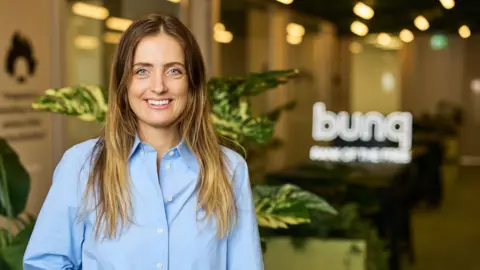
Bianca Zwart is chief strategy officer at online bank Bunq, where the IT and people team sit within the same bigger team.
She says it makes sense to have them together because both IT and HR are building systems that support the rest of the business.
Like many firms, Bunq is trying to work out how AI and humans will best work together.
They are betting that a good way to do that is to have IT and HR working closer together.
"In that sense, it's like a natural merger."
No one person is responsible for working out whether a task should be performed by a human or AI at Bunq.
The company aims to make its 700-plus people self-sufficient, building the automations and AI processes they need themselves.
Bunq is on track to automate 90% of its operations by the end of 2025, but has not made redundancies and continues to hire new employees.
"In any company, people need to understand that they need to work in a completely different way moving forward," she says. "AI will be taking away the repetitive tasks so they can focus on the more complex problems."
Latest Stories
-
Thousands of containers lost at sea – GSA’s Prof Gyampo warns importers are exposed to risk
1 hour -
Keep the money in Ghana – Gov’t enforces local cargo insurance
1 hour -
US Army veteran charged with leaking classified information to journalist
2 hours -
Dr. Dre joins Forbes billionaires list as second-richest hip-hop artist with $1 billion fortune
2 hours -
Trump administration cannot nix legal status of 5,000 Ethiopians, US judge rules
2 hours -
Libya announces new oil and gas discoveries with three major energy companies
2 hours -
Oil rises as investors remain wary US-Iran ceasefire will open supply flow
2 hours -
Police arrest suspect over church threat video
4 hours -
Eight appear in court as police intensify crackdown on illicit drugs in Tamale
4 hours -
Motorist remanded in custody for hitting four-year-old girl
5 hours -
Mobile money vendor robbed at Ziope
5 hours -
Benin’s Finance Minister Wadagni seeks his own mandate in election
5 hours -
GNFS retrieves body of unidentified man from Asylum Down drain
5 hours -
CAF’s Motsepe to visit both Senegal and Morocco amid AFCON fallout
5 hours -
Edmond Boateng takes up secretary role at Honorary Consular Corps of Ghana
6 hours