


Audio By Carbonatix
Scan your eyes over Apple's just-published list of the year's most popular iPhone apps, and there's one notable omission: Shazam.
In fact, it's been a while since the song-identifying software squeezed its way into the iOS App Store's top 10.
So, why has Apple confirmed it is "combining" its business with that of the smaller London company?
It has not revealed the price it is paying, but the sum is rumoured to be as much as $400m (£300m), which would make it one of Apple's most expensive takeovers to date.
The US technology giant also hasn't disclosed its motivations beyond saying that it has "exciting plans in store".
But there are several reasons the deal may have appealed.
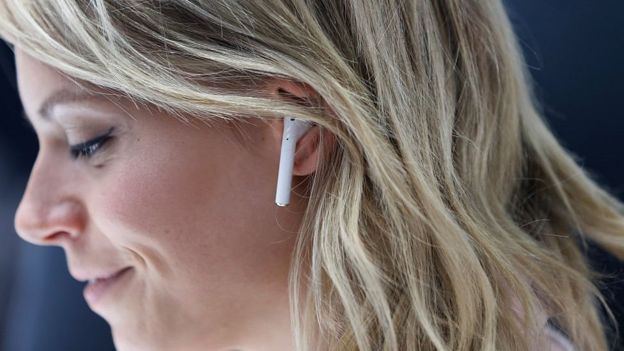
Apple is competing with Spotify among others to offer streaming music subscriptions
Apple's smart assistant, Siri, already taps into Shazam, allowing users to verbally ask: "What song is playing?" and has done so for more than three years.
But with growing competition between Apple Music and Spotify - which also ties into Shazam - Apple may have felt the need to secure the service rather than risk its Swedish rival or some other company buying it first.
Apple has said that Shazam is a "natural fit" for its streaming music platform.
Some, however, believe that the real value of the acquisition isn't Shazam's technology - which Apple could presumably have developed a version of itself for a smaller sum - but rather the data Shazam has gathered for more than a decade about its millions of users.
"Spotify has made the discovery of new music front and centre of what makes it a compelling proposition," said Mark Mulligan, from the consultancy Midia Research.
"Apple just doesn't have the same amount of data about listening tastes as Spotify, meaning it can't drive recommendations with as high a degree of accuracy and precision.
"Shazam essentially gives it a shortcut to having a massive database."
Music forms a major pillar of Apple's business - not just its song subscription service, but also its:
- Beats headphones division
- Beats 1 radio station
- iTunes store
- Carpool Karaoke TV show (with other music-themed programming reportedly on the way)
So, locking in one of the key song-discovery services and potentially deepening the way Shazam ties into Apple's wider ecosystem has a certain logic.
Always-listening
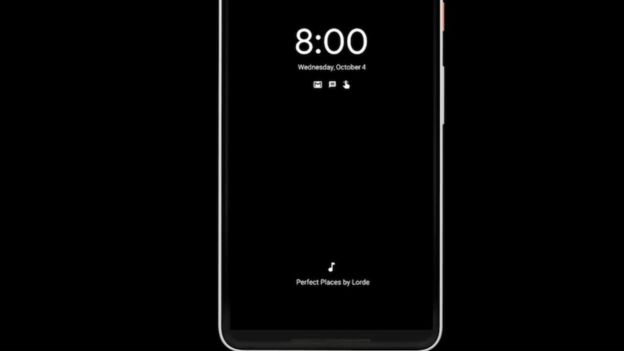
The Pixel 2 tells users wha music is playing via its home screen
Apple will be mindful that first Google Now and subsequently Google Assistant have used in-house technology to let Android users identify songs.
That helped the search giant add a clever feature to its recently released Pixel 2 phone: the handset proactively shows the name of songs it hears on its home screen without waiting to be asked.
Moreover, it does this without requiring an active internet connection thanks to it periodically updating an on-device database of tens of thousands of tracks, and carrying out the whole song-matching process on the phone.
To let Siri replicate the trick or add innovations of its own, Apple might have felt it needed to bring Shazam in-house.
Apple has long portrayed itself as a company that goes the extra mile to protect its users' privacy, so it would presumably reject the idea of allowing a third-party to run an always-listening service on its devices.
Homepod help
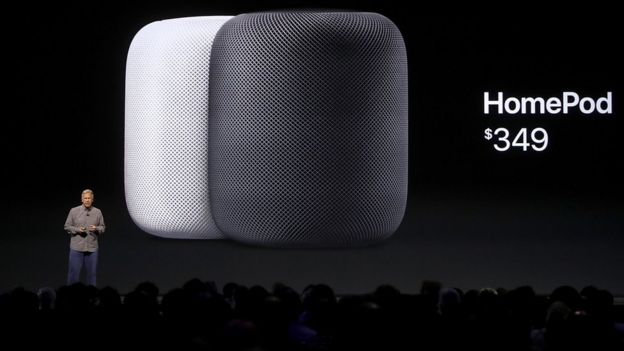
Apple had originally intended its Homepod smart speaker to be on sale by now
Augmented reality advertising
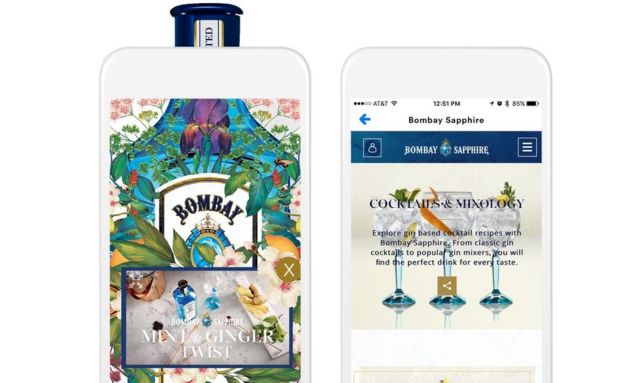
Shamzam's ugmented reality features have been used by Bombay Sapphire among others
While Shazam is best known for its song-matching capabilities, the app has also been adding augmented reality features.
The technology superimposes graphics over real-world views captured by a smartphone's camera and is something Apple's chief executive, Tim Cook, is particularly keen on.
He has repeatedly called AR more "profound" than virtual reality, which limits users to computer-generated views.
Shazam has focused on offering its AR capabilities to brands.
Fanta has used it as a way to let users bring posters for its soft drinks to life, while if users held their phone over a bottle of Bombay Sapphire gin they could see images of its ingredients grow out of its sides before prompting them to explore cocktail recipes.
Another British start-up, Blippar, has already demonstrated that merging real-world object recognition and AR has uses beyond advertising - it offers a way to show information about people seen standing nearby.
Perhaps, Apple is keen to build on Shazam's efforts to develop killer features of its own for the launch of its much-rumoured AR glasses.
Latest Stories
-
Trump declares victory after rescue but threats to US operation in Iran still loom
50 minutes -
US Secret Service investigates reports of gunfire near White House
1 hour -
Current account stability to mitigate pressure on cedi; currency to end year at GH¢11.40 to a dollar
1 hour -
Oil back above $110 after expletive-laden Trump threat to Iran
1 hour -
T-bills auction: Government records 32% undersubscription; interest rates rise again
1 hour -
Economy to remain relatively insulated from fallout of US–Iran conflict – Fitch Solutions
1 hour -
[Watch Live] Shatta Wale, Kofi Kinaata, and others ignite the grand finale of Gomoa Easter Carnival
3 hours -
Four injured in robbery attack on Elshadai Enterprise at Akatsi
4 hours -
Two remanded for alleged attack, robbery at jewellery shop
4 hours -
Royals attend Windsor Easter Sunday service
5 hours -
Trump issues expletive-laden threat to Iran over Hormuz Strait blockage
5 hours -
Berekum Chelsea edge Aduana FC in Bono derby to boost survival hopes
7 hours -
‘They can’t control the team’ – Ernest Thompson doubts local coaches for Black Stars role
7 hours -
Ghana-born midfielder Seidu realises ‘dream’ with Atlético Madrid debut
8 hours -
GPL 2025/26: Bubakari strikes late to hand All Blacks vital win over Dreams FC
8 hours