

Audio By Carbonatix
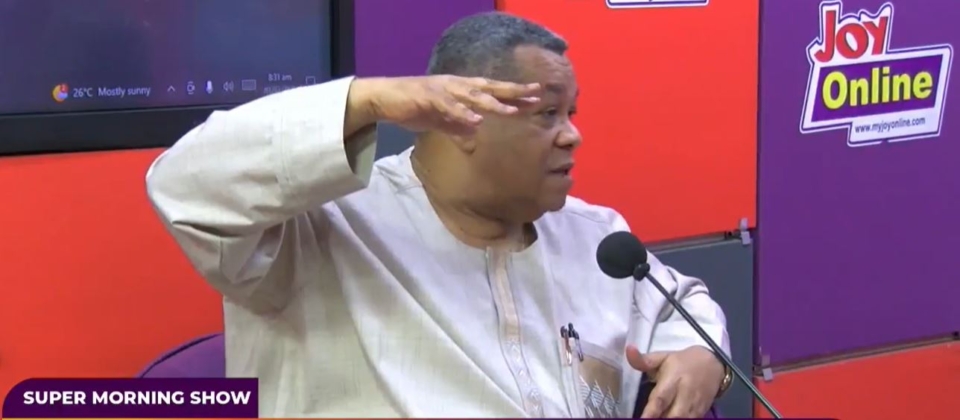
Ghana's ambitious "24-Hour Economy" policy is set to revolutionise agricultural mechanisation by fostering local production and creating new business opportunities for Ghanaians, according to Mr. Goosie Tanoh, Presidential Advisor on the 24-Hour Economy.
Speaking on Joy FM's Super Morning Show today, July 3, Mr. Tanoh questioned the nation's continued reliance on importing basic farm equipment, urging a shift towards domestic manufacturing.
"Why should we import 'Aboboyaa' [tricycles] from anywhere? This is basic technology?" Mr. Tanoh questioned rhetorically, extending the challenge to disc ploughs and other fundamental agricultural implements.
He asserted that Ghana possesses the inherent capacity to produce these items locally, a capability that the "24-Hour Economy" initiative aims to vigorously support.
A core component of the "Grow Ghana" programme, which falls under the broader 24-hour economy policy, is dedicated to "machinery and technology".
Mr. Tanoh outlined plans to establish a common cooperative system that will create a clear business model for individuals and entities interested in agricultural mechanisation.
This system will enable them to own tractors and other equipment, offering ploughing and other services to farmers at calibrated costs that guarantee profitable margins.
"You're providing a business opportunity for those who basically want to do mechanisation support, own tractors and make money from tractors by ploughing for you, one acre, maybe 100, 400 agriculture, maybe 400 cedis," he explained, illustrating how the costs would be calibrated to ensure viability for service providers.
Mr. Tanoh highlighted Ghana's existing "soft technology" and fabrication capabilities, particularly referencing informal industrial hubs like Suame Magazine.
"What we're doing in the fabrication component, we're going to basically create a fabrication industry out of what already exists," he stated.
He cited the local ingenuity demonstrated in Suame, where complex vehicle repairs and re-engineering are commonplace, as a testament to Ghana's potential to produce agricultural implements like threshers and combined harvesters.
He further emphasised the need to design specialised implements, noting that current imported equipment may not be suitable for local conditions, such as Ghana's shorter soybean varieties, which require different harvesting technologies.
The Presidential Advisor's comments underscore a strategic pivot towards localising the agricultural supply chain, fostering entrepreneurship in mechanisation services, and reducing the country's import bill.
This vision aligns with the broader goals of the "24-Hour Economy," which seeks to boost productivity, create sustainable employment, and reduce Ghana's dependence on foreign goods by maximising continuous economic activity across key sectors.
Latest Stories
-
Universities should focus on churning out impactful graduates rather than merely adding new programmes — UEW VC
3 minutes -
Publican AI system is speeding up trade, not slowing it — GRA Boss
6 minutes -
Government to construct a FIFA category 2 stadium in the Volta Region – James Gunu
15 minutes -
CAF to introduce reforms to fix AFCON final controversies – Patrice Motsepe
16 minutes -
EOCO defends probe into Kwamigah-Atokple
18 minutes -
Fuel tanker accident at Breku Forest spills thousands of litres of diesel
24 minutes -
IEAG backs Publican AI system after concerns addressed
27 minutes -
No new taxes or charges- GRA boss assures importers over rollout of Publican AI system
27 minutes -
Egypt goalkeeper banned for striking referee
28 minutes -
Police restore calm following clashes between Asisiriwa and Brodekwano
29 minutes -
Education sector job seekers must submit certificates for verification – GTEC
31 minutes -
Volta Lake accident highlights lax safety regulations — Savannah Regional Minister
31 minutes -
UEW Vice-Chancellor calls for rethink of Ghana’s education system at 2026 Public Lecture
38 minutes -
Health expert urges enough sleep, rest to control hypertension
38 minutes -
Foreign Affairs Ministry alerts travellers as EU rolls out new biometric Entry/Exit System
40 minutes