

Audio By Carbonatix
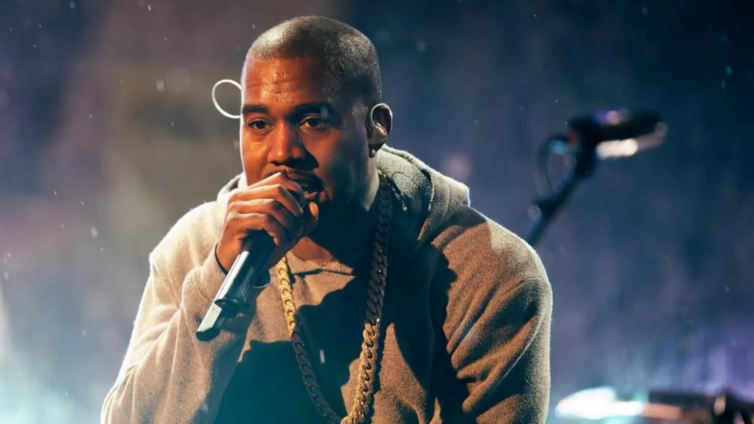
The United Kingdom Home Office has formally blocked the artist legally known as Ye, formerly Kanye West, from entering the country, leading to the immediate cancellation of the summer Wireless music festival. Officials rescinded an Electronic Travel Authorisation (ETA) previously granted to the rapper. The government determined his presence in the United Kingdom would not be "conducive to the public good." The decision effectively ends what was billed as a landmark return for the artist. He has not performed in Britain since headlining Glastonbury in 2015. Festival organizers confirmed that refunds will be issued to all ticket holders following the total collapse of the July event.
Security Grounds for Entry Denial
The United Kingdom Home Office maintains strict protocols regarding individuals who may pose a threat to public safety or spread extremism. A spokesperson for the Prime Minister confirmed that decisions are made on a case-by-case basis. "Decisions are taken on a case-by-case basis in line with the law and the evidence available, but where individuals pose a threat to public safety or seek to spread extremism, the government has not hesitated to act, and that includes cancelling permission to enter this country for extremist preachers and far-right figures," the spokesperson stated. The initial online approval was overturned after a formal review of the rapper’s history of inflammatory rhetoric.
Festival Response and Corporate Withdrawal
The booking had already triggered a significant commercial and political backlash. Major sponsors, including Pepsi and Diageo, withdrew their support for the festival in the days leading up to the ban. Despite this, Festival Republic managing director Melvin Benn defended the booking. He stated that Ye "intended to come in and perform." He clarified that organizers were "not giving him a platform to extol opinion of whatever nature, only to perform the songs that are currently played on the radio stations in our country and the streaming platforms in our country and listened to and enjoyed by millions." Following the ban, the festival released a definitive statement: “The Home Office has withdrawn Ye’s ETA, denying him entry into the United Kingdom. As a result, Wireless festival is cancelled and refunds will be issued to all ticket holders.”
History of Incendiary Rhetoric
The ban follows years of controversial behavior and hate speech. Ye has previously voiced admiration for Adolf Hitler and marketed imagery involving swastikas. His recent discography includes tracks with titles such as "Heil Hitler" and "Gas Chamber." Phil Rosenberg, president of the Board of Deputies of British Jews, highlighted the impact of these actions. “It has been less than a year since Kanye West released a song entitled Heil Hitler, the culmination of three years of appalling antisemitism. He also made a number of deeply offensive comments about the black community, saying that the 400-year experience of slavery was ‘like a choice’,” Rosenberg said. He added that the latest album remains deeply offensive despite the artist's claims of remorse.
Political Pressure and Public Good
The decision to bar the artist followed intense pressure from high-level political leaders. This included Mayor of London Sadiq Khan and Prime Minister Keir Starmer. Starmer described the booking as “deeply concerning” given the artist's celebration of Nazism. The festival organizers maintained that "multiple stakeholders were consulted in advance of booking Ye and no concerns were highlighted at the time." However, the government eventually aligned with critics. They argued that providing a platform to the artist would undermine social cohesion and public safety.
Future Dialogue and Artistic Remorse
Ye has attempted to mitigate the fallout through public apologies. This included a full-page advertisement in the Wall Street Journal attributing his actions to bipolar disorder. The artist expressed a desire to reconcile with the community he targeted. “As Ye said today, he acknowledges that words alone are not enough, and in spite of this still hopes to be given the opportunity to begin a conversation with the Jewish community in the UK,” the festival statement noted. While Ye offered to “meet and listen” to community members, the Home Office maintains that his legal exclusion remains necessary for the public interest.
Industry Uncertainty and Fan Backlash
The total cancellation of a major festival creates a significant void in the summer touring season. Fans expressed immediate frustration on social media over the loss of other scheduled acts. Industry analysts suggest this move may lead to stricter vetting processes for international artists. The financial loss for the London economy is expected to be substantial. Promoters are now facing increased scrutiny regarding the moral and legal risks of high-profile bookings. This event serves as a warning for the global live music sector regarding state-level intervention.
The cancellation marks a definitive collision between the commercial interests of the global music industry and the national security mandates of the state. It leaves a lingering question for the cultural landscape: whether an artist’s past rhetoric can permanently eclipse their creative output, or if a path to professional redemption exists within the framework of modern democratic values.
Latest Stories
-
Health Ministry engages Ga Mantse ahead of Free Primary Healthcare launch
10 minutes -
We can tackle multiple priorities – Sam George defends Anti-LGBTQ Bill push
45 minutes -
Statement: Ghana Chamber of Mines’ Response to Claims in Joe Jackson’s “Ananse Stories about the Economy of Ghana”
47 minutes -
GES opens 2026 teacher recruitment for licensed B.Ed graduates
49 minutes -
Ghana must value skilled trades, build resilient learners — Ibn Chambas
57 minutes -
Ghana must rethink education around relevance, resilience and responsibility — Ibn Chambas
60 minutes -
Prince Harry faces defamation lawsuit from charity he co-founded
1 hour -
South Korea deploys thermal cameras to track escaped zoo wolf
1 hour -
Calls for royal meeting with Epstein survivors grow ahead of US visit
1 hour -
Ibn Chambas advocates blend of technology and human values in education
1 hour -
UMA improves healthcare access in Asutifi North with GH₵700k ‘Kim Taylor Legacy’ Walkway
1 hour -
Scholarships Authority and Fanaka University offer sponsorship for procurement and supply chain studies
1 hour -
Bisa Kdei drops new single ‘Go N Look’ featuring Medikal
1 hour -
Benin facing rising terrorism in north as French military presence faces growing criticism
1 hour -
UEW Public Lecture Series 2026: Education debate ‘about the soul of Ghana’s future’ — Dr Ibn Chambas
1 hour