

Audio By Carbonatix
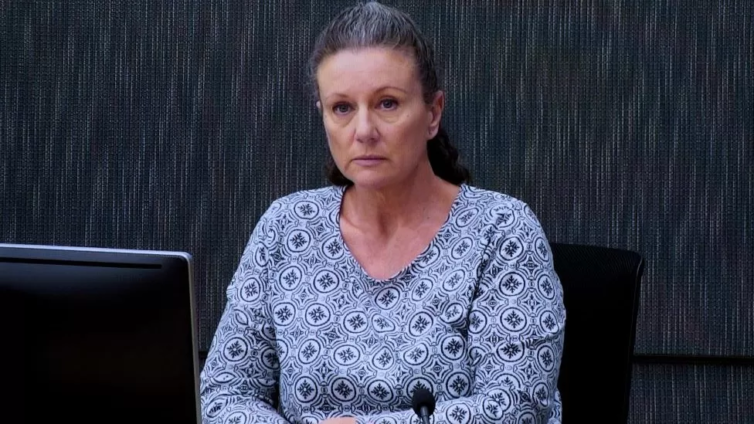
A woman once branded "Australia's worst female serial killer" has been pardoned after new evidence suggested she did not kill her four infant children.
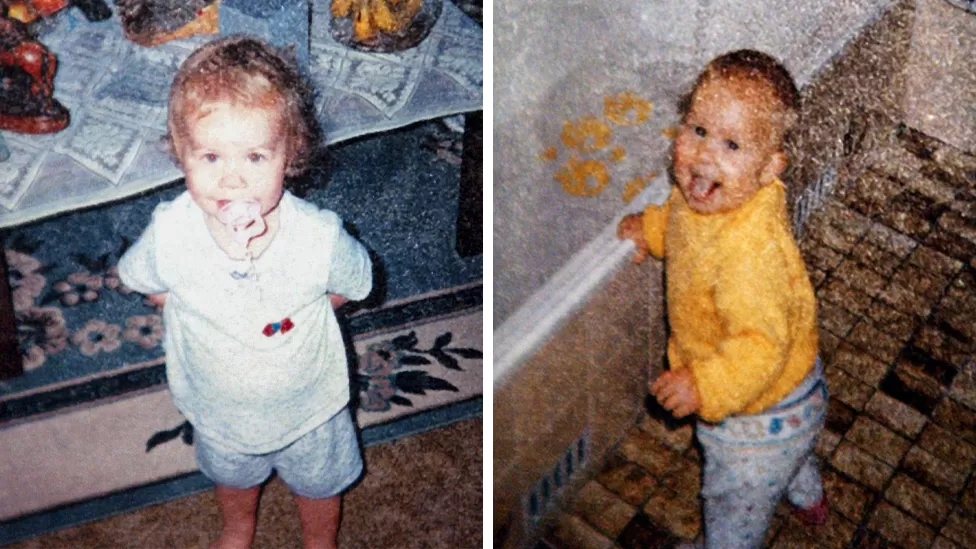
Kathleen Folbigg spent 20 years in prison after a jury found she killed sons Caleb and Patrick and daughters Sarah and Laura over a decade.
But a recent inquiry heard scientists believe they may have died naturally.
The 55-year-old's case has been described as one of Australia's greatest miscarriages of justice.
Ms Folbigg, who has always maintained her innocence, was jailed for 25 years in 2003 for the murders of three of the children, and the manslaughter of her first son, Caleb.
Each child died suddenly between 1989 and 1999, aged between 19 days and 19 months, with prosecutors at her trial alleging she had smothered them.
Previous appeals and a separate 2019 inquiry into the case found no grounds for reasonable doubt and gave greater weight to circumstantial evidence in Ms Folbigg's original trial.
But at the fresh inquiry, headed by retired judge Tom Bathurst, prosecutors accepted that research on gene mutations had changed their understanding of the children's deaths.
On Monday, New South Wales Attorney General Michael Daley said Mr Bathurst had concluded that there was reasonable doubt that Ms Folbigg was guilty.
As a result, the NSW governor had signed a full pardon, and ordered Ms Folbigg's immediate release from prison.
"It has been a 20-year-long ordeal for her... I wish her peace," Mr Daley said, adding his thoughts were also with the children's father, Craig Folbigg.
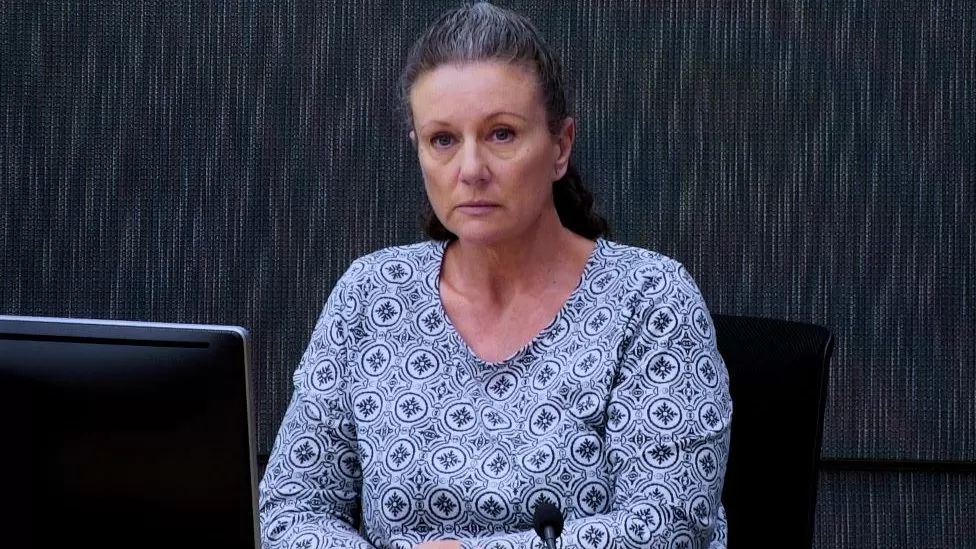
At the latest inquiry, Mr Folbigg's lawyers pointed to the "fundamental implausibility" of four children from one family dying of natural causes under the age of two.
The unconditional pardon does not quash Ms Folbigg's convictions, Mr Daley said. That would be a decision for the Court of Criminal Appeal, if Mr Bathurst chooses to refer the case to it - a process which could take up to a year.
If her convictions are overturned, she could then potentially sue the government for millions of dollars in compensation.
Her case has been compared to that of Lindy Chamberlain, who in 1982 was found guilty of the murder of her nine-week-old daughter, despite her claim that a dingo had taken the baby. She was awarded A$1.3m (£690,000, $US 858,000) in 1992 for her wrongful conviction.
But some advocates say the case of Ms Chamberlain, imprisoned for three years, pales in comparison with Ms Folbigg's.
"It is impossible to comprehend the injury that has been inflicted upon Kathleen Folbigg - the pain of losing her children [and] close to two decades locked away in maximum security prisons," said her lawyer, Rhanee Rego.
Law must be more 'science sensitive'
Ms Folbigg's 2003 trial centred on circumstantial evidence, most notably diaries which expressed her struggles with motherhood.
Those diaries were given to police in 1999 by her then husband, Mr Folbigg, who in time became convinced that his wife was guilty. The pair separated in 2000.
The diary entries - in which she agonises over the death of her children and describes how the "guilt about them all haunts me" - would form the basis of the prosecutor's case.
But there was no physical evidence of smothering or injuries to the children.
A campaign led by some of her friends prompted a petition to review her convictions based on forensic pathology findings.
At the recent inquiry, a team of immunologists found that Ms Folbigg's daughters shared a genetic mutation - called CALM2 G114R - that can cause sudden cardiac death.
Evidence was also uncovered that her sons possessed a different genetic mutation, linked to sudden-onset epilepsy in mice.
Prof Carola Vinuesa, who led the research team from the Australian National University, said an unusual genetic sequence was immediately obvious in Ms Folbigg's DNA.
"We did the first test and found a [gene] variant that looked very suspicious... even then in November 2018, we thought this [a] very high likelihood, if found in the children, to be the culprit," she told the BBC.
Prof Vinuesa said there were only 134 known cases worldwide of the potentially deadly heart condition linked to the genetic mutation.
She described the decision to pardon Ms Folbigg as a "beautiful moment" that could offer hope to other women in similar situations.
"We've been approached about women who have lost children, or who have been accused of inflicting harm, and the cases look as if they're also children with severe genetic conditions," she said.
The Australian Academy of Science says the case shows the need for reform that makes the legal system more "science sensitive", a call echoed by Ms Folbigg's lawyer.
Latest Stories
-
NPP leaders converge at party headquarters ahead of NEC meeting on polling station elections
9 minutes -
Fuel prices may rise in Ghana despite global drops – Duncan Amoah
12 minutes -
‘No one is above the law’- Volta Chiefs condemn EOCO over handling of Council of State member case
13 minutes -
AMA creates alternative pedestrian routes at Kaneshie after footbridge closure
17 minutes -
Ghanaians were misled- NPP accuses NDC of politicising Anti-LGBTQ bill
17 minutes -
Photos: Mahama receives full state welcome in Paris ahead of talks with French President Macron
39 minutes -
Deputy Health Minister endorses Women in Medicine Fellowship
39 minutes -
Duncan Amoah pushes for Consumer Protection Bill amid VIP fare hike
52 minutes -
LMWG backs Damang lease award to E&P, demands transparency and results
56 minutes -
Volta Chiefs condemns EOCO over alleged disregard for court ruling in Council of State member case
57 minutes -
Matthew Perry’s stepmother says ‘Ketamine Queen’ should get maximum sentence
57 minutes -
Northern Regional Police Command intensifies anti-drug operations, arrests 217 suspects
59 minutes -
The architect of a healthier Ghana: Mahama’s vision and legacy in primary healthcare
1 hour -
Israel carries out large wave of air strikes across Lebanon
1 hour -
BBC upholds complaints over racial slur in Baftas broadcast
1 hour