

Audio By Carbonatix
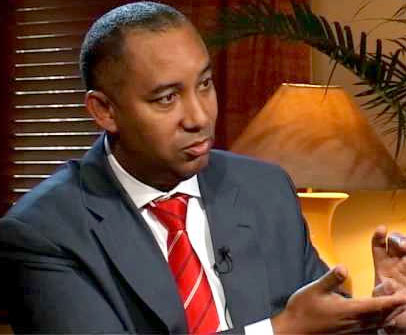
The World Bank provided a credit guarantee to the Government of Ghana which was subsequently used to back the Independent Power Producers (IPPs) to raise funds from the banks to construct the power plants in the country during the power fluctuation or ‘dumsor’ era, a former Chief Executive Officer of the Ghana National Petroleum Corporation, Alex Mould has told Joy Business.
“The World Bank increased Ghana’s ‘implicit guarantee’ so we could use as a credit derivative and lessen the risk of default by the counterparties [IPPs]. The World Bank was involved in the selection of the IPPs and also lent support to the Ghana government as ‘Partial Risk Guarantee’”. A partial risk guarantee protects private lenders against debt service defaults on loans, normally for a private sector project, when the defaults are caused by a government’s failure to meet specific obligations under project contracts to which it is a party.
“So, they [World Bank] provided support in the form of additional guarantees so that the Government of Ghana could provide a credit-backed ‘Government Consent and Support agreement’ [GCSA} or ‘Partial Risk Guarantee’ to enable these IPPs raise the financing”, he emphasized.
The World Bank in a statement said “it wishes to clarify that it has not provided any financing or guarantees to the Independent Power Producers (IPPs) that signed Power Purchase Agreements with the Government of Ghana or the Electricity Company of Ghana during the (Dumsor) energy crisis in 2014-2016”.
It however said it supports the Energy Sector Recovery Plan (ESRP) of the Government of Ghana for affordable and reliable electricity supply and enhance the accountability in the energy sector.
Again, it said it rather provided financing and a guarantee to the Sankofa Gas Project, which since 2019 has increased the availability of natural gas for power generation by leveraging private capital investment and promoting a cleaner energy mix.
But Mr. Mould said the World Bank was involved in discussions of the Partial Risk Guarantees to the IPPs and that it was in the context of its overall support to Ghana that the IPPs established their presence here.
He is therefore surprised that the World Bank wants to take a ‘back seat’ on this matter.
“The World Bank was aware and involved in the discussion of the selection criteria to be used since we had more than eight IPPs that qualified for the Partial Risk Guarantee”, he emphasised.
Latest Stories
-
US, Iran fail to reach peace agreement after marathon talks in Pakistan
1 hour -
Port crises loom as 11,000 drivers threaten four-day strike
2 hours -
A source of excellence across generations – Vice President Opoku-Agyemang lauds Mfantsipim
2 hours -
(Photos) Mfantsipim School launches historic 150th anniversary
3 hours -
Knights and Ladies of Marshall group backs Catholic Bishops’ stance on anti-LGBTQ+
4 hours -
Bright Simons writes: All the Filla in the Ibrahim Mahama/E&P – Gold Fields Saga
4 hours -
Monetise Idiocy In Ghana
4 hours -
ECG kicks off Phase Two of transformer upgrades at Lashibi; brief outages expected
5 hours -
The Ghanaian prophet and the mysterious death of his scottish wife Charmain Speirs
5 hours -
Nearly 400 sentenced in Nigeria for links to militant Islamists
5 hours -
Ghana’s recovery supported by gold strength despite global oil price pressures – Standard Bank Research
5 hours -
Methodist Church hails Mfantsipim@150; calls for “fresh consecration” to excellence
6 hours -
‘Excellence is our inheritance’ – Nana Sam Brew-Butler hails Mfantsipim’s 150-year reign in leadership
6 hours -
Kwaku Azar writes: A-G vs OSP
6 hours -
Mfantsipim–Adisadel rivalry built excellence, not division – Sam Jonah
6 hours