

Audio By Carbonatix
Rural Ghana seems to be losing out on the government’s drive to promote Science, Technology, Engineering, Arts and Mathematics (STEAM) education for holistic development of the country.
Access to learning materials and science tools for practical experience of the discipline remains elusive in remote communities.
Science and technology education has become an imperative contribution to global economies in fostering development.
The government of Ghana is driving the agenda to promote STEM education in the national curriculum to transform the academic space.
Some basic schools in remote areas miss out on the opportunities, but some private stakeholders are pushing to complement the government’s efforts.
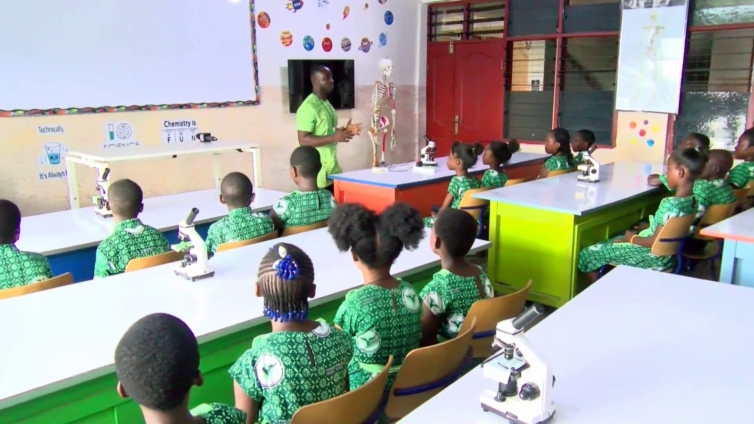
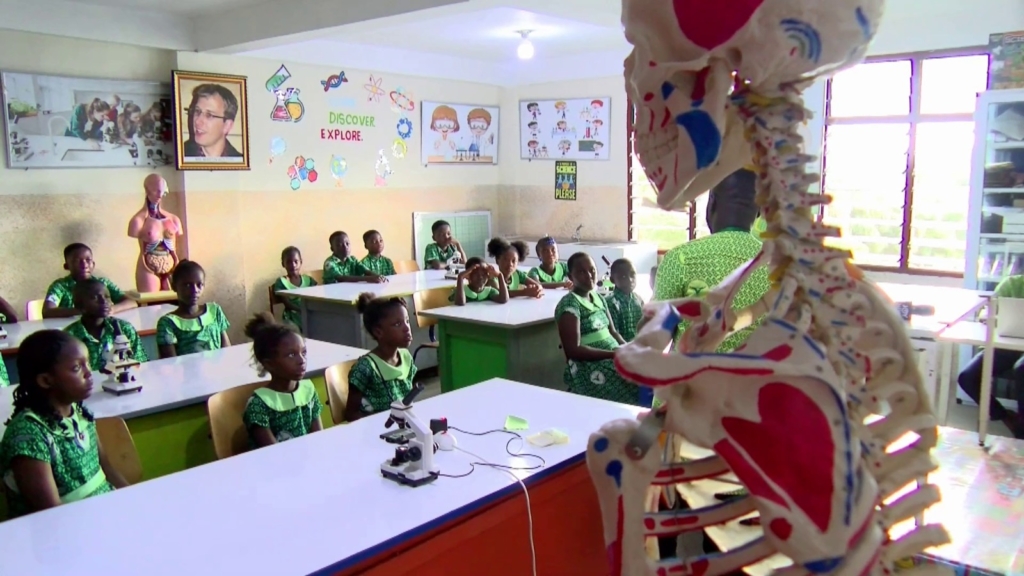
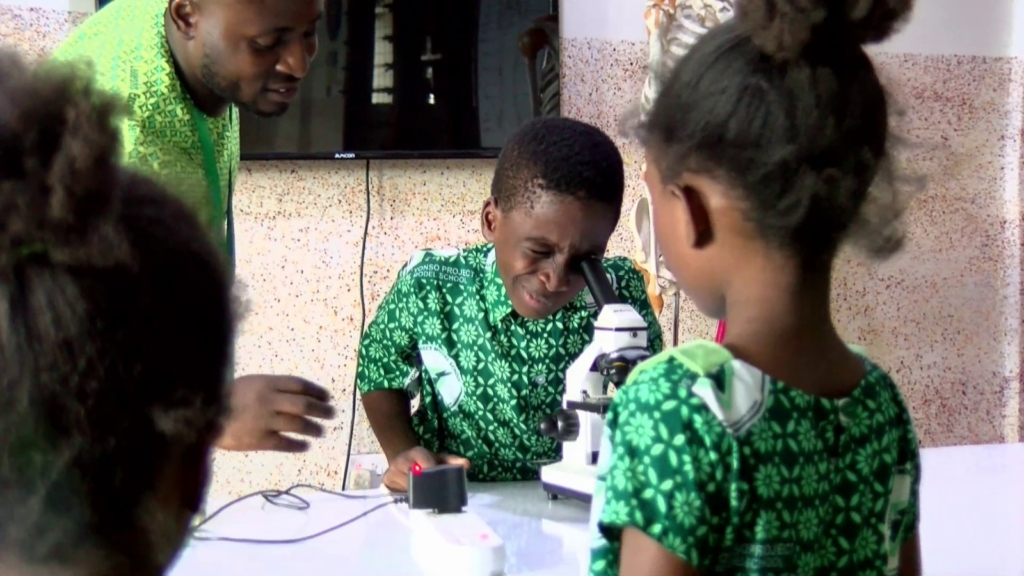
Established in 2019, the Yonso Project Model School is nurturing world-class leaders in the Wiamoase, Agona and Jamasi communities in the Ashanti region, affording students the opportunity to satisfy their curiosity in STEM education.
The school is bridging the gap to provide students in the rural community with hands-on practical education in science, technology and the arts disciplines.
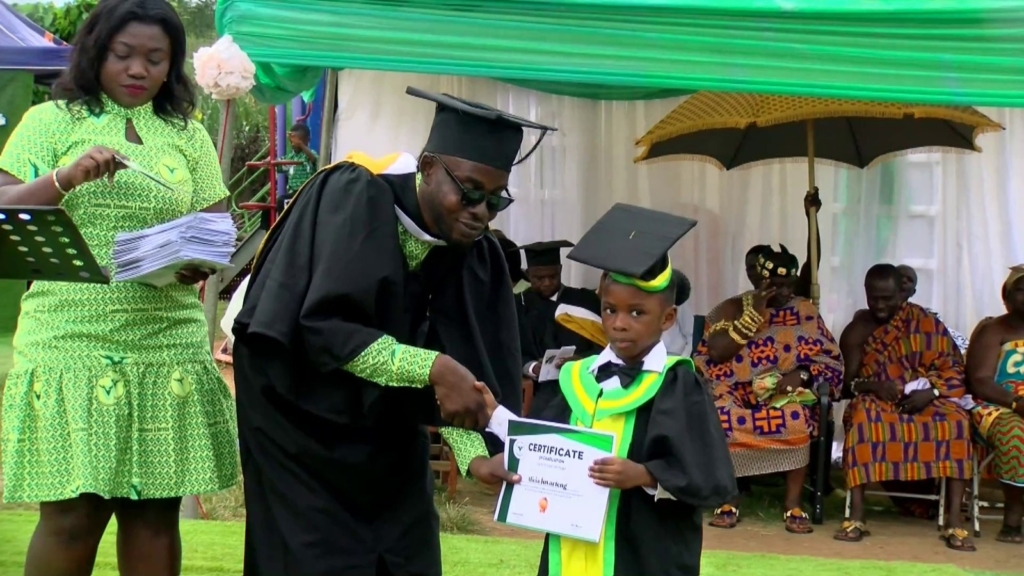
The school held its third congregation ceremony for 87 graduands at the pre-school and upper primary departments.
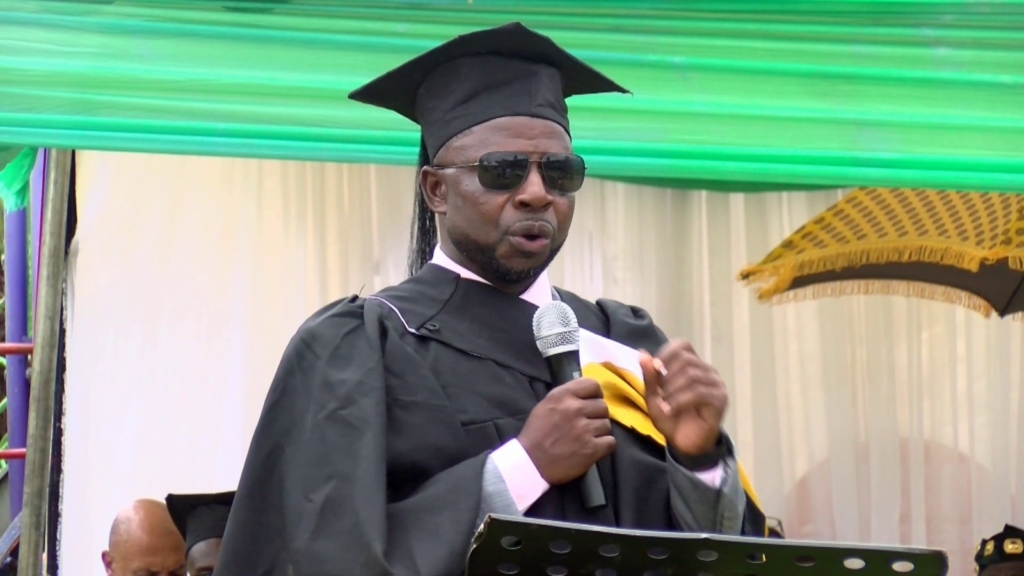
Executive Director of the school, Kwabena Danso wants a review of the country’s educational system to push students beyond the classroom but apply the gained knowledge.
“It’s about a time as a country, we retake a look at the educational system. Children must be educated to think out of the box, to build skills, and be able to do things as educated people. We can’t do the same thing everyday and expect a different result. We can’t continue the chew and pour and expect the children to do something extraordinary,” he said.
The school has in the last year supported its faculty members to travel and observe activities of their affiliated school in Germany aimed at employing certain relevant skills for teaching and learning.
Guest Speaker, Anita Solomon, urged the children to explore the unending opportunities of science and technology to impact the world.
“Create an environment where learning is not confined to textbooks but it is seen a joyous and life-long adventure. Technology plays a crucial role in this subject. Use it wisely to explore new subjects, connect with others and expand your horizon, but never let it replace the real-world experiences that are the bedrock of true understanding,” she said.
Students and teachers who performed exceptionally well during the academic year were awarded for their commitment and academic prowess.
Chief of Wiamoase, Nana Boakye Yiadom, admonished the collective efforts in realizing the accessibility to quality education.
“Education is a need for all for improvement. Let’s support the government in providing quality education for the children,” he said.
Latest Stories
-
US warns citizens to reconsider Nigeria travel on safety grounds
16 minutes -
Ivan Toney questions refereeing in Saudi Pro League title race after Al-Ahli draw
17 minutes -
Angola appoint Aliou Cissé as new head coach
28 minutes -
Virtual Security Africa showcases digital security vision at Kwahu Business Forum
33 minutes -
EBID strengthens regional integration role amid global economic uncertainty
59 minutes -
Two assault rifles, ammunition retrieved in Police probe of Tamale gang attack
1 hour -
EBID records strong financial growth with $722m disbursements in 2025 – President, Dr George Donkor
1 hour -
EBID to mobilise $2.69bn under new 2026–2030 growth strategy – Dr George Donkor
1 hour -
An open letter to telcos, regulators and security agencies on mobile money fraud in Ghana
1 hour -
Mobile Money Merchants are driving fraud
1 hour -
Alban Bagbin declines minority’s motion to investigate sale of gold reserves at BoG
1 hour -
NACOC leadership tours drug testing centres in Accra
1 hour -
OSP’s power to prosecute without AG’s authorisation unconstitutional – AG files at Supreme Court
2 hours -
Seven African referees selected for World Cup 2026 as Ndala, Issa Sy miss out
2 hours -
Why diaspora investors are using Accra real estate to hedge against global uncertainty in 2026
2 hours