


Audio By Carbonatix
As the ads boycott grows, Mark Zuckerberg shows no sign of backing down.
"My guess is that all these advertisers will be back on the platform soon enough" the Facebook chief executive has said.
Campaigners accuse the tech firm of being too slow and reluctant to remove some hateful content.
But Zuckerberg added: "We're not going to change our policies or approach on anything because of a threat to a small percent of our revenue."
The comments were made to Facebook staff at a private meeting last Friday, and were subsequently leaked to the Information news site.
The social network has confirmed they are accurate and also announced a fresh development: its chief executive is to meet the organisers of the boycott - Stop Hate for Profit.
It illustrates the concurrent ways Facebook is dealing with the matter.
The first is to be publicly conciliatory: offer smaller changes and hit home its message that hate has no place on the platform.
The second is to privately play down the impact of the boycott: reassure advertisers and resist any fundamental changes to Facebook's business model.
Balancing act
Yesterday the firm's global affairs chief, Sir Nick Clegg, published an open letter to the ad world.
He attempted to assuage fears the company hadn't done enough to combat hate. Not surprisingly, he didn't echo his boss and added: "You'll be back."
Now, of course companies have different internal- and external-facing messages.
But this one in particular underlines the delicate tightrope that Facebook is trying to tread.
The company is undoubtedly rattled by this boycott. According to a list compiled by its organisers, more than 600 brands are now involved.
This week Facebook sent an email to companies and ad agencies assuring them it was doing all it could to remove hate speech.
"This work is never finished, and we're proud of how our apps can help people come together, learn, and organize against hate and show their solidarity" an email to one ad agency said.
But the boycott isn't hurting Facebook as much as you might think.
In fact, Zuckerberg, in that same employee meeting, called the problem a "reputational and a partner issue" rather than a financial one.
And he has a point. The vast majority of companies are still advertising with Facebook.
Take the UK for example.
These are the top 10 companies that advertised on Facebook last year and how much they spent, according to analytics company Pathmatics:
- Huel, a powdered food-maker (£27m)
- Microsoft (£25m)
- Tesco (£22m)
- Giffgaff (£18m)
- Proctor & Gamble (£18m)
- SumUp Payments (£17m)
- BT (£17m)
- Vodafone (£16m)
- American Express (£15m)
- Just Eat (£15m)
With the exception of Microsoft, all of them still appear to be advertising on Facebook.
And thousands upon thousands of small-to-medium-sized businesses are doing likewise.
Return to Washington
One advertising executive sent me an expletive-riddled text yesterday, dismissing the idea its clients would stop advertising on Facebook.
It's that kind of message that gives Zuckerberg reason to be bullish.
Areeq Chowdhury, from WebRoots Democracy, also believes the companies that have joined the boycott will come back.
"The advertising being offered by these internet giants is unparalleled." he says.
"The level of targeting they can achieve is not matched anywhere else, so I find it hard to believe that a lot of them will stop advertising in the long run."
That seems to be what the market thinks, too.
After a dip in Facebook's share price, it's back to pretty much where it was last week.
So, Facebook's strategy so far seems to be working.
The far greater worry is contagion - for example, if users started to leave Facebook and Instagram in large numbers in response to the boycott. But once again, there's little evidence of that happening.
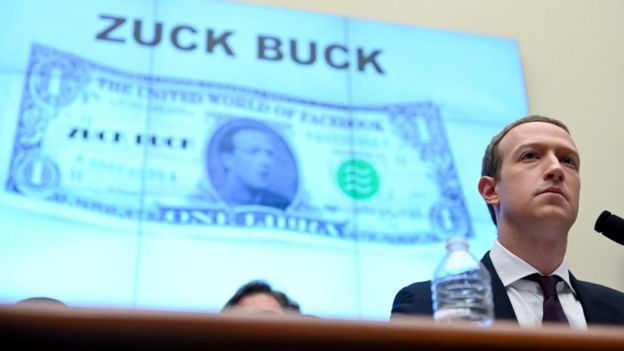
On Wednesday, it was confirmed that Zuckerberg - along with Google's Sundar Pichai, Apple's Tim Cook and Amazon's Jeff Bezos - would testify before Congress in an antitrust hearing later this month.
If the boycott continues to gather force, it could be an uncomfortable encounter, however secure Facebook may feel.
Latest Stories
-
Easter gesture: Ablakwa settles medical bills for 85 North Tongu constituents
44 minutes -
Africa must harness its population strength—Titus-Glover
45 minutes -
Visa-free access doesn’t mean unlimited stay – Lom Ahlijah
47 minutes -
From Golgotha to Kwahu: The Easter Migration of the Faithful and the Faithless
2 hours -
How the Ghanaian onion traders’ standoff with Nigeria unfolded and threatened local supply
2 hours -
No compensation for demolished structures on 24-Hour Economy market lands — Gov’t to structure owners
2 hours -
Financial Institutions must back local enterprises to spur growth – Deputy Minority Whip
3 hours -
Photos: Gomoa Easter Carnival 2026 ends in a burst of colour and celebration
3 hours -
Gomoa Easter carnival ends in colour as fashion, music and celebrity appearances light up final night
3 hours -
Families pick Luv Fm Family Party to celebrate Easter Monday with music and more
4 hours -
IMANI flags procurement issues in Ghana Gas insurance switch
4 hours -
Kaneshie footbridge rehabilitation to take up to 9 months — AMA
4 hours -
AMA confirms trading will be banned on Kaneshie footbridge after rehabilitation
4 hours -
IMANI flags procurement concerns in state insurance placements
4 hours -
Mahama’s push for visa-free Africa reflects Nkrumah’s Pan-African vision – Rashid Tanko-Computer
5 hours