

Audio By Carbonatix
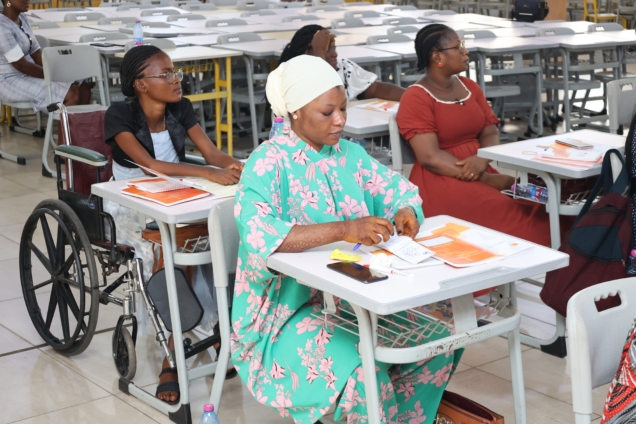
Fourteen persons with disabilities have been selected to participate in the maiden Medicine Counter Assistant (MCA) training by the Africa Higher Education Health Collaborative, KNUST in partnership with Mastercard Foundation.
Beneficiaries will be served with modules such as Ghanaian sign language for health communication, industrial pharmacy, entrepreneurship among others.
The course will include a 3-month mandatory internship training in a designated health facility.
It is under the Health Ecosystem pillar of the Collaborative led by Dr. Joseph Owusu.
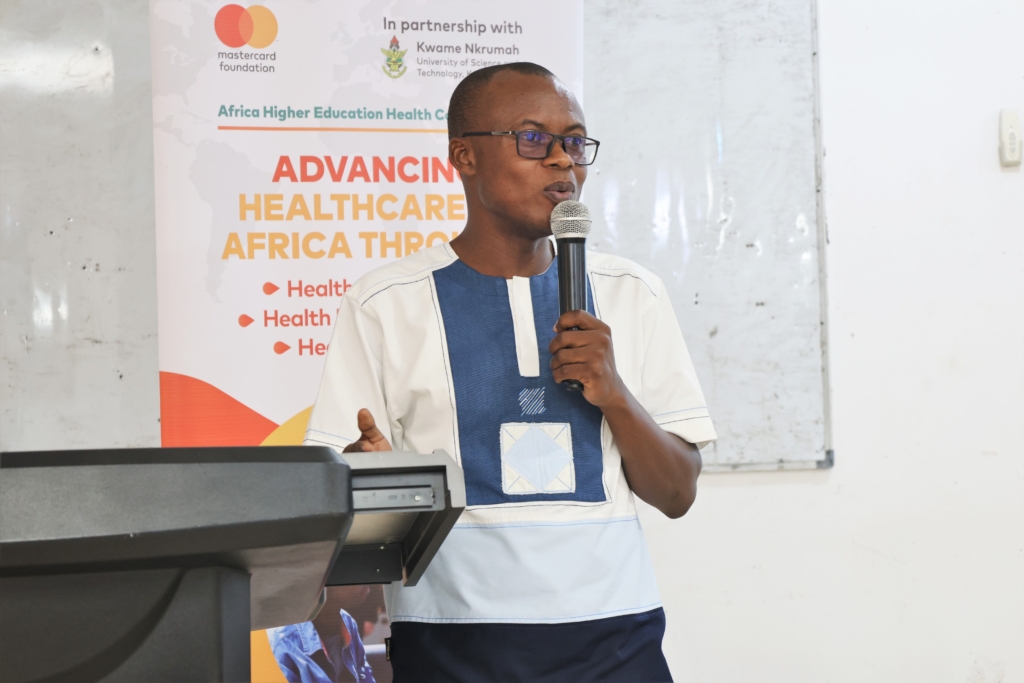
Registrar of the Pharmacy Council, Dr. Daniel Amaning Danquah charged the participants to leverage the opportunity to widen their prospects.
“Make it a memorable one by doing well in your studies so that your results will be exemplified so that nobody can say anything about your training,” he said.
Principal Investigator of the Collaborative, Prof. Ellis Owusu-Dabo added: “It is translating yourself from the so-called low-middle-income country to a position of value addition using the opportunity you can see and better your lot, transform your immediate environment and the community you come from”.
Dean of the KNUST of Faculty of Pharmacy and Pharmaceutical Sciences, Prof. Samuel Asare-Nkansah also assured participants of adequate tutelage towards their licensure exam.
“All your facilitators are very experienced, they will understand you, they will come down to your level and make your lectures interactive so you can pass the exam,” he said.
About Africa Higher Education Health Collaborative
The objectives of the Mastercard Foundation Africa Higher Education Health Collaborative are to build and strengthen the capacity of healthcare students and professionals to meet the growing demand for Primary Health Care (PHC) in the health sector; enable students to acquire advanced skills in Africa across a broad range of disciplines critical for sustainable health sector growth and transformation; Optimize entrepreneurial ecosystems in and through universities in Africa to launch and scale health start-ups to create jobs; Develop a dynamic, sustainable, long-term network of leading African universities, alumni, government agencies, health care start-ups, and private sector partners working together to create dignified and fulfilling jobs across health ecosystems.
The project will further develop a dynamic, sustainable, long-term network of leading African universities, alumni and government agencies, healthcare start-ups, and private sector partners working together to create dignified and fulfilling jobs across health ecosystems in the next ten years.
KNUST is one of the eight partners of the Higher Education Collaborative in Health with the aim to contribute to all three pillars of the health strategy: Health Employment, Health Entrepreneurship, and Health Ecosystems.
Latest Stories
-
World Bank maintains Ghana’s growth rate forecast at 4.8% in 2026
59 minutes -
Cedi was worst African currency in quarter 2, 2026 – World Bank
1 hour -
AI gains can lift three times as many people out of poverty in Ghana – World Bank
2 hours -
Police arrest suspect over jewellery theft during fire outbreak
4 hours -
EOCO returns Hanan’s £6,700, GH¢2,750 and devices after defence challenge
4 hours -
Opplift Youth Entrepreneurs Summit 2026 equips entrepreneurs with skills, mentorship and support
4 hours -
Rival clubs want range of punishments for Man City
5 hours -
Tear gas in Paris and Marseille as school protests grow across France
5 hours -
Kane inspires England to win over Czech Republic in UEFA Nations League
5 hours -
Finland orders halt to work on two Google data centres
5 hours -
Substitute Merino scores twice as Spain win in Croatia
5 hours -
Ronaldo wants Portugal ‘punishment’ but not retiring
5 hours -
White House defends Trump comment to let Iran ‘take out’ LA and San Diego
6 hours -
Asos confirms hackers sent ‘unauthorised’ notification to app users
6 hours -
US televangelist Jim Bakker, disgraced from sex scandal and fraud, dies at 86
6 hours